













A child is choking. What to do

A child is choking. What to do
This is one of those skills you hope you’ll never have to use. But if you do — it’s better to know the steps in advance than to frantically Google instructions in the moment. Save this lesson so you don’t lose it.
Choking can look different
If the child is coughing but can breathe and speak, they are not in immediate danger. Coughing is the body’s way of clearing the airway, so you can simply stay close and make sure everything is okay. Don’t pat them on the back the way people used to do because this can push the object deeper.
When you need to act immediately
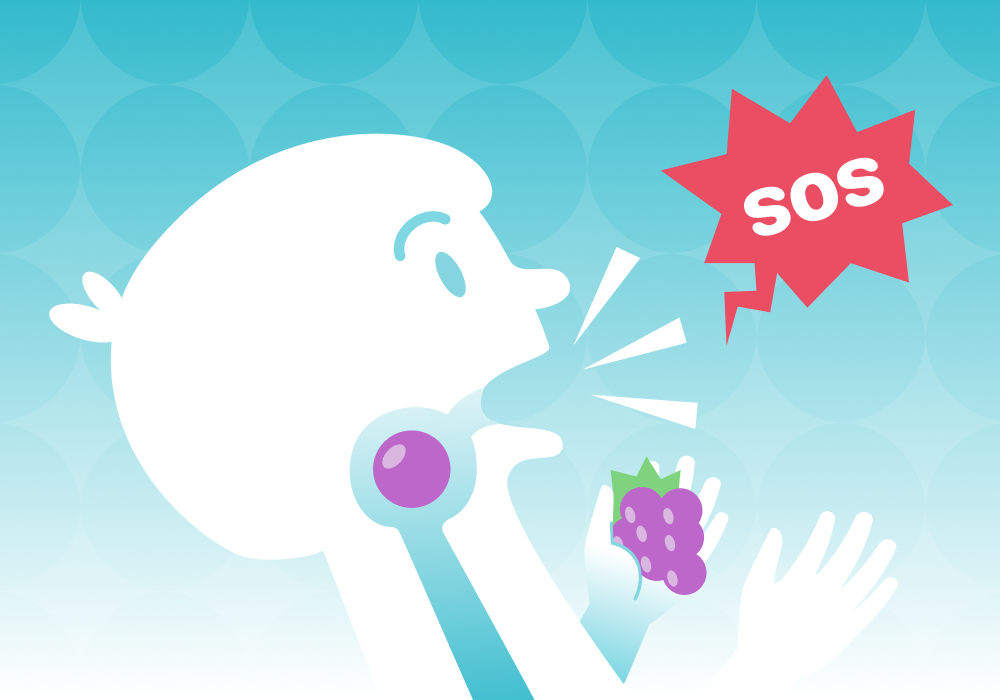
If the child suddenly goes silent and can neither inhale nor exhale or if their face turns blue, red or suddenly pale, and sometimes they grab at their throat — this means the airway is completely blocked and without oxygen the brain will start to suffer within minutes.
The first thing to do
Call emergency services (999 in the UK / 911 in the US / 112 in the XXX) and start helping immediately — don’t wait for someone to answer. If there’s someone else nearby, ask them to call while you help the child.
If the child is under one year old
The Heimlich manoeuvre is not suitable for infants — the risk of damaging internal organs is too high. Use a different technique instead.
Sit down and place the baby face down along your forearm so that the head is lower than the body — as if they are sliding down a slide on their tummy. Support the head and neck with one hand. Using the heel of your hand, deliver five firm blows between the shoulder blades. These should be definite strikes, not gentle pats.
Then cover the baby with your other hand, hold them between both hands and turn them onto their back — the head should still be lower than the body. Using two fingers, press on the breastbone five times: just below the nipple line, in the centre, pressing down about one third of the chest depth.
Alternate these two cycles — five back blows, five chest thrusts — until the object comes out or the ambulance arrives. If the child loses consciousness, begin CPR and follow the dispatcher’s instructions.
If the child is over one year old
Here you alternate back blows with the Heimlich manoeuvre.
Back blows first
Stand beside the child and support them gently with one hand. Lean them forward so the back is parallel to the floor. Using the heel of your hand, deliver five blows between the shoulder blades.
Then the Heimlich manoeuvre
Stand directly behind the child. If the child is small — kneel down to be at their level.
Find the navel. Your hands will work just above it but well below the ribs. That zone between the navel and the ribs is where you need to be.
Make a fist with one hand. Place it against the child’s abdomen in that zone with the thumb side against the body. Grip the fist firmly with your other hand. Make five sharp inward and upward thrusts — firm and quick, as if you’re trying to lift the child by the stomach.
⚠️ If the child loses consciousness at any point — stop the Heimlich manoeuvre, carefully lay them on their back on a firm surface, and start CPR immediately. Don’t wait for them to wake up on their own.
Even if everything seems fine — see a doctor
Back blows and abdominal thrusts create significant pressure that can affect internal organs. Part of the lodged object may also remain in the airway and cause problems later. It’s best to see a doctor even if everything seems okay.
Which foods are dangerous
Children under 3–4 years old don’t chew well, they eat quickly and get distracted easily, so they’re at particular risk. The main culprits: grapes, cherry tomatoes, cherries, nuts, seeds, popcorn, raw carrots, raw apple, hot dogs, large pieces of meat, toffees and chewing gum.
A simple rule: everything round should be cut into quarters so that no round cross-section remains; everything hard should be cut into small pieces. If a child can put something whole into their mouth — it needs to be cut or removed.
For older children, it’s worth explaining why they shouldn’t laugh or talk with a full mouth — it’s not about manners, it’s physiology. When you laugh, the epiglottis opens and food can go “down the wrong pipe” (remember being told exactly that as a child?)
💡 Safe eating rule: a child should only eat while sitting down, supervised, without running, laughing or playing with food in their mouth. Most choking incidents happen exactly when a child is eating on the move or distracted.
Cheat sheet. Save this to your phone
- 🆘 Under 1 year: 5 back blows → 5 chest thrusts (no Heimlich)
- 🆘 Over 1 year: 5 back blows → 5 Heimlich thrusts → repeat
- 🚨 Child can’t make a sound = act immediately
- 🫁 Loss of consciousness → start CPR, follow the dispatcher’s instructions
- 🍇 Cut round foods into quarters, cut up anything hard
Sources: American Heart Association (AHA), American Academy of Pediatrics (AAP), and American Red Cross guidelines on first aid for choking children.
Проверьте электронный ящик