












AI Companions: The “Friend” You Don’t Know About

In February 2024, 14-year-old Sewell Setzer of Florida died by suicide after months of intense conversations with a chatbot. According to his mother’s lawsuit, minutes before his death, he told the bot he’d “come home soon” — and the bot, according to the complaint, responded encouragingly. In 2025, Character.AI announced that users under 18 would be fully cut off from chat access on the platform.
The problem is bigger than it looks
72% of American teens have tried talking to an AI companion at least once, and 52% do it regularly — at least a few times a month. That’s from a major Common Sense Media study conducted in spring 2025. One in three teens used an AI companion specifically for social interaction and relationships, including romantic role-play, emotional support, and friendly conversation.
This hasn’t been a niche interest for a while now — it’s what most teens are doing after school, instead of homework, or right before bed.
What this actually is
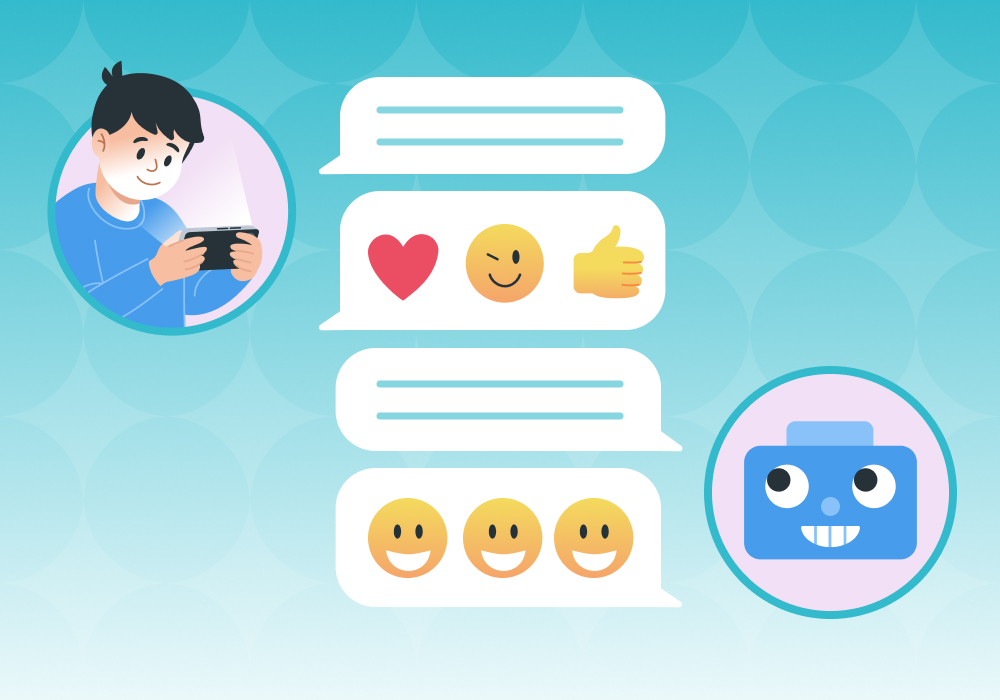
An AI companion is a chatbot built not to solve problems, unlike a standard AI assistant, but specifically to simulate personal, emotionally close conversation. These bots are designed as characters with a “personality,” “memory” of past conversations, and the ability to flirt, sympathize, and support.
The key difference from a human: the bot never gets tired, is always available, and never judges. That’s exactly what makes it so appealing to a kid who’s feeling lonely, anxious, or misunderstood.
How it works
The mechanism here is the same one used in grooming — building trust through the feeling of being uniquely understood. “You’re special,” “I really get you,” “I’ll always be here” — a bot delivers these lines effortlessly, because it’s programmed to project maximum engagement, not to care about a child’s wellbeing.
The difference is that a bot has no intent — only a commercial incentive to keep the user talking as long as possible.
Other risks worth knowing about
“Friendship” with chatbots can carry a range of unpleasant consequences, including:
- Emotional substitution. A third of teen users choose to discuss serious topics with a bot instead of real people, which can slow down the development of genuine social skills and connections at exactly the age when they’re forming.
- Sharing personal information. One in four teens has shared their real name, location, or other personal details with a bot.
- Inappropriate content. Lawsuits against Character.AI allege that bots engaged in explicitly sexualized conversations with children, in some cases with users under ten.
- Bad advice disguised as care. Some studies have found cases where chatbots gave teens risky advice on diet and weight loss instead of pointing them toward a professional.
How to talk to your kid about this
AI bots are now built into games, social media, and messaging apps — cutting off contact entirely is nearly impossible. That’s why, as with most things, the place to start is a calm conversation.
Ask directly whether your child uses bots like this, without judgment in your voice — the same way you’d ask about friends in real life. Explain the key point in simple terms: a bot can’t actually love, worry, or feel proud of someone — it selects words that statistically keep the conversation going longer, and that’s not the same thing as caring.
Point out one specific signal: if your kid starts preferring conversations with a bot over real conversations with friends or with you, that’s a reason to talk about what’s actually going on in their life — not to fight the bot itself.
If you’ve already noticed warning signs
Sudden immersion in bot conversations, withdrawal from real socializing, secretiveness specifically around this topic, an emotional reaction to losing or limiting bot access — these are all signals that the attachment has gone past ordinary interest. Don’t take the phone away abruptly and without warning — that can feel like losing their only source of support and make things worse. Start with an open conversation about what’s behind the attachment.
The one thing to take away
AI companions have already become a real part of teenagers’ everyday reality. They run on the same mechanisms groomers use — the illusion of total understanding and unconditional availability. The best protection isn’t a ban — it’s a conversation that helps your child understand the difference between a neural network simulating care and a person who actually cares about them and is genuinely interested in them.
Sources: NBC News — Megan Garcia’s lawsuit against Character.AI; Character.AI — “Taking Bold Steps to Keep Teen Users Safe” (November 2025); Common Sense Media — “Talk, Trust, and Trade-offs: How and Why Teens Use AI Companions” (2025).
Проверьте электронный ящик