







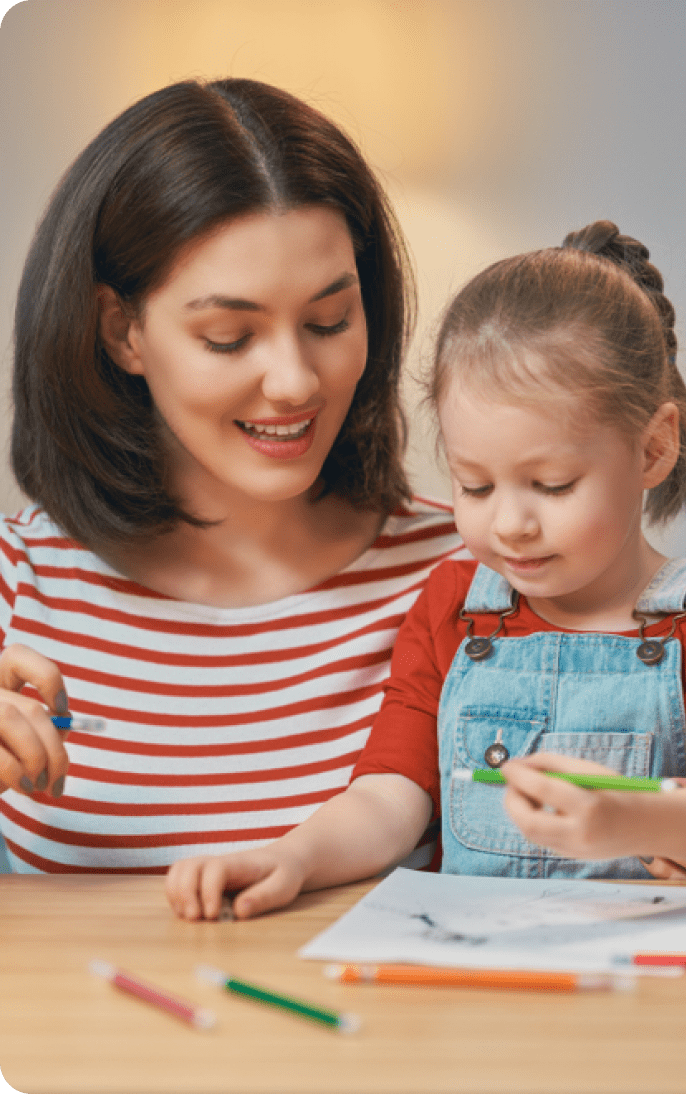






Discipline or Control? How Not to Overdo It

Every parent wants their child to grow up responsible and self-reliant. In practice, though, finding the balance between discipline and excessive control isn’t always easy.
In this article, we’ll look at how parents can hold boundaries without turning into a warden, and help their child build genuine, internal responsibility.
When Discipline Turns Into Control
“I have to control everything, or she won’t do anything” — this is a phrase parents often say. It can feel like the moment you loosen your grip, the whole routine falls apart: homework stops getting done, the teenager stops coming home on time.
A few things are worth keeping in mind:
- Kids aged 7–11 are still building the skill of self-control
- Teens aged 12–17 are going through a stage of separation and naturally push back against outside pressure
- Too many demands can create learned helplessness: “Why bother trying if Mom’s going to check everything anyway?”
Excessive control can produce fast results, but it doesn’t teach a child to manage things on their own. Gradually easing off control and handing over responsibility step-by-step tends to work much better long-term.
How to Hand Responsibility Over to Your Child
Responsibility is a skill that develops over time. Don’t expect your child to suddenly manage homework, chores, and daily tasks all on their own. But you can create the conditions for them to learn this gradually, one step at a time.
One task at a time
If a parent has been controlling everything the child does, a sudden “Now you’re on your own” will create chaos and pushback.
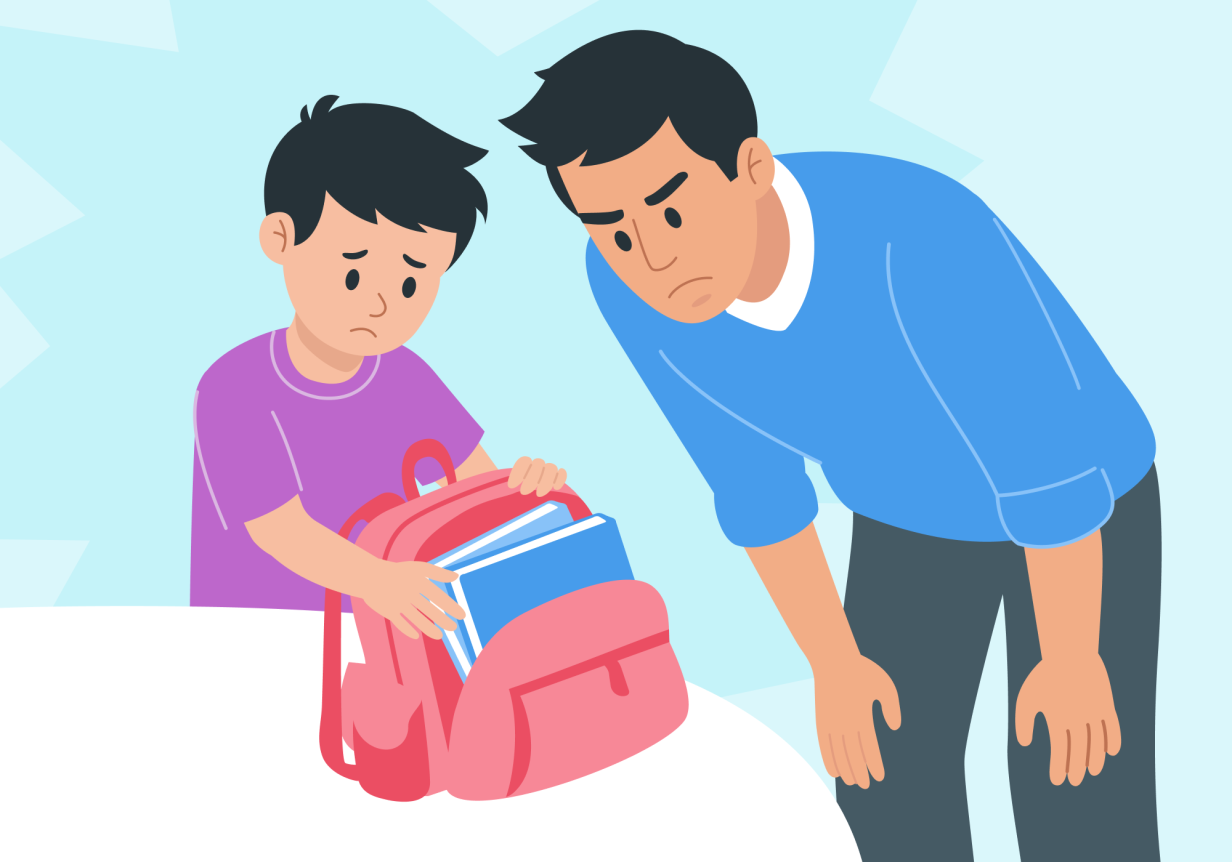
Start with one specific thing — packing their own backpack, or remembering to charge their phone. Once you see they’re handling it consistently, add the next task.
Give choices wherever you can
A choice doesn’t remove the rule, but it makes it feel more manageable:
- “Do you want to do homework right after school, or after 30 minutes of downtime?”
- “Are you tidying up this morning or this evening?”
When a child has options, control stops feeling like pressure and starts feeling like a joint decision.
“Invisible control” instead of direct pressure
For younger kids, visual reminders work well — checklists, magnetic planners, timers.
For teens, agreements and clearly stated consequences work better:
- “If you’re going out, text me where you are and when you plan to be back.”
- “If you’re late, the next outing will be shorter.”
Control is still there — it’s just not in-your-face.
Praise them
Responsibility takes hold faster when a child hears: “You remembered on your own — I can see you’re growing up,” instead of “Finally, you did what I told you.”
Praise recognizes the effort and reinforces internal motivation.
Discuss consequences ahead of time
For a rule to actually work, a child needs to understand the natural outcome of their actions — not just the punishment.
For example:
- “If you don’t charge your phone, it’ll be harder to stay in touch tomorrow.”
- “If you don’t pack your bag, you might forget your homework and get a note from the teacher.”
This teaches kids to see cause and effect, and to plan their behavior accordingly.
Mistakes Are Part of Learning
Mistakes simply mean the skill is still developing. The adult’s job isn’t to scold, but to help the child think it through: “What got in the way today? What would help tomorrow go better?” Self-reflection is a core piece of building responsibility.
Проверьте электронный ящик