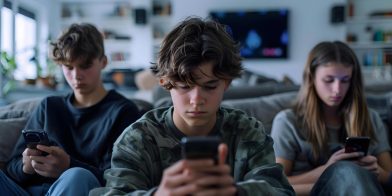















Today’s children are growing up in a world full of notifications, busy schedules, and constant stimulation. While technology often contributes to that distraction, the right mindfulness apps for kids can turn those same screens into tools that build resilience, improve focus, and support mental health.
Whether your child struggles with anxiety, has trouble winding down before sleep, or simply needs help processing everyday feelings, these carefully designed apps can introduce calming routines through stories, games, guided meditations, and breathing exercises.
Key Takeaways
- Mindfulness apps help children build breathing, relaxation, emotional awareness, and focus through engaging, age-appropriate activities.
- The best apps for kids combine guided meditations, games, and stories to teach lasting coping skills.
- Different apps support different needs, including anxiety, sleep, focus, and emotional regulation.
- Mindfulness is most effective when paired with healthy screen habits, consistent routines, and parental support.
- Offline mindfulness activities help children apply these skills in everyday life.
Contents:
What Are Mindfulness Apps for Kids?
Mindfulness is the practice of paying attention to the present moment with openness and curiosity. It teaches children to notice their thoughts, feelings, and surroundings without immediately reacting, helping them feel calmer and more in control.
Mindfulness apps teach these skills through games, stories, guided meditations, breathing exercises, and other calming activities. Designed for different ages, they encourage children to slow down, build healthy coping habits, and get better at managing stress in short, engaging sessions.
How Mindfulness Apps Work
Most meditation apps use short daily activities to build healthy habits. Children might listen to guided meditations, practice deep breathing, or enjoy calming music and sleep stories while learning to notice their thoughts and feelings as they arise.
Rather than trying to eliminate difficult emotions, these apps teach children to pause, respond thoughtfully, and develop greater self-awareness and healthier ways to manage negative thoughts, all in sessions that typically take less than 10 minutes.
Do Mindfulness Apps Actually Help Children
Research suggests that mindfulness apps can have a major impact. Mindfulness meditation has been shown to improve attention and emotional regulation or self-regulation. It can also reduce stress and support better overall mental health in school-aged children.
What Kids Can Learn From Mindfulness Apps
While all skills take time to develop, even a few minutes of consistent practice with mindfulness apps can make it easier for children to pause, think, and respond thoughtfully instead of reacting on impulse.
Some lessons they can teach include:
- Naming difficult emotions
- Practicing deep breaths during stressful moments
- Building self-control
- Strengthening self-esteem
- Developing emotional intelligence
- Learning healthier responses to negative thoughts
- Finding calm when they feel anxious
They can even help improve focus in the classroom. Short guided meditations and attention exercises teach children to recognize when their minds wander and gently refocus, supporting better concentration during lessons and homework.
The biggest benefit, however, comes from consistency. Five or ten minutes of daily practice often produces better results than occasional longer sessions.
As a parent, remember that these apps are supportive tools, not treatments for clinical anxiety or other mental health conditions. If your child is experiencing significant emotional challenges, you should always have them evaluated by a healthcare professional.
What Mindfulness Apps Cannot Do
Even the best mindfulness apps have limits. They can’t replace professional therapy, meaningful parent-child conversations, healthy sleep, physical activity, or time outdoors.
Kids still need caring adults to help them process difficult feelings and model healthy coping skills. Mindful activities work best as one part of a balanced, supportive daily routine.
Read also: Coping Skills for Kids: How Parents Can Help Kids Manage Stress and Emotions.
8 Best Mindfulness Apps for Kids to Consider
There are many mindfulness apps designed specifically for children, each focusing on different needs—from sleep and relaxation to emotional regulation and focus. Below is a quick overview of some of the most popular options parents may consider.
1. Smiling Mind
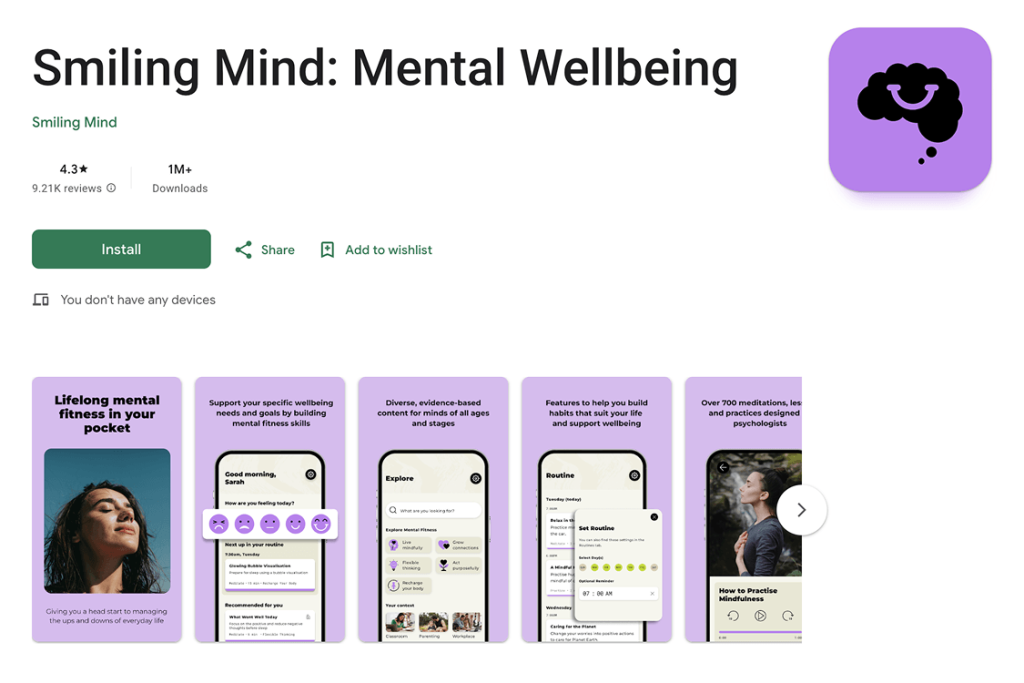
Smiling Mind App
- Best for: Everyday mindfulness and emotional wellbeing
- Age Groups: 3+
One of the most respected free mindfulness apps, Smiling Mind, was developed by psychologists and educators. The app offers structured programs for different age groups, including preschoolers, elementary students, teens, parents, and teachers.
Smiling Mind offers guided meditations, breathing lessons, classroom activities, and short daily practices. Because content grows with children, Smiling Mind remains useful for many years instead of being quickly outgrown.
Parents like it because it:
- Mostly free
- An excellent evidence-based program
- Has activities for home and school
- Has a strong focus on building lifelong habits
2. Headspace for Kids
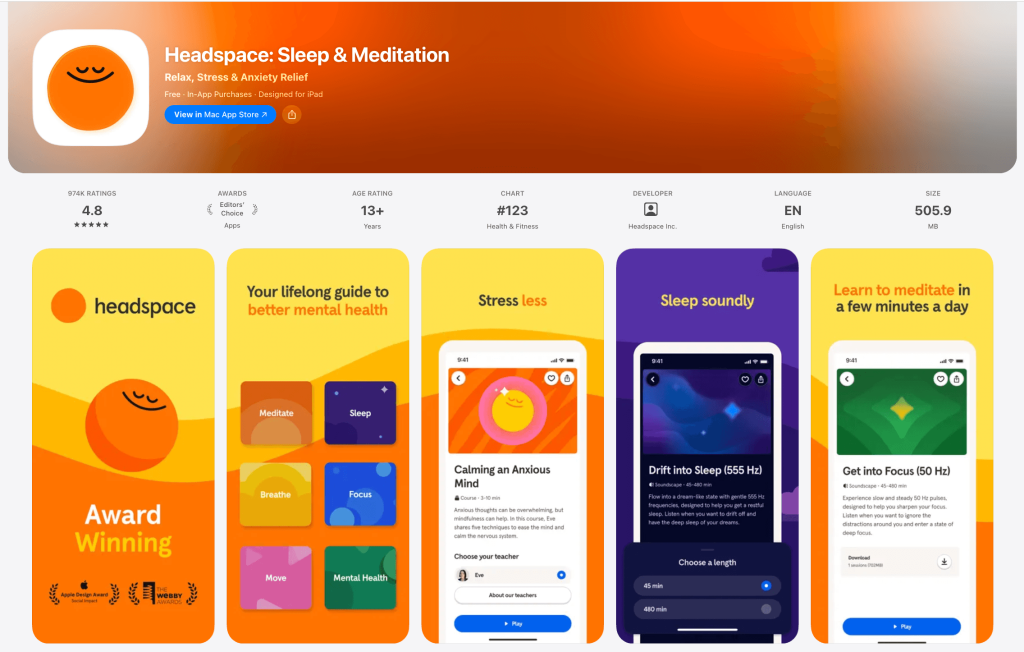
Headspace for Kids App
- Best for: Anxiety and everyday stress
- Age Groups: 5+
One of the leading meditation apps for both children and adults, Headspace has a kid-friendly section that offers age-specific guided meditations, breathing exercises, calming animations, and short lessons that help young kids understand emotions in simple language.
The app also offers sleep meditations and exercises designed to help children relax after busy days.
It’s loved by parents for its:
- High-quality audio
- Excellent beginner lessons
- Family-friendly subscription
3. Calm
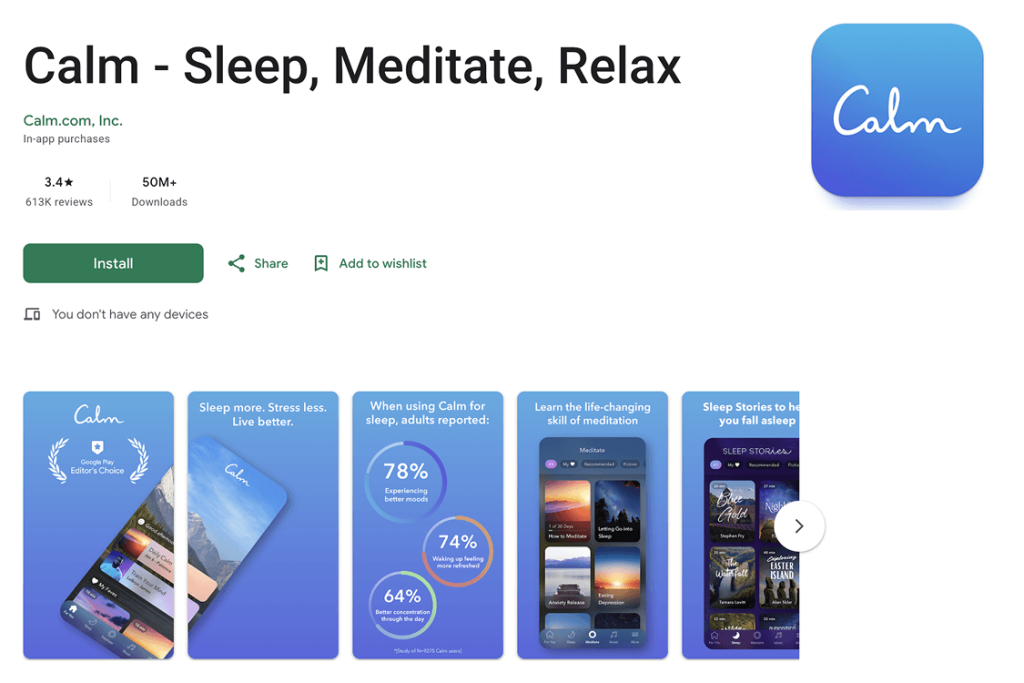
Calm App
- Best for: Sleep issues
- Age Groups: 4+
Few apps focus on sleep as well as Calm. It features an extensive library of sleep stories, relaxing music, sleep meditations, breathing exercises, and guided meditations for both children and adults.
Parents like it for its:
- Outstanding bedtime stories
- Beautiful nature sounds
- Daily meditation options
- Strong relaxation content
4. Breathe, Think, Do with Sesame
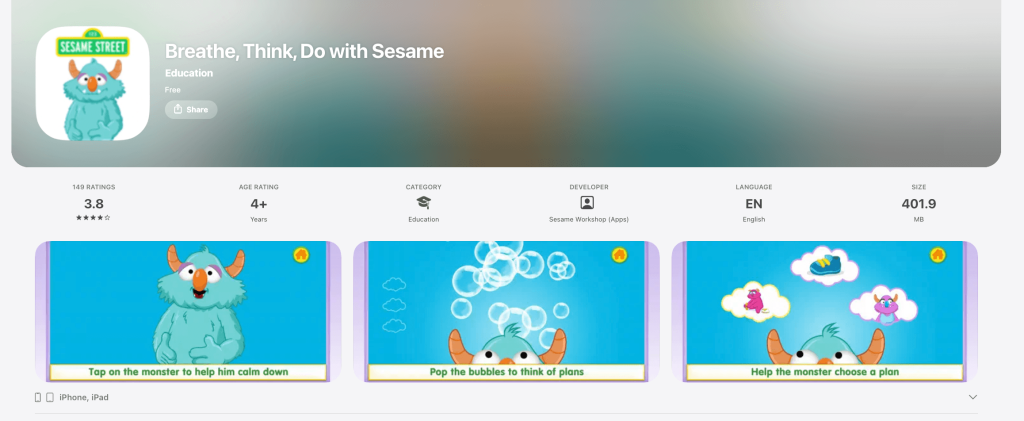
Breathe, Think, Do with Sesame App
- Best for: Big emotions and problem-solving
- Age Groups: 2–5
Featuring familiar Sesame Street characters, this free app helps younger children work through everyday frustrations using simple breathing exercises and guided decision-making. Children help a monster character pause, take deep breaths, think through a problem, and choose a solution.
If you’re introducing mindfulness to very young kids, this is an excellent starting point because the activities are short, interactive, and easy to understand, with practical strategies.
Also, it:
- Is completely free
- Features trusted Sesame Street characters
- Teaches problem-solving alongside breathing skills
5. Moshi
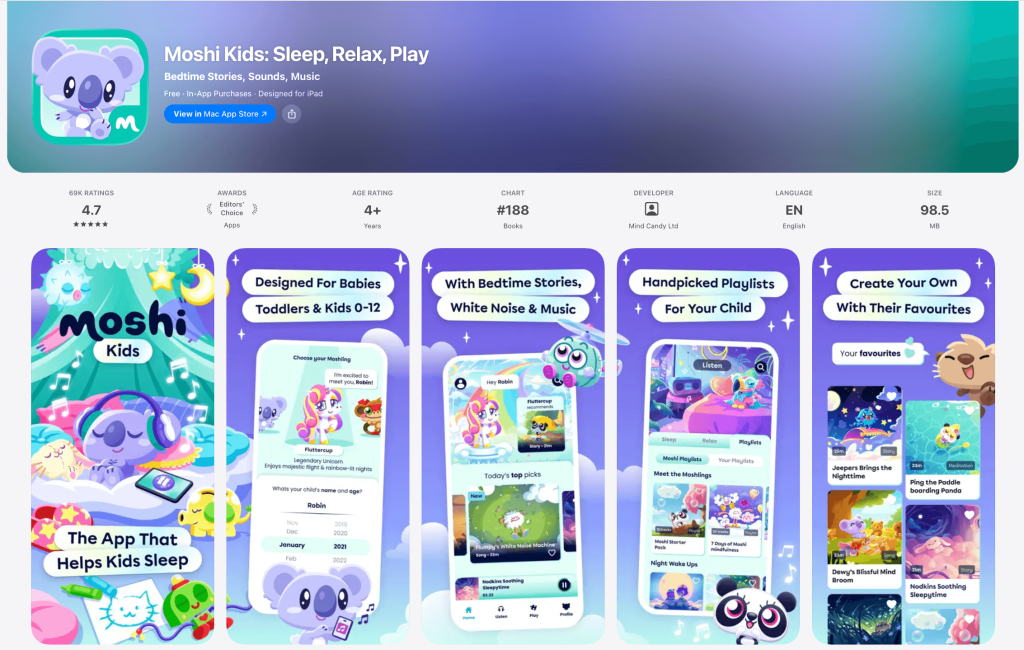
Moshi App
- Best for: Bedtime and relaxation
- Age Groups: 4–10
If your child struggles with sleep issues, Moshi is worth exploring. The app includes calming sleep stories, soothing music, gentle guided meditations, and relaxing soundscapes designed to help children wind down before bed.
It has a/an:
- Extensive library of sleep stories
- Relaxing narration and calming sounds
- New content added regularly
6. Positive Penguins
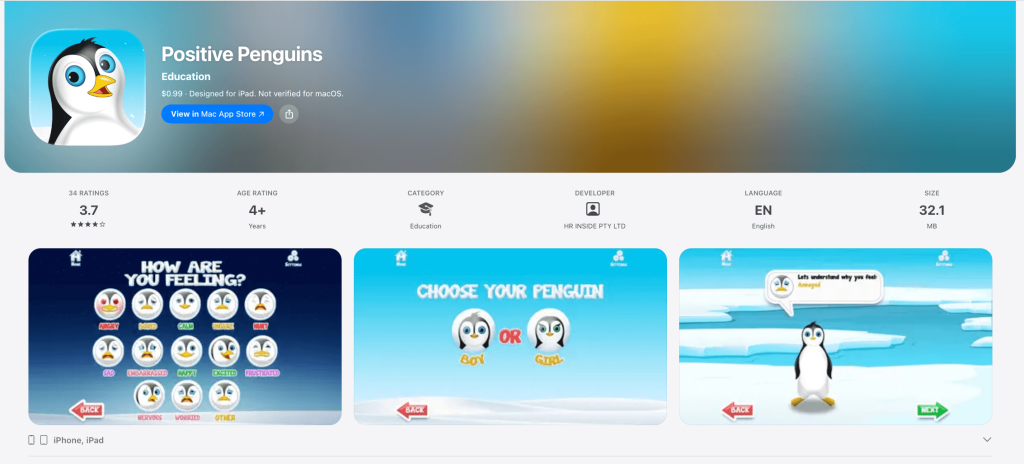
Positive Penguins App
- Best for: Anxiety and managing negative thoughts
- Age Groups: 7+
Positive Penguins focuses on helping children recognize negative thoughts and replace them with healthier patterns of thinking. Through playful activities, the app teaches cognitive behavioral techniques with four positive penguins that can help children understand why they’re feeling anxious and choose more balanced responses.
Parents like it because it:
- Introduces cognitive behavioral therapy (CBT) concepts in a child-friendly way
- Helps young people challenge their negative thoughts
- Encourages resilience and positive thinking
- Has an engaging, game-like format
7. Super Stretch Yoga
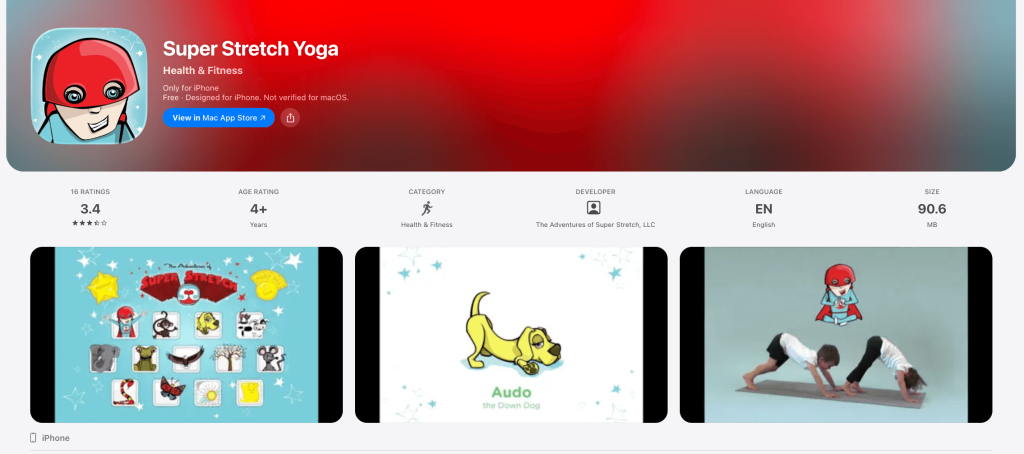
Super Stretch Yoga App
- Best for: Movement and mindfulness
- Age Groups: 3–8
Some children find it easier to practice mindfulness while moving. Super Stretch Yoga combines breathing with fun stories and simple yoga poses, making it especially appealing for energetic children who have difficulty sitting still during traditional meditation.
The combination of movement and relaxation can improve focus, body awareness, and self-confidence while helping children relax after active days.
Parents love that it:
- Encourages physical activity alongside mindful moments
- Has easy-to-follow yoga poses for beginners
- Is great for energetic children
- Makes relaxation feel fun instead of like a chore
Related: Yoga for Kids: Best Poses, Tips and Master Classes.
8. Three Good Things: A Happiness Journal
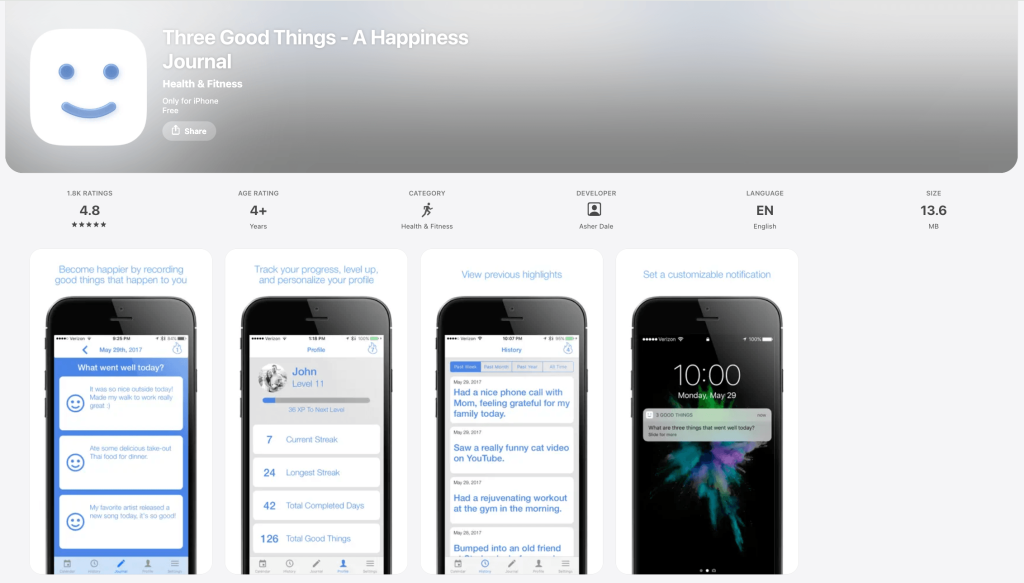
Three Good Things: A Happiness Journal App
- Best for: Gratitude and positive thinking
- Age: 8+
This simple journaling app encourages older children, teens, and even young adults to reflect on three positive moments from each day. Building a gratitude habit can improve self-awareness, strengthen optimism, and help children notice positive experiences alongside life’s challenges.
Although it isn’t a traditional meditation app, it complements meditation and mindfulness by encouraging reflection and emotional balance.
Parents like that it:
- Promotes gratitude and positive reflection
- Encourages healthy journaling habits
- Takes just a few minutes each day
- Supports emotional wellbeing and optimism
Quick Overview: Mindfulness Apps for Kids
To help parents quickly compare different options, here is a structured overview of the most popular mindfulness apps for children and what each one offers:
| App | Best for | Age | What it includes | Price | Platforms |
| Smiling Mind | Everyday mindfulness & emotional wellbeing | 3+ | Guided meditations, breathing exercises, structured programs for kids, teens, parents, teachers | Free | iOS, Android, Web |
| Headspace for Kids | Anxiety & daily stress | 5+ | Age-based meditations, breathing exercises, sleep content, calming animations | Paid (subscription) | iOS, Android |
| Calm | Sleep & relaxation | 4+ | Sleep stories, meditations, breathing exercises, music, relaxation content | Paid (free trial available) | iOS, Android, Web |
| Breathe, Think, Do with Sesame | Early emotional skills | 2–5 | Interactive breathing, problem-solving games, Sesame Street characters | Free | iOS, Android |
| Moshi | Bedtime routines & sleep | 4–10 | Sleep stories, music, meditations, soundscapes | Paid (subscription) | iOS, Android |
| Positive Penguins | Anxiety & negative thinking | 7+ | CBT-based activities, thought reframing, gamified learning | Paid | iOS, Android |
| Super Stretch Yoga | Movement & mindfulness | 3–8 | Yoga stories, breathing exercises, movement-based mindfulness | Free / Freemium | iOS, Android |
| Three Good Things | Gratitude & reflection | 8+ | Daily journaling, gratitude prompts, emotional reflection tools | Free / Freemium | iOS, Android |
Mindfulness Starts With Balance: How Findmykids Supports Healthy Digital Habits
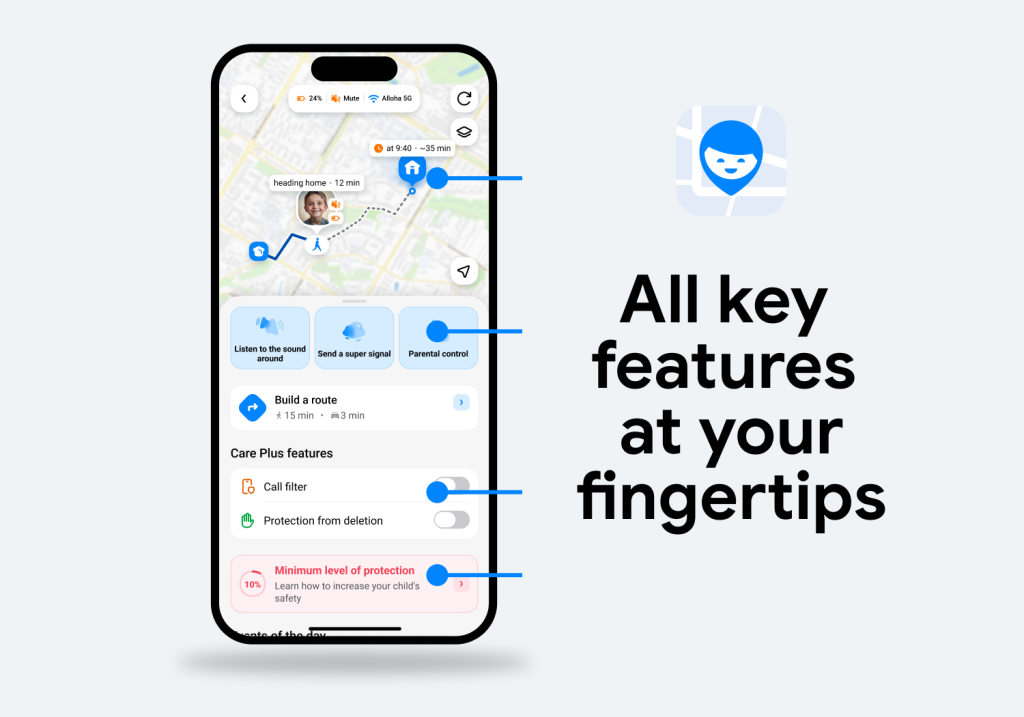
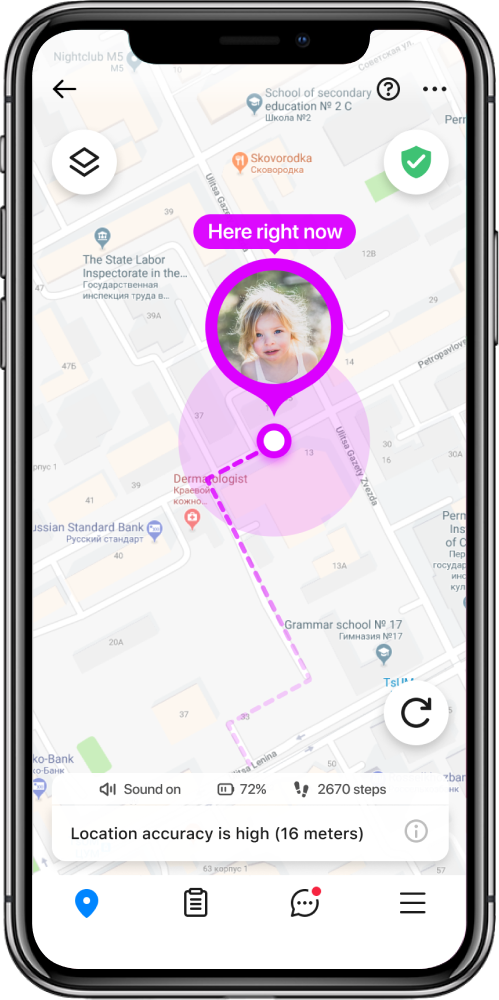
Findmykids app
If your child spends hours switching between games, videos, and social media before opening a mindfulness app, it may be harder for them to settle into a calm, focused state. That’s where Findmykids can help.
It has features like app usage reports, app blocking, and customizable routines that help create healthier technology habits so mindfulness becomes an intentional activity instead of just another screen. With a premium plan, you can also temporarily block distracting apps during homework or bedtime, helping children stay focused on healthier routines.
Connect Mindfulness With Screen Time Awareness
Mindfulness isn’t just about what happens during a five-minute meditation session. You need to create space for calm throughout the day.
Reviewing screen time habits can help you identify when your child may benefit from taking a break, practicing breathing, or spending time away from screens altogether. You can use Findmykids to understand how your child spends time on their device, support consistent after-school routines, and reduce unnecessary digital distractions.
Support Better Bedtime and After-School Routines
Many families find success by pairing a short mindfulness session with their existing routines. For example, you might encourage your child to listen to sleep meditations before bed or complete a brief breathing exercise after school before homework begins.
To make these routines more effective, Findmykids also allows parents to temporarily block distracting games and social media apps during key moments of the day. This helps reduce constant switching between entertainment apps and gives children a clearer separation between “active screen time” and calmer routines such as mindfulness, homework, or bedtime preparation.
Use Location Awareness to Build Emotional Safety
Mindfulness isn’t only about screen habits—it’s also about feeling safe and grounded in real life.
With real-time location tracking, parents can stay aware of where their child is during school commutes, after-school activities, or free time outdoors. This reduces background anxiety for families and creates more space for calm, focused moments like mindfulness or relaxation.
For families looking to bring more balance into their child’s digital life, tools like Findmykids can help make everyday routines more structured, predictable, and easier to manage. Try it for free right now!
How to Choose the Right Mindfulness App for Your Child
For younger children, choose colorful, interactive experiences with short activities. Older kids ages 8 and above, may enjoy longer guided meditations, journaling, or more structured mindfulness meditation programs.
You should also consider whether your child needs support with anxiety, focus, sleep, or big emotions, as different apps specialize in different areas.
Beyond Apps: Mindfulness Activities You Can Try Together
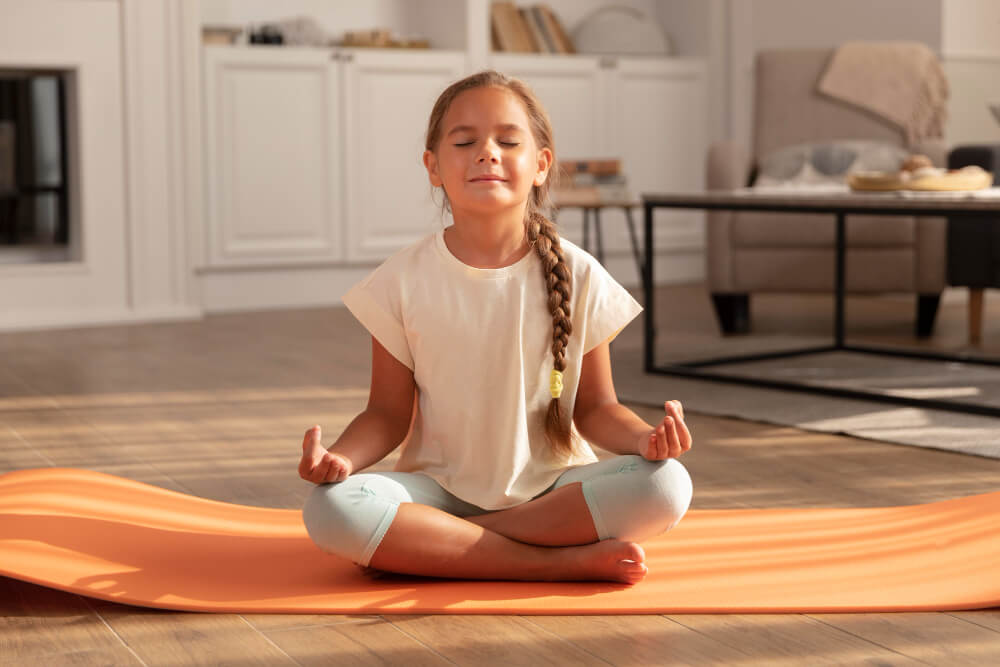
Technology can introduce mindfulness, but some of the most meaningful moments happen away from a screen. Try taking a mindful nature walk, practicing belly breathing together, keeping a gratitude journal, or spending a few quiet minutes noticing sounds and sensations around you.
Looking for more ideas? Explore these simple mindfulness activities for families!
Helping Your Child Build Calm That Lasts
The best mindfulness apps for kids don’t promise perfect behavior or eliminate every stressful moment. Instead, they give your child simple tools to pause, breathe, and respond with greater confidence.
Combined with healthy routines, balanced screen time, and your support, these habits can strengthen emotional wellbeing long after the screen is turned off.
FAQs
What are the best mindfulness apps for kids?
Top choices include Smiling Mind, Headspace for Kids, Calm, Moshi, Breathe, Think, Do with Sesame, Positive Penguins, and Super Stretch Yoga.
Are mindfulness apps safe for children?
Yes, reputable child-friendly apps are generally safe when used with parental guidance and age-appropriate content. They work best as one part of a balanced routine rather than replacing offline activities.
Can mindfulness apps help kids with anxiety?
They can help children learn calming techniques like breathing, relaxation, and emotional awareness that may help reduce anxiety. However, apps should not replace professional care if your child has persistent or severe anxiety.
At what age can kids start using mindfulness apps?
Some apps for kids are designed for children as young as 2 or 3 years old, while others are better suited to school-age children, teens, or young adults.
Should kids use mindfulness apps before bed?
Yes. Apps that include sleep stories, calming music, or guided meditations can become part of a relaxing bedtime routine and may help children settle more easily before sleep.
Sources & References
- What is Mindfulness?, Mindful, 2025
- Mindfulness Meditation: Impact on Attentional Control and Emotion Dysregulation, Archives of Clinical Neuropsychology, 2021
- The Benefits of Mindfulness for Children, The Child Mind Institute, 2024
- Making Time for Mindfulness, Harvard Graduate School of Education, 2019
- Mindfulness-based school interventions: A systematic review of outcome evidence quality by study design, Mindfulness (NY), 2022
Cover image: Freepik / magnific.com
Проверьте электронный ящик