















School life: bullying, conflicts

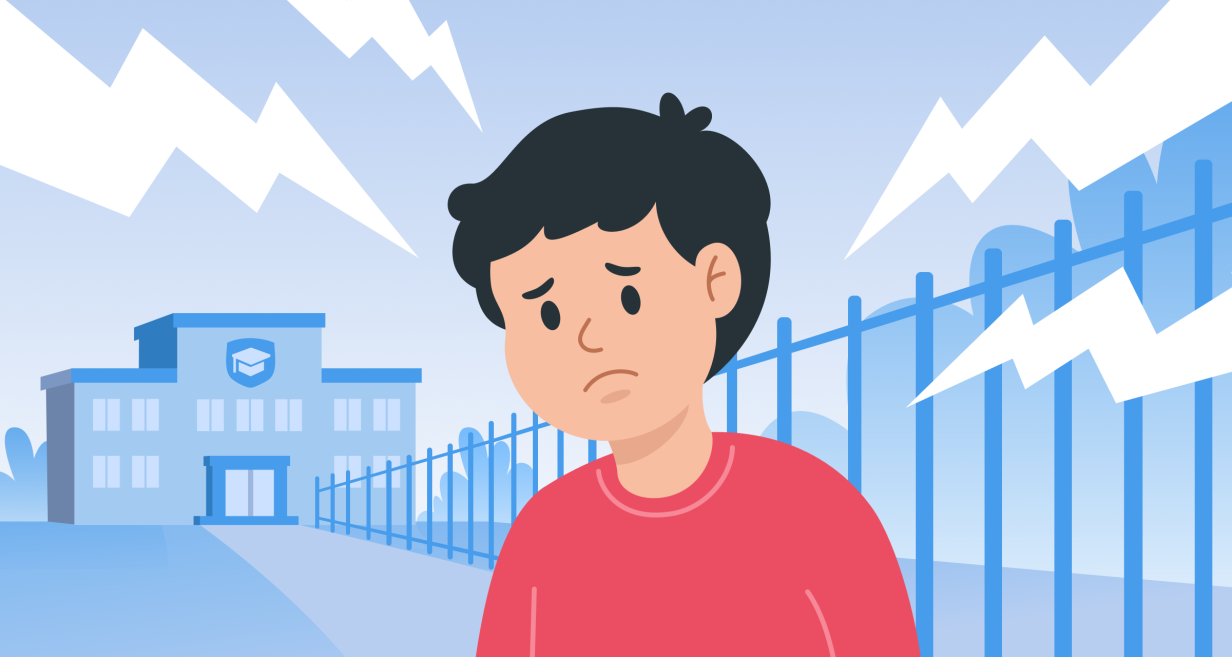
How to talk to your child about it, what to watch for, and when to step in
Children spend most of their lives at school, where they learn to make friends, socialize, and navigate difficult situations. Sometimes, children face problems at school that only adults can resolve: these include bullying and serious conflicts.
Conflicts and bullying: how to tell the difference
Minor school conflicts are common. Through them, children learn to stand up for themselves and their boundaries. Bullying is different. It is the systematic harassment of a single child that repeats itself over and over. It does not go away on its own, and the child cannot handle it alone.
Types of bullying
Physical: hitting, damaging belongings, unwanted touching;
Verbal: insults, threats, jokes about appearance, background, or religion;
Social: exclusion, isolation, gossip, false rumors.
How to tell if a child is having problems at school
Children might not talk about their feelings directly, but their body language and behavior often speak for them. Here’s what to look for:
Reluctance to go to school. Regular tardiness, complaints about feeling sick, and requests to stay home, or refusing to go on class trips, especially if this wasn’t a pattern before.
Irritability, fatigue, and declining grades. A child who is struggling often takes it out on loved ones and loses interest in schoolwork and hobbies, not because they’ve become lazier, but because all their energy is being drained by something else.
Requests for money and a reluctance to explain why. Bullying is often accompanied by extortion. If a child asks for money more and more often but avoids giving explanations — that’s a red flag.
Refusal to go to certain places. The route to school, the gym, the playground at school — a child may avoid places where they feel vulnerable, without explaining why.
Sleep disturbances lasting several weeks. They can’t fall asleep, they wake up at night, or they have trouble getting up in the morning. If this has been going on for several days or weeks, it’s worth talking about.
Bruises, cuts, damaged belongings. Kids fall and get into fights — that’s normal. What should raise a red flag is consistency: marks keep appearing, and the child won’t or can’t explain where they came from.
Each of these signs on its own doesn’t necessarily mean anything. But if several of these signs appear at once, you need to keep a close eye on the child and, perhaps, talk to them.
How to start the conversation
If something seems off, don’t wait for the child to come to you. Choose a calm moment, not right after school and not on the go. Start with an observation: “I’ve noticed that you’ve been coming home tired lately. I want to know if everything is okay with you.” This gives the child space to open up.
What to do if the child denies there’s a problem
Sometimes a child says “everything’s fine” even when it’s obvious that’s not the case. They aren’t necessarily lying: perhaps they’re afraid things will get worse, they feel ashamed, or they simply don’t know how to explain it. In this situation, don’t pressure them or try to force an admission. Instead, let them know you’re there for them and aren’t in a hurry: “Okay, I hear you. When you want to talk — I’m here.” And keep an eye on things.
What to do if it is bullying after all
First and foremost: relieve the child of any sense of guilt. They need to know that it’s not their fault and that this could have happened to anyone. Tell them directly: “I’m glad you told me. I believe you. It’s not your fault. I’ll help.”
Talk to your child. Show them that what’s happening isn’t normal: “This shouldn’t be happening, and we’re going to fix it.” Help them develop confident behavior: a straight back, head held high, a calm gaze. Not responding to provocation is also a stance. Don’t start a fight first. Document everything: screenshots, photos, dates.
Talk to the school. Go to their teacher with specific facts about what happened, when, and who was there. Stay calm and focused. Agree on what steps will be taken and by when. If nothing changes, go to the principal.
If the school doesn’t act, escalate — to the school district, a local education authority, or if necessary, law enforcement. Changing schools or classes is a last resort, and it’s worth knowing it doesn’t automatically solve the problem. The same dynamics can follow a child to a new environment.
Проверьте электронный ящик