
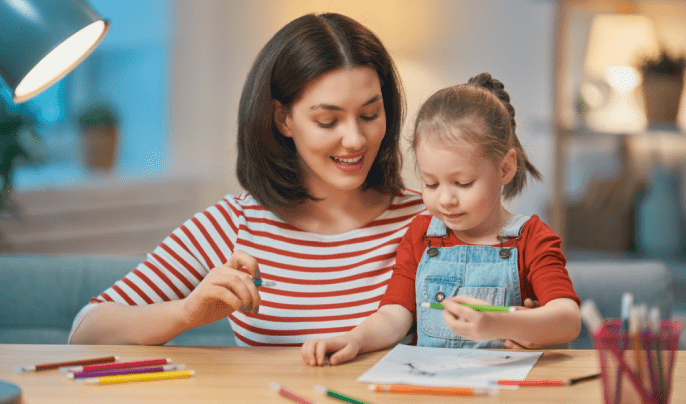





What Should You Teach a Child in Today’s World?

You watch your child do homework and wonder: will they ever need sentence diagramming or reciting a poem with feeling again? Your doubts are understandable. A neural network can solve almost any math problem in a couple of seconds, and it is no longer obvious what from the school curriculum will matter in the future. Let’s figure it out.
STEM brains and humanities brains, hard skills and soft skills
The “what matters more, exact knowledge or people skills” debate is a bit like arguing over what matters more in a sandwich: the bread or the filling.
In 2025, the World Economic Forum surveyed large employers around the world about which skills their workforce will need by 2030. Demand is growing fastest for technical skills: working with AI and data, cybersecurity, digital literacy. But right next to them on the list of core skills are very different ones: adapting to change, leading a team, influencing people, coming up with new ideas, listening and understanding others.
🧠 The share of companies that name leadership and social influence as a core skill rose by 22 percentage points compared with the previous report two years earlier.
💡 In other words, employers aren’t looking for a “technical genius” or a “gifted humanist”. They want a person who can do both.
The basics
These are the skills that will matter in ten and in twenty years.
🧮 Reading and math. Economists Eric Hanushek and Ludger Woessmann compared the economies of different countries and concluded that countries grow faster when their students do better on tests of basic skills, including math and reading. What counts is not the years spent at a desk but what a person has actually learned.
📚 Reading for pleasure is more useful than it seems.
UCL researchers Alice Sullivan and Matt Brown followed about 6,000 children from the British Cohort Study, all born in 1970. Those who read for pleasure made more progress between ages 10 and 16 in vocabulary, spelling and even math. The reading habit mattered more for their results than the parents’ level of education.
🤔 Knowledge is what you think with. Psychologist Daniel Willingham, whose work is widely cited in the US, reviewed a large body of research and concluded that critical thinking doesn’t work without knowledge. “It’s all on the internet” doesn’t save us here: poems, dates and the multiplication table stay in your memory and help you think for the rest of your life.
Soft skills: why they matter and how to grow them
Economists James Heckman and Tim Kautz, in their review “Hard Evidence on Soft Skills”, write that perseverance, self-control and motivation predict success in life. The same World Economic Forum survey, which included about a thousand employers, lists analytical thinking, flexibility, creativity, listening, curiosity and a readiness to keep learning throughout life among the key skills of 2030.
💡 How to build this in your child:
Let them cope on their own. Yes, you’ll have to watch them stare at a simple problem for two hours. You can give a hint, but don’t do the work for them.
Teach them to argue. Ask questions and explain the rules of a discussion: no insults and no getting personal.
Give them team activities. A game, a project or a club where they have to reach agreements will certainly pay off later.
Praise the process. “You struggled with that problem for a long time and still figured it out” works better than “You’re such a genius.”
What about creativity?
🎨 The international PISA test of creative thinking (2022) showed that students who draw, act or write creatively about once a week do better on the tasks than those who do it less often or every day.
About half of the most creative students were not top performers in their regular school subjects.
The takeaway is simple: creativity matters, but it shouldn’t become the main focus. Setting aside time for it about once a week is enough. It will do your child good, and, honestly, you too.
Takeaways
We don’t know what professions will look like in twenty years. But it’s clear what will stay valuable: the ability to learn, think, reach agreements, come up with new things and not give up.
All of this can be developed at home, over an ordinary dinner, and you don’t need to buy any courses. As for sentence diagramming, let that stay on the school’s conscience. Poems, though, are probably worth keeping.
Sources
- World Economic Forum, The Future of Jobs Report 2025, chapter “Skills outlook”
- Hanushek, E. A., Woessmann, L. (2008). The Role of Cognitive Skills in Economic Development. Journal of Economic Literature
- Sullivan, A., Brown, M. (2013). Social inequalities in cognitive scores at age 16: The role of reading. UCL Centre for Longitudinal Studies
- Willingham, D. T. (2007). Critical Thinking: Why Is It So Hard to Teach? American Educator
- Heckman, J. J., Kautz, T. (2012). Hard Evidence on Soft Skills. NBER Working Paper 18121
- OECD, PISA 2022 Results (Volume III): Creative Minds, Creative Schools
Проверьте электронный ящик