














Why your child can’t change settings on their phone


Your child may figure out smartphone settings long before you manage to find the flashlight or calculator yourself — that’s the reality millions of parents live in today. And that’s exactly why our app’s settings are protected from changes made on a child’s device.
The Problem Nobody Mentions in the Instructions
So, you downloaded a parental control app, spent an entire evening setting it up, and agreed on family rules with your child. Amazing job! At least until tomorrow.
Because on forums, in school group chats, and under popular videos, there are hundreds of tutorials explaining how to bypass parental controls, disable location sharing, or delete tracking apps. Kids exchange these tricks the same way they swap slime recipes: partly out of solidarity, and partly because it’s a fun technical challenge.
A Simple Solution
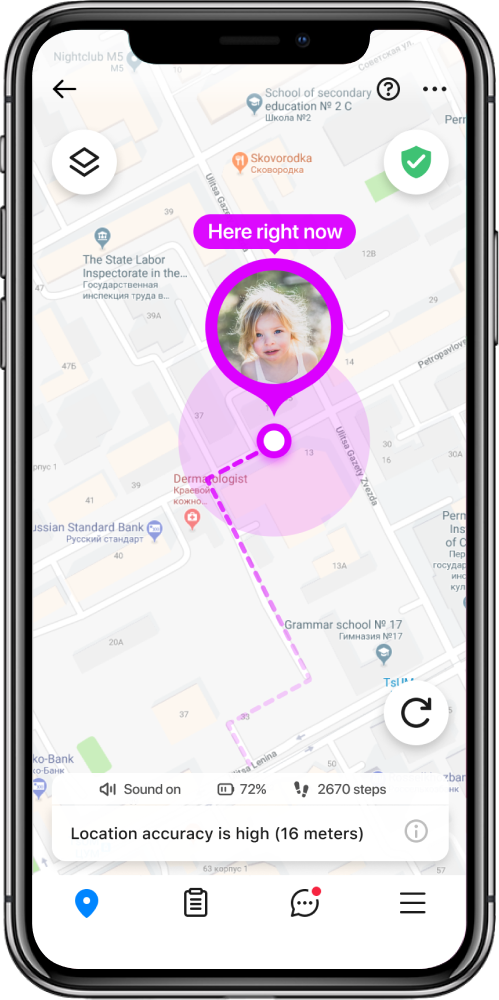
Our app includes a special toggle that blocks children from accessing the app’s settings on their own device.
That means your child can’t:
- change the time zone,
- disable location tracking,
- turn off parental controls,
- remove limits or schedules,
- or uninstall the app.
Those settings simply aren’t available to them.
If you want to access the app settings on your own phone — for example, to adjust permissions or increase screen time limits — you can temporarily disable the protection, make the changes you need, and then turn it back on.
Why It Matters at Every Age
For younger children, protected settings are first and foremost a matter of safety. Accidentally disabling location sharing can have serious consequences, which is why it’s important to make sure key settings stay untouched.
Teenagers are different. When they try to disable controls, they’re often not just testing boundaries — they’re expressing independence.
And honestly? That’s completely normal. Adolescence is exactly the time when people begin learning autonomy.
But autonomy and safety are not the same thing.
Protected settings don’t stop teenagers from growing up. They simply make sure the family rules you agreed on stay real rules — not optional suggestions that can be bypassed in thirty seconds.
What matters most is how you talk about it together.
Control vs. Care: A Very Thin Line
No parent wants to become the person who reads every message their child sends or demands a report about every step they take.
That’s why it’s important to explain this clearly to your child:
protecting settings isn’t about spying on them. It’s about making sure your family agreements stay stable and consistent.
The best rules are the ones that don’t require daily policing — because they simply work.
And instead of spending another evening checking whether location tracking was turned off again, you can spend that time doing something much nicer together.
Проверьте электронный ящик