














Should You Help With Homework — or Step Back?

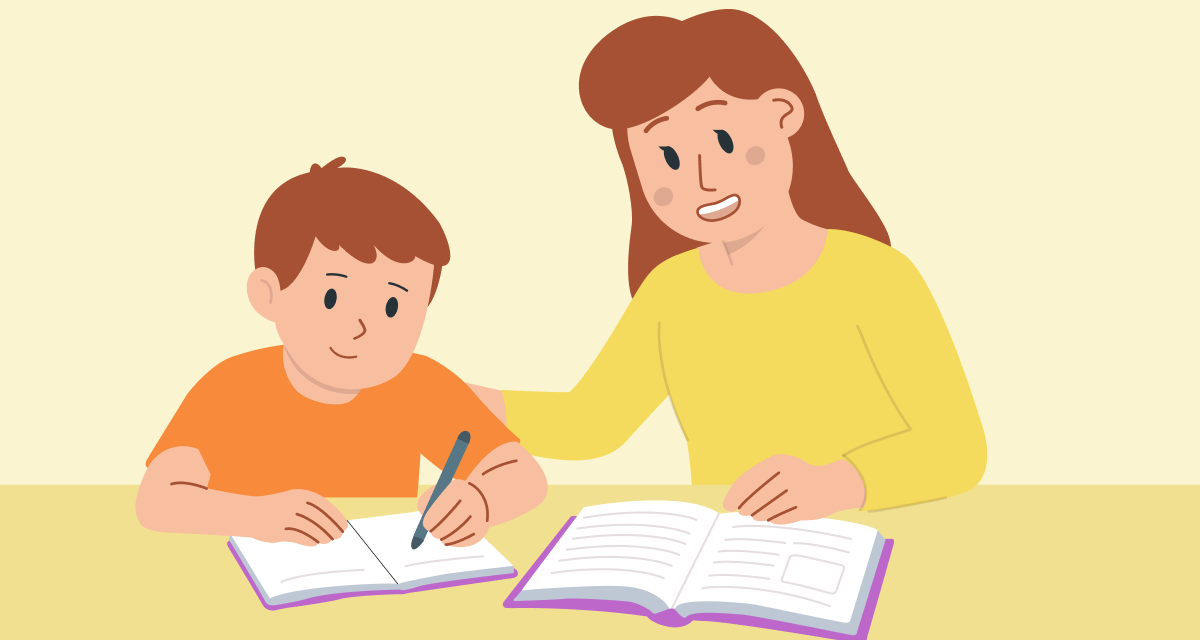
Sometimes we do homework together with our kids. For some, it happens because the child struggles and asks for help. Other parents worry about grades and try to make sure everything goes smoothly. And sometimes, the urge to control schoolwork comes from the parents’ own anxiety.
These situations are familiar to many families. But it’s important to ask: does this kind of help really build a child’s independence, confidence, and ability to handle challenges?
What Research Shows
According to various studies, parental involvement in a child’s school life is generally beneficial: children feel more confident, less anxious, and better able to adapt to academic demands. However, when it comes to homework help, the results are mixed.
A meta-analysis shows that children who often receive help with homework tend to perform worse academically. But it all depends on the type of help. When parents support curiosity and ask guiding questions, such help is useful. Conversely, doing the assignments for the child or being overly controlling can harm both learning and the parent—child relationship.
A meta-analysis is a research method that combines data from multiple independent studies on one topic to draw more reliable conclusions.
Other studies emphasize that the style of help plays a key role. Supporting independence and respecting effort have a positive effect on motivation and confidence. Constant monitoring and overprotection, on the other hand, undermine initiative and prevent responsibility from developing.
Research also shows:
- The effect of parental help depends on the child’s age, family environment, and cultural background. Younger students benefit from clear structure — when adults help them organize their time and explain how to complete tasks. For older children, trust and independence matter more.
- When parents respect their child’s efforts and believe in their abilities, it lowers anxiety and boosts confidence. But when help comes with frustration or parental anxiety, it has the opposite effect — the child becomes afraid of making mistakes and loses interest in learning.
- Reviews show that when a child starts struggling at school, parents often respond with tighter control, but that only reduces motivation and performance, creating a vicious cycle.
Why Doing Homework Together Can Be Harmful
Doing homework side by side is not always helpful. Parents may truly want to support their child, but in practice, it can lead to unintended consequences:
- The parent becomes a “second teacher,” and the child finds it harder to act independently.
- Homework turns into a source of conflict instead of growth.
- When parents complete tasks for the child, they stop practicing skills and lose ownership of learning.
- The child begins to study to meet parental expectations, not for their own curiosity or goals.
- Anxiety increases, especially if every step is criticized or checked.
How to Help With Homework the Right Way
Homework help can be valuable if it supports independence and creates a calm atmosphere. The goal is not to solve tasks for your child, but to help them find their own way.
- Show interest in the process. Ask what your child will start with and how they plan to solve the task. This shows respect for their effort and helps them think more independently.
- Encourage independence. Guide them toward answers, but don’t give them right away. Mistakes are part of learning, and fixing them on their own builds confidence.
- Ask questions instead of giving answers. Use open questions to help your child find the solution themselves. This develops reasoning and analytical thinking.
- Create emotional support. Help your child focus calmly. Praise not only correct answers but also effort, patience, and perseverance.
- Help with organization. Set up a comfortable workspace, teach time management, and remind them to take breaks. This lowers stress and builds planning skills.
Doing homework with your child isn’t always necessary. Parental involvement truly matters, but what counts most is how you help, not how much time you spend together.
Support, trust, and genuine interest do far more good than control and pressure.
References
- The Homework Wars: Exploring Emotions, Behaviours, and Conflicts in Parent-Child Homework Interactions, arXiv, 2025
- The Effect of Homework on Student’s Performance and Mental Health, International Journal of Multidisciplinary Research and Growth Evaluation, 2025
- The Influence of Parental Involvement in Children’s Homework on Academic, Education Journal, 2023
- Should we Help our Children with Homework? A Meta-Analysis Using PISA Data, Psicothema, 2022
- Parental Involvement in Homework and Student Achievement: A Meta-Analysis, Educational Psychology Review, 2022
Проверьте электронный ящик