
















Getting a driver’s license as a teen is an important milestone. It brings more freedom and independence, but it also comes with new responsibilities. According to the Centers for Disease Control and Prevention, drivers ages 16–19 have a higher risk of being involved in a motor vehicle crash than any other age group.
Those first years behind the wheel are especially important when developing safe driving habits—and it’s so much more than just knowing about traffic laws. Teen driving safety also involves limiting distractions, following speed limits, choosing the right passengers, understanding the risks of nighttime driving, and more.
Key Takeaways
- Teen drivers face a higher crash risk because inexperience and developing judgment make it harder to recognize hazards, manage speed, and respond safely to road conditions.
- Distraction, speeding, teen passengers, nighttime driving, alcohol, and fatigue are among the biggest dangers new drivers face.
- Parents can reduce these risks by setting clear rules, modeling safe behavior, limiting passengers, encouraging seat belt use, and preparing teens for breakdowns or collisions.
- Findmykids can help parents review a teen’s driving after a trip by providing Driving Reports with route information, maximum speed, and other trip details.
Contents:
Why Teen Drivers Have a Higher Crash Risk
The main reason teen drivers have a higher risk of car crashes is inexperience. They tend not to recognize hazards or make sound judgments about speed, curves, other vehicles, and weather conditions.
along with inexperience is the fact that a teenager’s brain is not fully developed. This could lead to risk-taking situations, poor attention, and impulsive decisions on the road. According to the Insurance Institute for Highway Safety, teen drivers have crash rates over 4 times those of drivers 20 and older per mile driven.
Although drivers of all age groups can be involved in accidents, teenagers experience a higher crash rate per mile than adult drivers and nearly every other age group. Compared with older drivers, they have had less time to develop the judgment needed to respond to unexpected situations.
The Main Risk Factors for Teen Crashes
There are a few factors that increase a teen’s risk for car accidents that parents should be aware of before handing over the car keys and teaching safe driving habits.
Distracted Driving
It’s no secret that most teens today are glued to their electronic devices, and that doesn’t always change when they get behind the wheel. In fact, the CDC reported that 39% of high school students text or email while driving. Additionally, nearly 6 in 10 teen car accidents were caused by distractions such as texting, listening to the radio station, or distracting passengers.
You can read more about how distracted driving affects teen driving safety in our blog post A Closer Look at Teen Texting While Driving with Real Accident Stories.
Speeding
Teens have a need for speed when they get behind the wheel, but it could put their lives and others on the road in danger. According to studies, 35% of male drivers between ages 15 and 20 were speeding at the time of a fatal crash; meanwhile, 19% of young female drivers were speeding.
Teen Passengers
Having other teenagers in the car, even if they’re in the back seat, can cause distractions and increase the chances of reckless driving. In fact, when there is just one teen passenger, there is a 60% higher chance of a fatal accident. However, when there are only adult passengers in a car with a teen driver, they are 40% less likely to die in a car crash.
Nighttime Driving
Driving at night, due to reduced visibility and unfamiliar surroundings, can increase the risk of car crashes, especially for novice drivers. In fact, 20% of teenage motor vehicle crash deaths occurred between 9 p.m. and midnight. Since nighttime driving can be so dangerous, many states have implemented Graduated Driver Licensing (GDL), which enforces nighttime driving restrictions of either 9 p.m. or 10 p.m. for the first 6 to 12 months of solo driving.
Driving Under the Influence
Even though the legal drinking age is 21 in the United States, almost 33% of teenagers between 12 and 20 years old drink at least one alcoholic beverage. Now, out of the teens who drink, about 5.4% of high school drivers reported driving after drinking at least once a month. This also pertains to driving under the influence of illegal drugs.
Fatigue
Drowsy driving can have profound negative effects on driving, especially on new teen drivers. Studies from the National Sleep Foundation found that nearly 1 in 6 teens drove while tired, mostly because schoolwork and jobs kept them from getting the sleep they needed to feel rested.
Аnd here is where it gets even more concerning: 95% of teens see impaired and distracted driving as more dangerous than drowsy driving, but the reality is that fatigued driving causes 10-25% of car accidents.
15 Teen Driving Safety Rules Every Parent Should Teach

New Africa / magnific.com
Teaching your teen to drive is only one part of the equation. Parents also need to teach them some ground rules about teen driver safety, which means more than simply following traffic laws.
For an even more comprehensive way to teach these driving safety tips, enroll your teen in driver education classes or a driver training program as well.
1. Always Wear a Seat Belt
We’ve been told all of our lives how important it is to wear your seat belt, yet 56% of teen drivers and passengers who died in an accident were not wearing theirs.
Teach your child to put their seat belt on immediately when they get in the car, even before turning the car on. Unfortunately, seat belt use declines among teens, especially when they are passengers.
2. Never Text While Driving
With Bluetooth technology and Apple CarPlay, there is no need to pick up the phone and text while driving. Texting while driving makes up for 25% of all car accidents and kills 11 teenagers every single day. Let them know that answering a text can always wait. It’s not worth their life.
3. Put the Phone Away Before Starting the Car
To avoid distractions from phone notifications, advise your teen to put their phone away before starting the car. This could be in their school bag or a compartment in the car. Simply having it out of reach can decrease distracted driving and keep them safe behind the wheel.
4. Follow Posted Speed Limits
Speed limits are enforced for a reason, but many teens tend to ignore them, which can increase their risk of a car accident. Explain that when they speed up, it decreases the distance between them and the car in front of them, making it more difficult to stop in time and increasing the impact of an accident, especially if you’re in a large vehicle.
5. Never Drive Under the Influence
Nobody should ever get behind the wheel after drinking alcohol, as it impairs your vision, reaction time, and judgment. If your teen has been drinking, let them know that they can always call you for a ride home without getting into a fight about it.
6. Don’t Drive When Extremely Tired
Between schoolwork and part-time jobs, teens often feel they have to get behind the wheel. Discuss how dangerous drowsy driving is and that your teen should recognize when they are too tired to drive safely or cannot stay alert and focus on the road ahead.
7. Limit Passengers Who Are Distracting
Having a passenger who distracts your teen while driving increases the risk of a fatal car accident. Give your teen the confidence to refuse rides to distracting passengers to keep both of them safe.
8. Follow Local Graduated Licensing Rules
Every state in the U.S. enacts graduated licensing rules that cover minimum ages to get a learner’s permit, passenger restrictions, seat belt requirements, texting bans, and zero tolerance for driving under the influence. Check your state’s provisional license and unrestricted license rules and read them over with your teen.
9. Avoid Aggressive Driving
Teaching your teen to be a defensive driver is a great skill, but it’s just as important as teaching them to avoid aggressive driving. Highlight the importance of patience on the road and how it helps drivers stay safe.
10. Keep Both Attention and Eyes on the Road
Distracted driving causes many fatal car accidents among teenagers. That’s why it is so important for drivers to keep both their attention and eyes on the road at all times. Safe teen driving means developing good habits like watching for turn signals and keeping track of where other drivers are in their rearview mirror.
11. Know the Route Before Leaving
Not knowing where you’re going can cause teen drivers to panic behind the wheel and reach for their phones to pull up their GPS. Recommend that your teen set their route guidance before starting the carstarting the car, even if they already know the first part of the journey.
12. Don’t Let Friends Pressure You Into Unsafe Driving
Peer pressure among teen drivers is a real risk factor. Building up the confidence in your teen to tell their friends no when they are pressuring them into unsafe or aggressive driving is an important skill.
13. Keep Emergency Contacts Accessible
In case of an accident, having a list of emergency contacts easily accessible in their phone is important. Set up this list with your teen when they first get their learner’s permit.
14. Know What to Do After a Breakdown or Collision
While every parent hopes their teen never experiences a car breakdown or collision, it’s important to teach them what to do in case one occurs. Tell them who to call, what to say, and how to handle the situation calmly.
15. Tell a Parent if Something Feels Unsafe
Cars can be a bit tricky. Let your teen know that if something doesn’t feel right in the car, they can always come to you. Never ignore lights that come on on the dashboard, and always prioritize safety.
How Parents Can Stay Connected Without Distracting a Teen Driver
Findmykids app
Letting your new teen driver get behind the wheel and drive around town can feel like you’re losing control. You have to put a lot of trust in them to drive safely and be honest about where they are going. But with the Findmykids app, handing over the keys becomes easier.
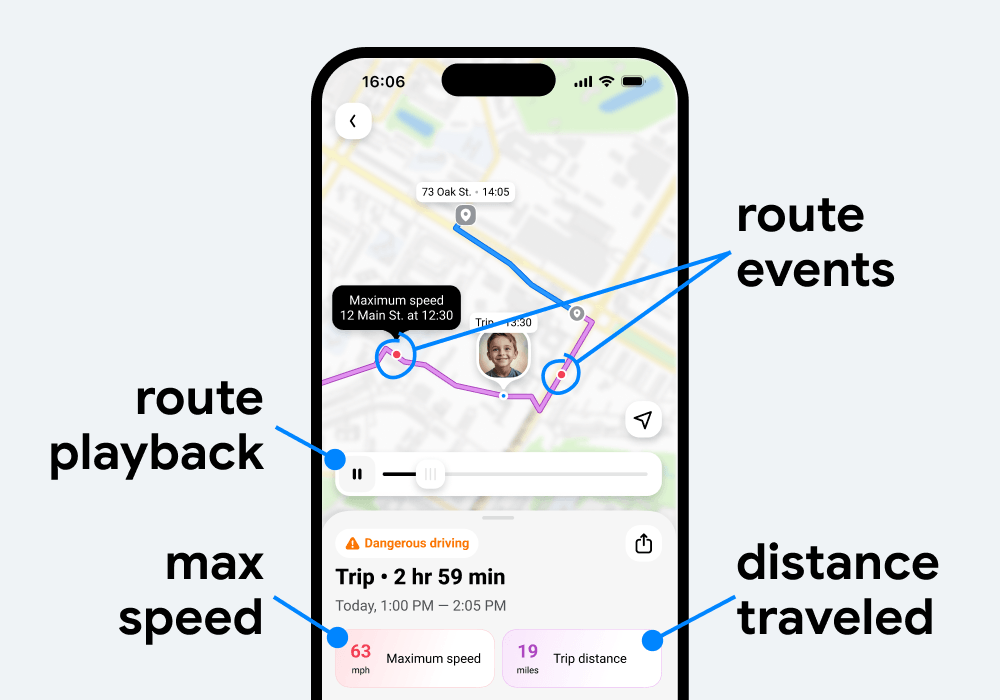
With the Driving Reports feature, parents can get information about their teen’s location, driving safety, and route. The feature includes:
- Route Timeline: See a detailed, chronological route history of their teen’s movements and details about the places they’ve been.
- Interactive Map: Virtually see exactly where your teen’s route took them on an interactive map.
- Route Details: Review details such as the trip duration, maximum speed, and distance.
- Maximum Speed: Knowing the fastest speed your teen reached during a journey can help you judge their driving habits.
- Safety Rating: After a trip, the algorithm takes into account factors such as speed, braking, acceleration, and distance to assign a safety rating.
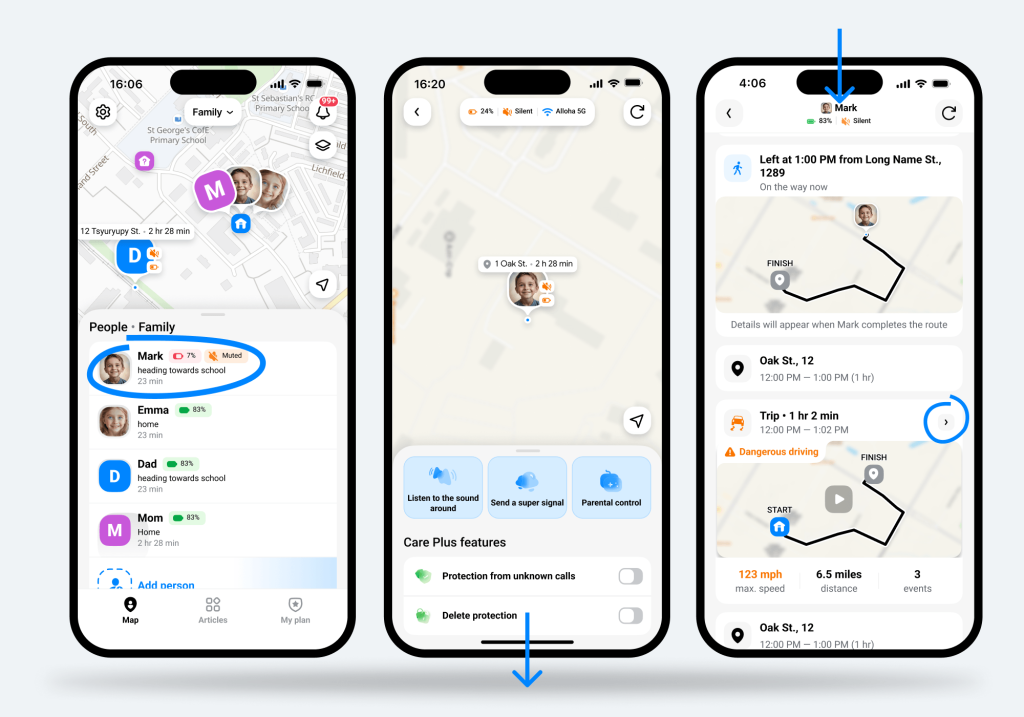
To view a Driving Report:
Findmykids app
- Install Findmykids. Download the Findmykids app on your and your child’s phone and follow the setup instructions to connect the teen’s device to your account.
- Open the Findmykids app. Once your teen’s device is connected, open the app on your phone.
- Select your teen’s profile. Choose the child whose route you want to review.
- Open the route timeline. Scroll down the feed to find the route timeline and recent trips.
- Select a trip. Tap the route card for the journey you want to check.
- Review the trip details. You can see information such as the route, maximum speed, distance, and other details about the journey.
- Review the route on the map. The app can replay the journey on an interactive map, helping you see where the trip took place.
Driving Reports are not the only way parents can stay informed. Findmykids also provides location-based features that can help parents understand a teen’s routine without interrupting them during a trip. Parents can check the child’s current location, review location history, and set up safe zones for places such as home, school, or a friend’s house. Notifications can alert parents when a teen enters or leaves a saved place, while frequently visited locations can provide a clearer picture of their usual routine.
Together, these features give parents useful information about where a teen goes and how they drive, while allowing the teen to stay focused on the road. Parents can review the information after a trip instead of relying on calls or messages during the journey.
Download Findmykids to feel more confident about giving your newly licensed teen the freedom to drive.
What Parents Should Do After a Teen Gets Their License
After your teen passes their driver’s license test and is ready to take on the road, there are a few things that you need to do.
- Establish clear safety rules while driving
- Create a parent-teen driving agreement that outlines expectations and consequences
- Limit teenage passengers and follow graduated licensing regulations
- Encourage “Do Not Disturb While Driving” settings on their phone
- Model responsible driving by following the same rules
- Download Findmykids to see their location and get driver safety reports
Teen Driving Emergency Checklist
Emergencies happen, and being prepared for them makes them much more manageable. Before your teen starts driving on their own, going through this teen driving emergency checklist is a good example of what to have in the family car.
What Should a Teen Keep in the Car?
- Vehicle registration and proof of insurance
- Owner’s manual and roadside-assistance information
- Emergency contact card
- Phone charger
- Flashlight with spare batteries
- Jumper cables
- Spare tire, jack, and lug wrench
- Basic tool kit
- Emergency window breaker and seat belt cutter
- Ice scraper and snow brush
- Warm blanket
What to Do After a Collision?
- Stop, turn on your hazard lights, and stay at the scene unless you need to leave for immediate safety or medical assistance.
- Check for injuries and call emergency services if anyone is hurt.
- Move the car to a safe location if it is drivable.
- Call a parent or trusted adult.
- Exchange contact, driver’s license, insurance, vehicle, and license plate information.
- Photograph the damage, vehicles, road conditions, and surrounding scene.
- Arrange towing if needed, notify the insurer, and seek medical care.
What to Do if the Car Breaks Down?
- Stay calm, turn on the hazard lights, and find a safe place away from traffic.
- Stop the engine and apply the parking brake.
- Call a parent or trusted adult with your location.
- Contact roadside assistance or emergency services.
- Do not stand beside the car or attempt repairs.
- Wait for assistance with the doors locked and keep your phone available.
What to Do if the Teen Feels Unsafe Driving?
- Slow down and avoid sudden movements.
- Pull into a well-lit public place, parking area, or service station.
- Put the car in park and call a parent or trusted adult.
- Wait until weather or other unsafe conditions improve, or ask a parent or trusted adult for help if you are too tired or anxious to continue.
Who to Call in a Bad Situation?
- Parent or guardian
- Trusted adult or relative
- Emergency services
- Police non-emergency line
- Roadside assistance provider
- Auto insurance company
- Towing company
- Family mechanic
Teach Your Teen Safe Driving Habits and Make Sure They’re Followed
Parents can only teach their teens so much about safe driving habits. The rest is up to the teen to follow them. But with modern apps and technology, parents don’t have to give up all control.
Many parents use Findmykids to see whether those safe driving habits are being followed. With Driving Reports, parents can see their teen’s route, safety rating, and more.
If you found this article helpful, make sure to share it with a friend who is also teaching their teen safe driving practices.
FAQs
Why are teen drivers at greater risk of car crashes?
Teens are at greater risk of car crashes because they are inexperienced. They are also more likely to get distracted and text while driving.
What is the biggest safety risk for teen drivers?
The biggest safety risks for teen drivers are lack of driving experience, passenger distractions, and texting while driving.
How can parents help a teen become a safer driver?
Parents can help their teen become a safe driver by practicing safe driving themselves, being a passenger in dangerous situations like at night or in harsh weather conditions, and establishing safety rules.
How can parents keep teenage drivers safe?
Parents who use the Findmykids app keep teen drivers safe because they receive driving reports about maximum speed, route, and an overall safety rating.
How many passengers should a new teen driver have?
Each state determines how many passengers a teen driver can have. Generally, during the first six months of licensing, they can have one non-family passenger under the age of 18. After six months, this can increase to three peer passengers.
Is nighttime driving more dangerous for teenage drivers?
Yes, nighttime driving is more dangerous for teen drivers due to visibility issues and driver inexperience.
Sources & References
- Risk Factors for Teen Drivers, CDC, 2025
- Teenagers, IIHS, 2026
- Factors Contributing to Crashes Among Young Drivers, PubMed Central, 2014
- Transportation Risk Behaviors Among High School Students, CDC, 2020
- Distraction and Teen Crashes: Even Worse Than We Thought, AAA Newsroom, 2015
- The Dangers of Teen Speeding, Children’s Hospital of Philadelphia Research Institute
- Teen Drivers, NSC Injury Facts
- Night Driving Accident Statistics, Children’s Hospital of Philadelphia Research Institute
- Graduated Driver Licensing, PubMed Central, 2014
- Underage Drinking in the United States (ages 12 to 20), National Institute on Alcohol Abuse and Alcoholism, 2025
- Study Results Show Drowsy Driving Begins During Teen Years, National Sleep Foundation, 2023
- Fatigue and Crash Risk, European Commission
- The Facts About Teenagers Texting and Driving, Warren & Griffin Attorneys at Law
- Graduated Driver Licensing, CDC, 2024
Cover image: magnific / magnific.com
Проверьте электронный ящик