







The Longer Teens Stay on Their Phones, the Worse They Sleep

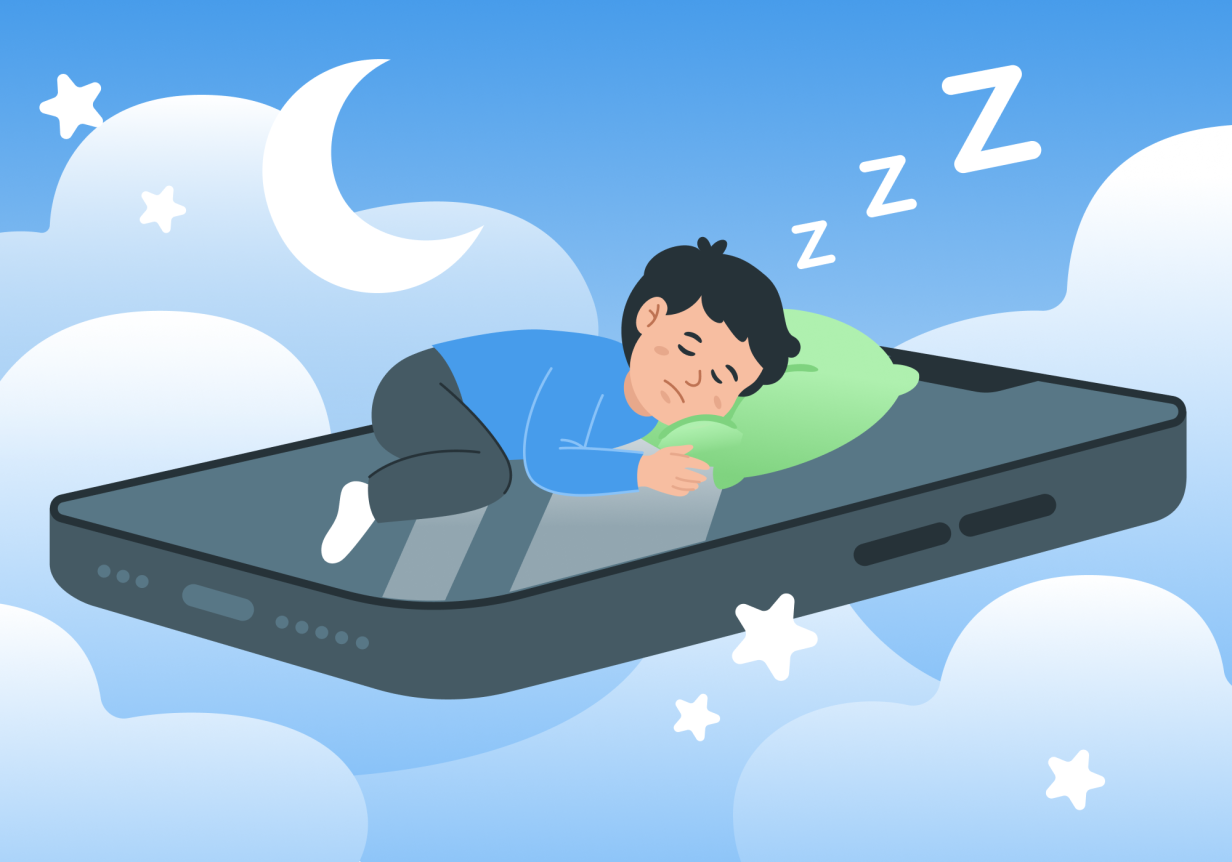
Scientists have found out what happens to teenagers who spend too long on their phones before bed. It’s obvious that their sleep quality gets worse. But, as it turns out, that’s not the worst of it.
The later, the worse
Researchers from Columbia University, Stony Brook University and Seattle Children’s Research Institute followed 425 teenagers, tracking their evening activity and sleep. They found that every extra ten minutes on the phone after 10 p.m. pushes back falling asleep by almost nine minutes and cuts sleep by about four minutes. And the closer to midnight, the stronger the effect.
Another group of scientists followed 230 American teenagers for about 17 days on average. They spent an average of 46 minutes a night on their phones after midnight. On evenings when they spent longer on their phones before bed, they used them even longer at night: every extra 20 minutes before bed meant 8 to 9 extra minutes at night.
It’s a vicious circle: the more phone in the evening, the harder it is to put it down at night.
Why it happens
💡 Three reasons researchers point to:
1. The phone pushes bedtime back: “five more minutes” turns into an hour.
2. Notifications and sounds interrupt sleep.
3. Interactive activities, such as video games, may be especially harmful.
🧠 Fact: it doesn’t matter whether it’s social media or not. The link between evening and nighttime phone use turned out to be similar for social media and for all other apps. The researchers didn’t expect that.
What the researchers advise
- limit phone use closer to bedtime;
- replace it with something calming, such as reading a paper book;
- charge the phone in another room, so there’s no temptation to check it one more time.
The American Academy of Sleep Medicine recommends that teens aged 13 to 18 get 8 to 10 hours of sleep and turn off devices 30 to 60 minutes before bed.
What happens later
At the same conference, another study was presented, this one about teen sleep in general.
🧠 Fact: teen sleep affects health later in life. Over seven years of follow-up, teens with poor sleep and symptoms of insomnia had worse health as adults.
And every extra hour of “social jetlag,” meaning the gap between sleep schedules on school days and weekends, was linked to almost 2.5 times higher odds of at least one overnight hospital stay in young adulthood. This is an association, not a proven cause.
Sources
- Medical Daily: JAMA Pediatrics study on evening phone use and teen sleep
- Medical Dialogues: Late-Evening Smartphone Use Linked to Poorer Sleep in Adolescents
- SLEEP 2026: Bedtime smartphone use linked to overnight phone activity in teens
- Psychiatric Times: No Screens Before Bed
Проверьте электронный ящик