







What Does Mog Mean? A Parent’s Guide to the Slang

If your child suddenly announces at the dinner table that they are about to “mog” you, they are not threatening you. Most likely, they simply want to say they are better than you at something: taller, funnier, or just stronger at online games. Here is where the word came from, and why it has taken over from the already legendary “six-seven.”
What does “mog” mean?
The word means “I outshine you”, usually in one specific way and usually as a joke. It can be about looks, personal qualities or skills. Most of the time it is a comparison on a single trait. Over time the word has picked up more meanings: you can “mog” someone with a better photo, more likes on a post or a higher test grade.
There is a whole family of related terms: “mogger” (the one who comes out on top), “moggee” (the one who gets outshone), the phrase “you got mogged”, and compounds like heightmogging and facemogging.
Where does it come from?
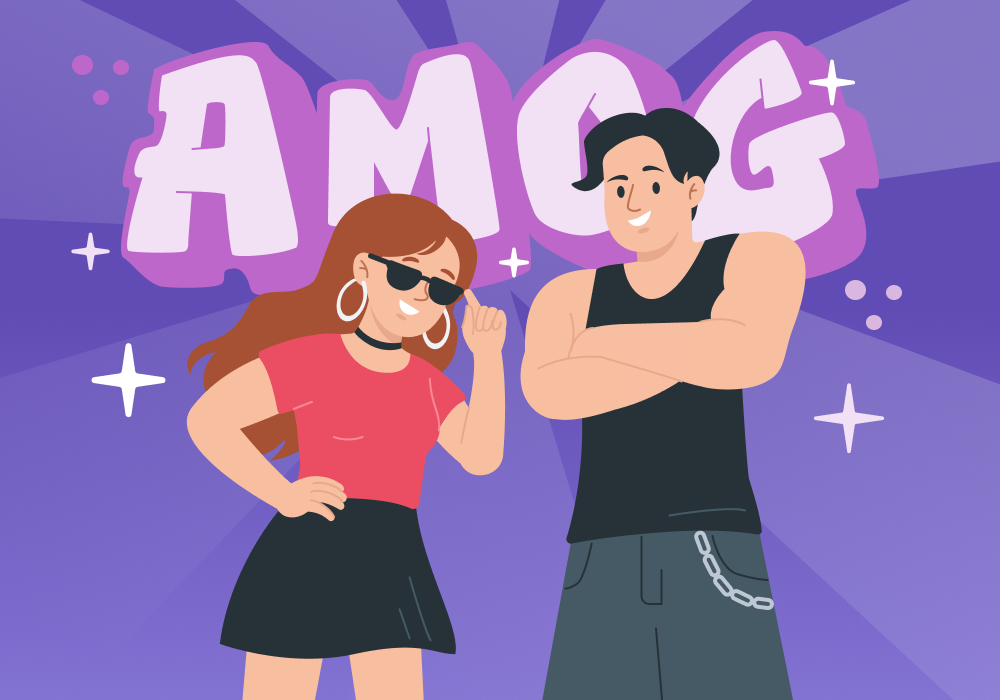
In the 2000s, the abbreviation AMOG appeared on online forums. It stands for “alpha male of the group”: the most noticeable guy in the room. From it came the verb “to mog”, and by the 2010s it had been picked up by communities obsessed with improving their looks. Hence heightmogging (“taller than you”) and facemogging (“better face”).
In 2026, TikTok brought the word back. Users caption photos of celebrities with “mog,” and even athletes joke about “mogging” their rivals. The words are simple, the humor is absurd and the phrase is easy to remix, which is exactly what a meme needs to go viral.
The phrase caught on because it works like a social password: if you know the word, you are one of us. Absurd memes also give us a break from heavy news and help us switch off and think about something silly.
Should you worry?
The meme itself is harmless. But the word comes from a particular environment, and that’s worth a closer look.
That world is big on looksmaxxing, from “looks” and “maxing”: the drive to look as good as possible. It covers harmless things like skincare and regular exercise, but also dangerous ones: steroids, extreme diets, and dubious pseudoscientific practices. Risks for teens include lower self-esteem, harmful health advice, and getting drawn into toxic communities. The most serious outcome is body dysmorphic disorder, when a person is constantly fixated on imagined or very minor flaws in their appearance and suffers because of them. If you notice signs like these, it’s worth seeing a specialist.
But in most cases, “mogging” is just a joke, a meme, and a reason to laugh together. It’s also a good opening to talk about how your child feels about their looks and what they see on social media. Use it.
What to say if your child tells you “I mog you”
The best response is a light joke that helps you both relax and lets you check that you’re still on the same wavelength. Here are a few options for different situations.
Play along. “Go ahead, mog me. Dishes first, though.”
Turn it into a competition. “At what, exactly? Let’s find out: who can tidy the kitchen faster?”
Ask like they’re the expert. “Okay, this isn’t the first time I’ve heard that. Explain it to me — what does it mean?”