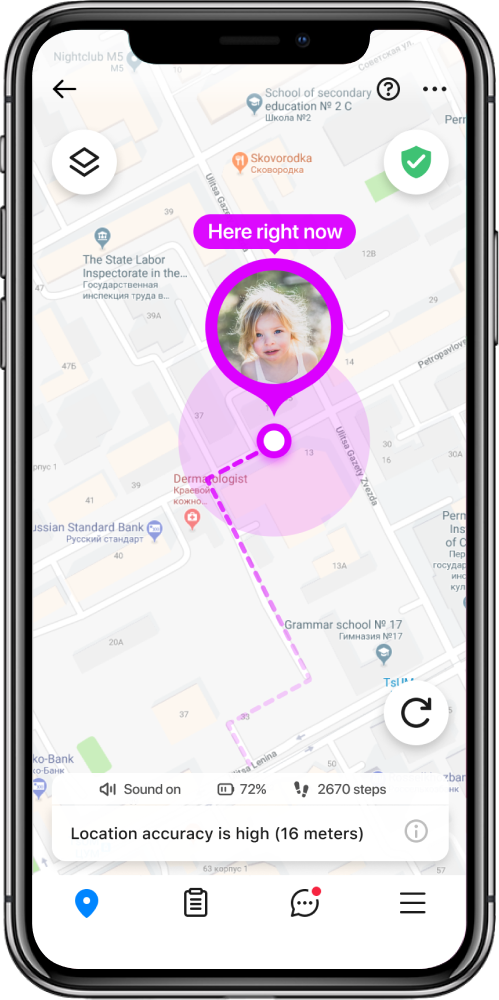

















When a Child Turns Off Their Phone


Children ages 7 to 11 often use phones confidently, but for them a phone is not really a way to stay in touch with you. It is a way to play games, listen to music, or text friends. They do not always understand why a phone needs to stay charged and turned on.
That is why kids easily forget to charge their phone, turn the sound off, or even switch the phone off completely without seeing any problem in it. In this article, we look at how to explain to a child why staying reachable matters.
Why Children Turn Off Their Phones
Kids ages 7 to 11 are still learning responsibility and often do not think through the consequences of their actions. For them, a phone is part of play, not a communication tool. Turning it off can feel as simple as putting a toy away.
Here are some common reasons behind this behavior:
1. Kids live in the moment
When a child is absorbed in a game, a walk, or an activity, the thought of charging the phone or keeping it on just does not come up. This is not ignoring parents. It is how a child’s thinking works at this age.
2. It feels like nothing bad will happen
The idea of being unreachable feels abstract to a child. They believe parents are always nearby and everything is under control. Because of this, staying connected can seem unnecessary or purely formal.
3. Fear of getting in trouble
Sometimes kids turn off the sound or the phone to hide the fact that they broke a rule. For example, they played longer than allowed or watched videos late at night.
How to Explain Why Staying Reachable Matters
For a child to truly understand the rule, it helps to avoid fear and lectures. Simple words and familiar situations work best.
Safety, Not Control
Kids accept rules more easily when they understand that the rule is about safety, not punishment.
You might say:
“When your phone is on, I know you are okay. It is like a little string that connects us. I need it so I can help if something happens.”
Real and Relatable Examples
Use calm, everyday situations instead of scary ones:
- “Sometimes an activity ends early, and you can text me to come get you.”
- “If you get separated from the group on a trip or in a store, we can find each other faster.”
- “If you feel scared or uncomfortable, you can always call me.”
This helps the child see practical value instead of a vague rule.
Talking About Consequences
Children ages 7 to 11 do not always think ahead, so it helps to explain consequences calmly:
“If your phone is off, I do not know where you are. I start worrying, calling teachers or other parents. I feel much calmer when I can reach you.”
Simple and Realistic Rules
For example:
- The phone stays on, even if it is on silent
- When the battery drops below 20 percent, it goes on the charger
- When you go out, text or call when you arrive
- Reply to parents’ messages when you see them
Rules work best when they are clear, short, and the same every day.
Building Mutual Trust
You can say:
“When you stay reachable, I see that I can trust you. And that means I can give you more freedom.”
How to Respond If Your Child Still Turns the Phone Off
Even with clear rules, kids may still turn off their phone because they forgot, felt emotional, or did not think things through. What matters is how you respond.
Stay Calm
Anger and blame usually increase resistance. A calm tone helps the child talk instead of defending themselves.
Find Out What Happened
Ask gently: “What happened that the phone was off?” The answer is often simple. The battery died, they forgot, they were tired, they were afraid of being scolded, or they did not want to be distracted from a game.
Look for a Solution Together
Frame it as a shared problem, not control:
- Set reminder alarms
- Turn on low-power mode
- Agree on a message before muting the phone
- Use a battery case or power bank if the phone often runs out
Notice Progress
When staying in touch becomes more consistent, say it out loud: “Thank you for answering right away. I felt calm.” Specific praise builds responsibility much better than criticism.
References
- Why Are Children So Distractible? Development of Attention and Motor Control From Childhood to Adulthood, Child Development, 2021
- Parenting in the digital age: The challenges of parental responsibility in comparative perspective, DiVa, 2018
- The structure of working memory in young children and its relation to intelligence, Journal of Memory and Language, 2017
Проверьте электронный ящик