














Your Child Is Using 16+/18+ Apps. What Should You Do?

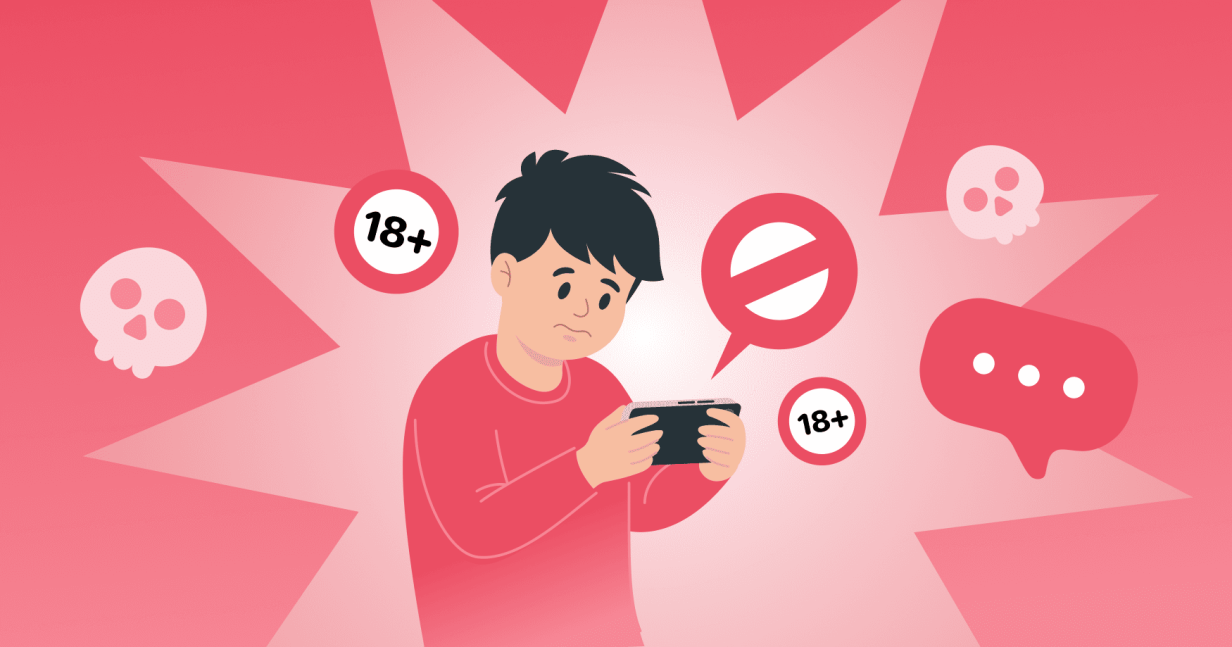
The situation: you glance at your child’s phone and spot an app that’s clearly not age-appropriate. Your first instinct — delete it and shut it down. But that rarely works: forbidden fruit tastes the sweetest, and your child will find another way to get what they want. So what do you do? Let’s talk about how to respond calmly without leaving your child alone with something they’re not ready for.
Why kids go there in the first place
Before you ban anything, it helps to understand: your child isn’t doing this to defy you. Usually, the reason is pretty straightforward.
They’re just curious
If something is labeled 16+ or 18+, that alone makes it intriguing. They want to see what’s so forbidden about it.
Everyone else is already there
Their friends are on the app, talking, joking around — and your child doesn’t want to be left out.
More freedom, more excitement
These platforms tend to have less moderation and more edgy content. It feels more exciting and real.
They want to feel grown up
Apps like these give kids a sense of “I’m not little anymore.” That’s a real need — even if this isn’t the best way to meet it.
What parents can do
Your first thought is probably to delete the app, ban it, lock things down. That’s a completely natural reaction. But deleting the app might not solve the problem — your child will just find a workaround. So it’s worth taking a slightly different approach.
Talk — without coming in hot
It’s better to open the conversation with something like, “I noticed this app on your phone. What do you like about it?” rather than “I saw everything” or “This is off-limits.” If it doesn’t feel like an interrogation, your child is much less likely to shut down.
Discuss the risks — without fear-mongering
Don’t just say “it’s dangerous.” Explain what could actually go wrong.
They might come across content they’re not ready for. People online aren’t always who they claim to be. Personal information can spread further than they think.
Keep it calm, no drama. The goal isn’t to scare them — it’s to help them understand.
Agree on ground rules
Hard bans rarely stick. But agreements do.
For example:
No chatting with strangers. No sharing personal details. Tell a parent if something feels off. No late-night scrolling sessions.
Show them you’re always on their side
This is the most important part. Your child needs to know that if something goes wrong, they can come to you without being afraid of getting yelled at, punished, or having their phone taken away.
When it’s time to step in more firmly
There are situations where it’s better not to wait. Watch for signs like:
Your child starts hiding things on their phone. Their mood shifts noticeably after using the app. They’re talking to people they don’t know. They’re seeing content that’s clearly not age-appropriate. They become anxious, withdrawn, or irritable.
You can temporarily restrict access or remove the app, but explain calmly why you’re doing it. Not “Because I said so,” but because it isn’t safe.
And make sure you circle back to the conversation: what was actually going on in the app, what caught their attention, what felt confusing or uncomfortable. The point isn’t just to take the phone away — it’s to help your child process what happened so they’re not left dealing with it alone.
Проверьте электронный ящик