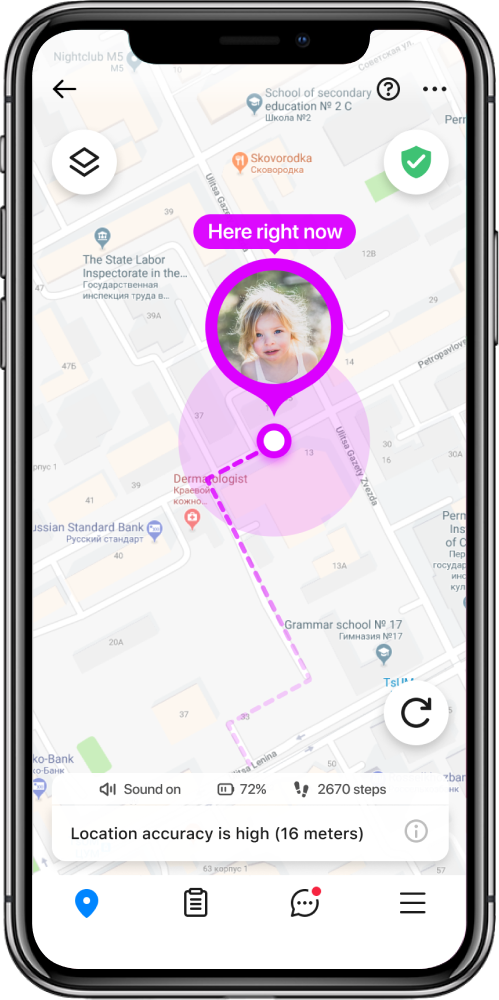















Should You Check Your Child’s Phone?


Smartphones are part of everyday life even for younger school-age children. Parents want to be sure their child is safe. But can trust be preserved if you start checking what your child does on their phone?
Why Parents Start Checking
Parents worry about real risks: cyberbullying, inappropriate content, strangers in messages. Sometimes checking a phone feels like the only way to make sure nothing bad is happening.
When adults feel anxious, overwhelmed, or unsure how the digital world works, control can seem like the only form of protection. But it’s important to understand how this looks from the child’s point of view.
How Children Experience Phone Checks
Parents may see phone checks as care. Children often experience them very differently, especially if they don’t know they are being monitored.
- Hidden control breaks trust. Children, and especially teens, sense when someone is watching without their knowledge. Even with good intentions, this feels like a violation of boundaries.
- More control often means less honesty. Instead of sharing problems, a child may start hiding things, deleting messages, using secret chats, or creating additional accounts.
- Teens are especially sensitive to intrusion. During adolescence, a sense of autonomy and the right to personal space develops. Strict or opaque monitoring feels like distrust and power, not care.
- If a child finds out that a parent looked through their phone without permission, it often leads to anger, hurt, or a sense of betrayal. This usually creates distance rather than safety.
- Children, including teens, handle monitoring better when it is open and respectful. Younger kids need clear explanations and attention. Teens especially need to feel that their opinion matters and that control is not imposed without discussion.
A phrase like, “I want to understand what’s going on with you because I worry,” sounds very different from secret checks a child finds out about later.
What Works Better: Control or Dialogue?
Research shows that children feel safer when parents talk things through and set clear, agreed-upon rules. When both sides understand what is allowed, what is not, and why it matters, children are more likely to act responsibly.
This approach helps kids learn to recognize risks, make thoughtful decisions online, and ask for help without fear.
What to Agree on in Advance
The best way to protect trust is to agree on digital rules before something worrying happens. And if those agreements weren’t made earlier, that’s okay. It’s never too late to start an honest conversation and build new rules together.
Things worth discussing:
- Which apps or websites worry you, and why. For example: “TikTok sometimes shows disturbing content. If anything makes you uncomfortable, you can tell me, and I’ll try to help without judging.”
- What to do if a parent feels worried. For example: “If I start to worry, I’ll tell you directly and ask to talk. I want you to know I’m not trying to control you. I just want to be there if you need help.”
These agreements create a sense of predictability and honesty. When children know what to expect, they are less afraid of their parents’ reactions and more likely to come up with questions on their own.
⠀
So, should you check your child’s phone? It can be appropriate, but only when it’s based on respect, open conversation, and an understanding of your child’s age.
Total control without dialogue rarely builds trust. Openness, honesty, and involvement are what help create a truly safe and trusting relationship with your child.
References
- Digital Media Use and Youth Mental Health: A Narrative Review of the Impact and the Role of Parental Monitoring, Frontiers in Psychiatry, 2024
- “It’s not about surveillance, it’s about protection”: Parental mediation and monitoring in the digital age, Digital Health, 2024
- Parental Monitoring of Early Adolescent Social Technology Use in the US: A Mixed-Method Study, Journal of Child and Family Studies, 2023
- Parental Monitoring in the Digital Age, The Cambridge Handbook of Parental Monitoring and Information Management during Adolescence, Cambridge University Press, 2022
- Children’s Right to Privacy in the Digital Age Must Be Improved, Office of the United Nations High Commissioner for Human Rights, 2021
Проверьте электронный ящик