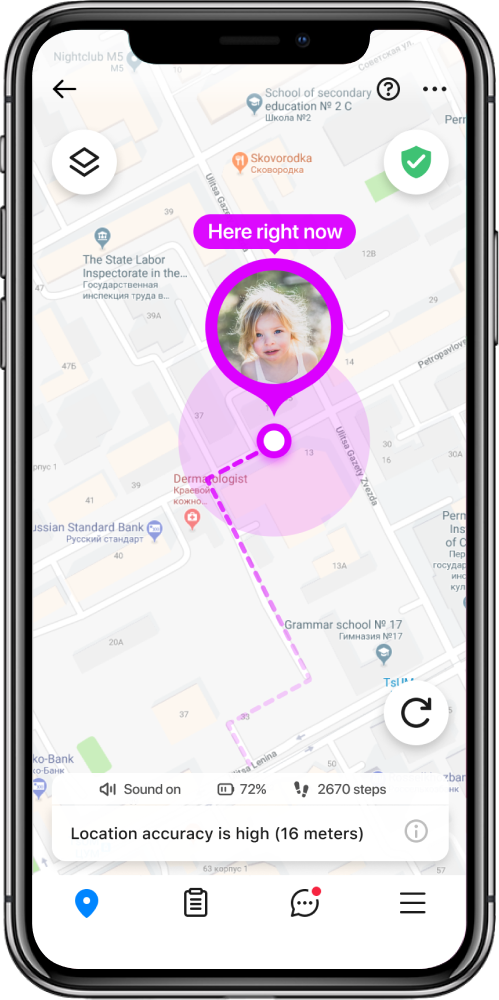















Carefree Chloe: Helping Your Girl Stay Organized

Sometimes Chloe comes home missing something — her gym clothes left in the locker room, a textbook forgotten in the cafeteria. One day, she thought she’d lost her keys — but they were sitting on the playground bench.
Sound familiar? Let’s take a look at why this happens and how you can help your daughter deal with forgetfulness.
Why Kids Lose Their Things
It might seem like your child is just being careless or irresponsible. But in reality, losing things is often a normal part of development for kids ages 7 to 12.
The Brain Is Still Learning Control
The ability to keep track of belongings depends on certain brain functions that help us plan, check tasks, and finish what we’ve started.
Between ages 7 and 12, these executive functions are still developing, so losing things is perfectly natural and has nothing to do with laziness or lack of discipline.
Personal Traits Start to Show
Some children with developmental differences — such as ADHD or autism spectrum traits — may struggle more with forgetfulness.
But even without such diagnoses, a child can easily drift off into their thoughts and focus only on what feels important to them, not necessarily to adults.
For others, it’s simply part of their personality or attention style. All of this makes the “always losing stuff” phase a perfectly normal part of growing up.
What Parents Can Do
We can help our children become more organized — one small step at a time.
What helps:
- Visual reminders and labels. Create simple visual cues together — for example, labeled spots in the hallway like “Backpack lives here” or “Hat corner.” Add colorful stickers or pictures to make it easy to remember.
- Simplify their space. Too many things make it hard to stay organized. Keep only what’s needed: one pair of gloves instead of five, one pencil case instead of three. Transparent boxes and folders help them instantly see what’s missing.
- Lists and gentle reminders. Hang a small checklist or make a beaded bracelet where each bead stands for one task. It turns packing up into a fun little game and lowers stress.
- Evening routines. Spend 10–15 minutes before bedtime packing for the next day. This small ritual reduces morning chaos and the chances of forgetting something.
- Time to search. If something goes missing, help her think it through: “Where do you think you left it? Let’s check your desk or the gym.” This helps her learn to solve problems instead of panicking.
- Respect for belongings. Avoid replacing lost things right away. Try to look together first — this helps your child understand the value of her things.
What Can Backfire
Sometimes, in an effort to help, parents act too strictly — scolding their child for being careless, comparing her to others, or pointing it out in front of people.
These reactions rarely help. They increase anxiety and lower confidence, making it even harder for the child to stay focused and organized.
Remember: losing things is a natural part of development for 7—12-year-old girls — not a sign of poor character. Support, patience, and empathy work much better than pressure or criticism.
References
- Prefrontal cortex intrinsic functional connectivity and executive function in early childhood and early adulthood, Developmental Cognitive Neuroscience — Volume 74, 2025
- Executive function in children with neurodevelopmental conditions: a systematic review and meta-analysis, Nature Human Behaviour, 2024
- The Development of Executive Function: Mechanisms of Change and Functional Pressures, Journal of Cognition and Development — Volume 24, 2023
- Working memory and short-term memory deficits in ADHD: A bifactor modeling approach, Frontiers in Psychiatry, 2020
- Prefrontal cortex and executive function in young children: a review of NIRS studies, Frontiers in Human Neuroscience, 2013
Проверьте электронный ящик