
















My child hit their head. Is it dangerous?

It happens: children fall (sometimes on perfectly flat ground!) and nobody is to blame. Most of the time they’re just fine, but sometimes you need to watch your child’s condition carefully so you don’t miss any warning signs and can get medical help in time. Let’s break it down — bumps, colours and all.
In the first seconds
Stay calm (yes, this matters — panic gets in the way of assessment). Sit or lay the child down. Don’t shake them or lift them up suddenly. Apply cold to the site of impact: ice or frozen food wrapped in cloth, for 15–20 minutes.
What not to do
Don’t apply heat to the bruise. Don’t massage the site of impact. Try not to leave the child alone during the first 24 hours after the bump, even if everything seems fine.
When to call emergency services
Call 999 / 911 / 112 immediately if you notice:
- loss of consciousness
- seizures or numbness in the arms or legs
- a headache that doesn’t go away but gets worse
- vomiting, especially if it happens more than once
- blood or fluid from the nose or ears
- pupils of different sizes
If the child is under two years old — see a doctor after any head injury, even if everything looks fine on the outside. In young children, symptoms can cleverly disguise themselves as minor discomfort and may only appear several days later. Doctors call this the “observation period” — we call it “don’t let your guard down.”
The bump looks terrible. Is that normal?
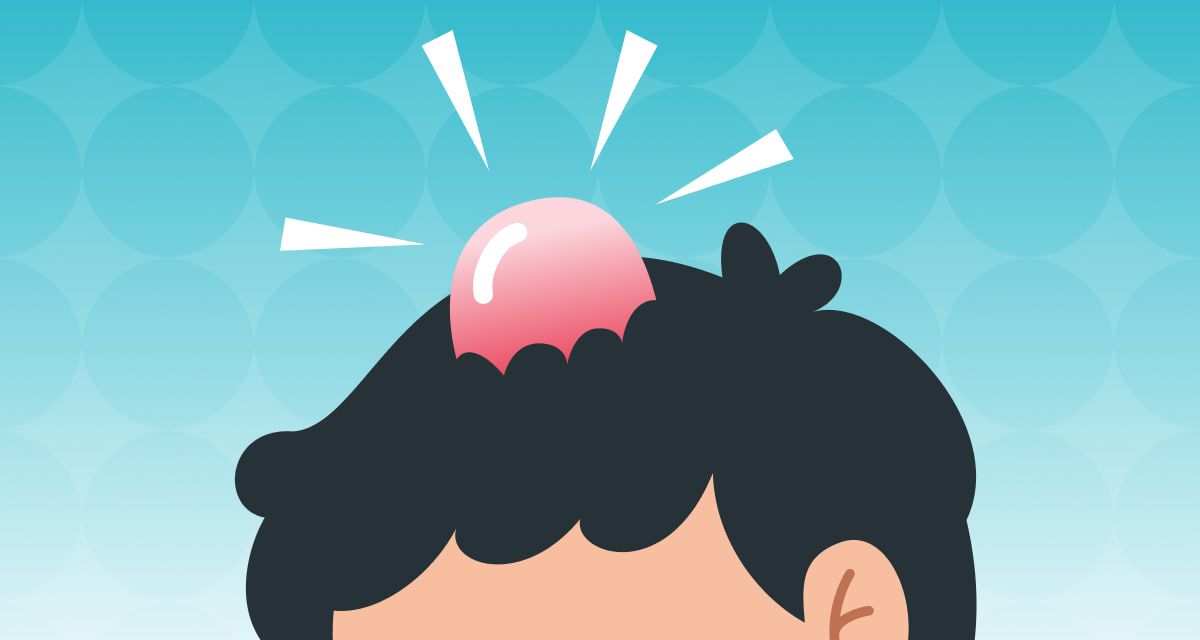
Almost always, yes. A bump is blood and fluid accumulating under the skin after an impact — it’s completely normal. It turns red, then blue, then gradually fades. It looks alarming but usually isn’t.
Three reasons to take a closer look:
- it keeps growing despite the cold compress
- you can feel something fluid underneath, like a water balloon
- the child complains of pain, nausea or dizziness
Any of these symptoms is a reason to see a doctor.
Age matters
Under 3–4 years old, a child can’t properly describe what hurts. You’ll need to be a detective: a sudden cry that abruptly goes quiet, refusing food, restless sleep — these are all symptoms to notice and remember. Monitor them and see a doctor if they worsen or increase.
Older children can explain what’s going on. Ask them: does your head hurt, and if so, how — throbbing or pressing? Do you feel sick? Dizzy? Sleepy?
The child fell asleep right after the bump. Should I wake them?
Yes, without hesitation. In the first 2–3 hours, wake them every 30 minutes. While a child is asleep, you can’t assess their condition. If you can’t wake them or the sleep seems unusually deep — call emergency services.
Symptoms that don’t appear straight away
Sometimes everything looks fine right after the bump. Then a few hours or even days later, something strange starts happening. These are called delayed symptoms, and they’re important to know:
- bruising under the eyes or behind the ears for no apparent reason
- disturbed sleep, irritability, tearfulness, excessive sweating
- the child can’t bring their chin to their chest — the neck muscles are that tense
If any of these appear — see a doctor immediately.
Head injuries in children are unpredictable. A minor bump sometimes needs investigation, while a frightening-looking lump turns out to be nothing. Trust your instincts. And don’t put it off if something doesn’t feel right.
Sources: HealthyChildren.org (AAP) — Head Injury in Children: How to Know If It’s Minor or Serious; Seattle Children’s Hospital — Head Injury; Children’s Wisconsin — Mild Head Injury: Care at Home.
Проверьте электронный ящик