











Teaching Household Chores to Kids Ages 7–11

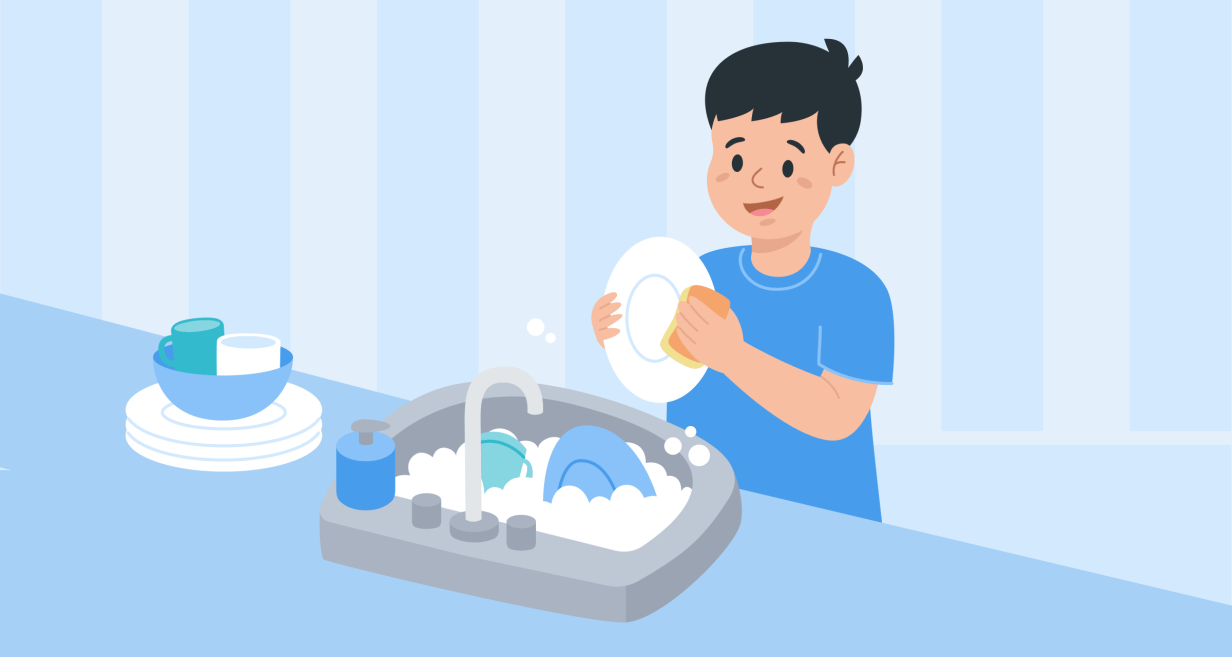
Household chores are about more than a tidy room or clean dishes. For children ages 7–11, they are a way to feel like part of the family, learn to care for their shared space, and build independence. At this age, kids especially need to feel that they can influence the world around them and contribute in meaningful ways, even through small steps.
Teaching children to help at home should not turn into a heavy obligation or constant reminders. It works much better when chores feel like a natural part of family life. Let’s talk about how to make that happen.
What Children Ages 7–11 Can Do
Between ages 7 and 11, children are already capable of handling simple household tasks. At the same time, their planning and self-control skills are still developing.
Kids this age often struggle to estimate how much work something takes. What feels like a quick five-minute task to an adult can look like a huge job to a child. That is why clear guidance and breaking tasks into small steps matter so much.
Here are examples of chores that suit most children in this age range:
- Putting toys and books back in their place
- Folding clean clothes and putting them away
- Washing their own cup or plate
- Wiping the table after meals or homework
- Helping set the table or clear it after dinner
- Hanging up towels or putting away clean laundry
- Watering plants
- Taking out the trash
- Rinsing the bathroom sink after washing up
- Unloading the dishwasher (and loading dirty dishes)
- Fusting their own shelf or desk
What to Do If Your Child Forgets or Puts Chores Off
At this age, children often forget agreements or postpone chores, and that is normal. Their attention is still developing, and household tasks rarely feel interesting enough to hold their focus.
Calm, brief reminders help a child return to the task without feeling pressured. Visual cues can also help, such as checklists on the door, sticky notes, timers, or a separate basket for items that need to be put away. These tools reduce mental load and help children gradually become more independent.
Sometimes it helps to start the task together. A shared beginning lowers resistance and helps the child ease into the process. Once they see the task is manageable, it becomes easier to continue. The key is not to turn help into control, but to support the child as they learn to handle things on their own.
How to Build Habits Without Pressure or Conflict
Habits do not form through strict demands, but through repetition and a sense of success. For children ages 7–11, tasks need to be clear, simple, and realistic.
- Focus on small steps. The shorter and more specific the task, the easier it is for a child to complete it and feel successful.
- Support rather than judge. Phrases like “Let’s see where we can start” lower tension and help the child engage.
- Stick to routines. Doing the same task at the same time gradually turns it into a habit.
- Notice any progress. Even small wins give a child a sense of stability and motivation to keep going.
The most important things children learn at ages 7–11 are how to notice responsibilities, take on manageable responsibilities, and confidently handle small tasks. These skills grow through repetition, support, and warm involvement from adults. Along the way, something even more important develops: independence, confidence, and the feeling of “I can do this.”
References
- Household chores and their effects on children: perspective from Ghana, Humanities and Social Sciences Communications, 2025
- Personal initiative: Developmental predictors and positive outcomes from childhood to early adolescence, Journal of Applied Developmental Psychology, 2017
- Personal initiative in middle childhood: Conceptualization and measurement development, Learning and Individual Differences, 2016
Проверьте электронный ящик