















AI is already showing up in homework, classroom apps, writing tools, tutoring programs, and language practice. For many children, it’s no longer “future technology,” but is simply part of how they study after school, check answers, draft ideas, and get help when they’re stuck.
AI can be useful, but it’s also confusing for parents. A child might use AI to understand a math problem, translate a word, or brainstorm an essay outline. But the same child might also use AI to skip the hard thinking, copy an answer, or spend too much time jumping between apps.
The tool itself isn’t the whole story. How a child uses it makes the difference, and we’ll explain why in this guide.
Contents:
What is AI in Education?
AI in education means using artificial intelligence tools to help with learning, teaching, or school tasks. In simple terms, AI tools can respond to questions, suggest next steps, explain ideas, or create content based on what a student types in.
For example, parents may already see AI in tools like:
- Homework apps that explain math problems step by step
- Chatbots that answer study questions
- Language learning apps that correct pronunciation or grammar
- Reading tools that summarize text or define difficult words
- Classroom platforms that give students extra practice when they struggle
How Artificial Intelligence Is Used in Education Today
Landscape Al / Freepik.com
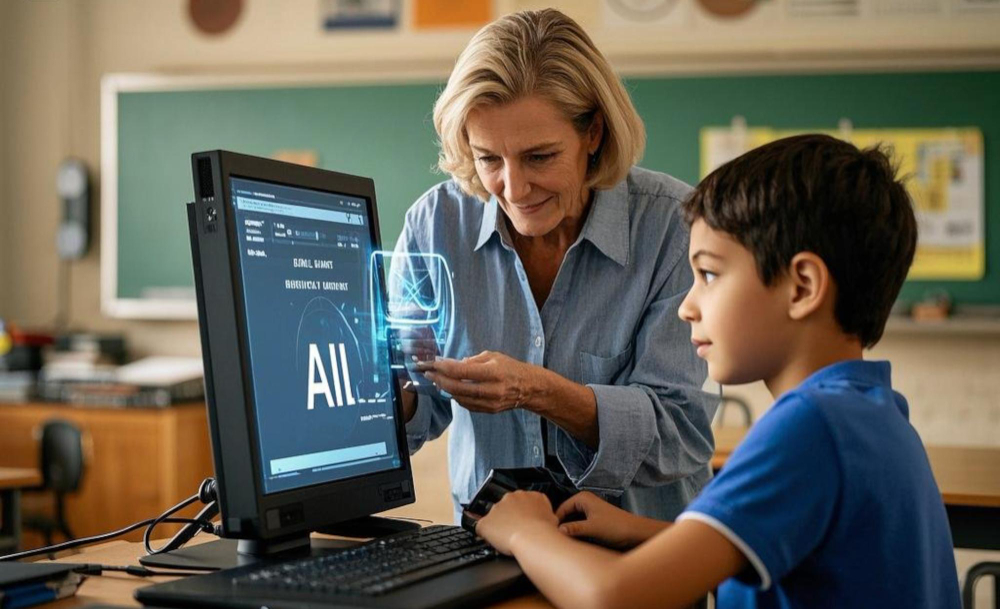
In real classrooms, AI technologies and AI algorithms are already woven into everyday teaching and learning.
For example, teachers are using AI to create lesson plans, build interactive lessons, and adapt instruction for different learning styles and individual needs. Instead of spending hours creating worksheets or grading assignments, educators can use AI to streamline administrative tasks and focus more on actual teaching.
For students, the experience is even more direct. AI can walk them through complex concepts step by step, generate practice questions, and even simulate conversations to help them learn new skills.
In many schools, AI is also helping with student support services. For example, a student might receive personalized prompts if they’re falling behind, or recommendations for resources that match their learning style. These systems are designed to support students before small challenges become bigger problems.
At the same time, educational institutions are using AI behind the scenes to automate administrative tasks such as scheduling, reporting, data processing, and tracking student progress.
Benefits of AI in Education
AI can support learning and knowledge developmentby giving children additional help outside the classroom, especially when they need extra explanation, practice, or a different pace than what is possible during school lessons. It is increasingly used as a tool that complements traditional teaching and helps students engage with material more flexibly.
Key benefits of AI in education include:
- Personalized practice and pacing. That personalized practice is a strong benefit; a child who struggles with multiplication can get more multiplication problems to work on at home, while a child who already understands the topic can move ahead without getting bored. This individualized pacing can reduce frustration across the board.
- Faster feedback and fewer barriers to learning. AI can also reduce frustration by giving quick detailed feedback. Instead of waiting for the next class period, a child can see where they made a mistake and try again. For some students, that immediate response keeps them from giving up.
- Improved accessibility. Accessibility and support for students with disabilities is another strong use. Speech-to-text tools can help students who struggle with writing, while translation tools can support multilingual families. Reading tools can help children who need text read aloud or simplified.
- Support for teachers and classroom workload. For teachers, AI may reduce time spent on repetitive tasks such as creating practice questions or organizing lesson materials. Used carefully, this can leave more time for actual teaching and student support — an ultimate win for students and their families.
Risks and Concerns of AI in Education
Designerarif111 / Freepik.com
Generative AI / generative artificial intelligence systems can help children learn, but they can also make schoolwork look finished before real learning has happened. While it offers useful support, there are important risks that parents and educators need to consider.
Key risks of AI in education include:
- Over-reliance on AI. The biggest risk is over-reliance. If a child asks AI for every answer, they may stop practicing the thinking skills school is meant to build. This is especially risky in writing, math, and research, where the learning process matters as much as the final result.
- Inaccurate or misleading information. Accuracy is another concern. AI tools can sound confident even when they provide wrong or incomplete information. Children may not yet have the skills to question answers, check sources, or notice when something doesn’t quite add up.
- Privacy and data concerns.UNESCO’s guidance on generative AI highlights the need for clear rules around privacy, safety, and responsible use, since many systems collect or process user data. For schools and families, this raises important questions about how children’s information is handled.
- Academic honesty and unclear boundaries. academic integrity can also become complicated. Some students may submit AI-generated work as their own, while others may be wrongly accused of using AI. It has become increasingly common for teens to report having assignments flagged as AI-generated even when they insist they did not use it.
- Increased screen time and distraction. As with many digital tools, AI platforms can blur the line between learning and general device use. What starts as homework help can easily turn into extended screen time, making it harder for children to stay focused and balanced in their study habits.
Related: Recommended Screen Time for Kids: How Much Is Healthy by Age.
Why Parents Often Feel Out of Control
If all of this feels overwhelming, that makes total sense. And we hear you.
The reality is that AI tools in educational contexts are powerful, but they’re also unstructured. Your child can access them anytime, from almost anywhere. And unless you’re actively monitoring, it’s hard to know what’s happening.
You might notice your child finishing assignments faster, but are they actually learning? You might see them on their device, but is it for school or something else?
For many parents, this creates a sense of uncertainty. You want to support your child and give them access to helpful technology, but you also want to make sure they’re developing real skills, like critical thinking, problem-solving, and independent learning.
How Findmykids Helps Parents Manage AI Learning Safely
This is where structure becomes essential, and where tools like Findmykids can make a real difference.
What Is Findmykids?
Findmykids app
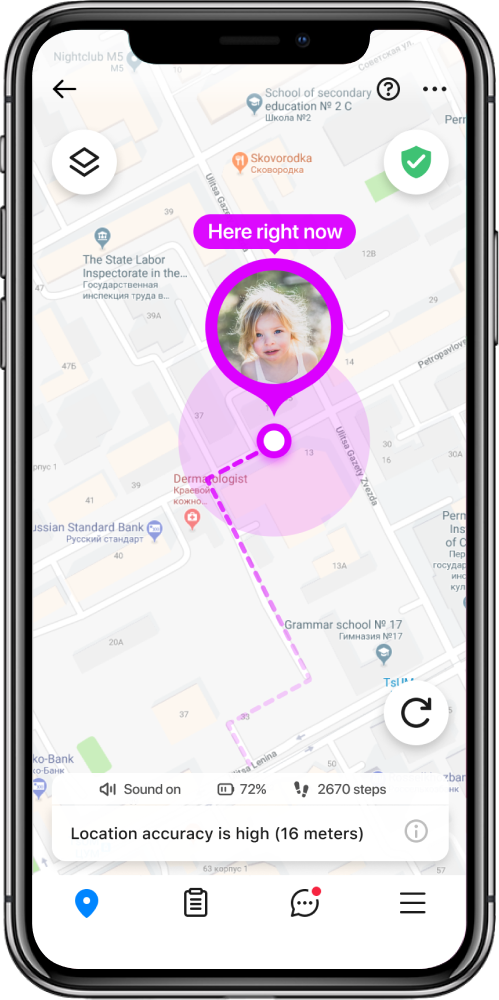
Findmykids is a parental control app designed to help parents stay connected to their child’s digital and physical world. It provides visibility into how children use their devices while also offering tools to manage that use. The app includes real-time location tracking, app usage monitoring, and flexible app blocking options.
Why It Works for AI Learning
AI tools can help your child learn, but Findmykids helps you guide how they use those tools.
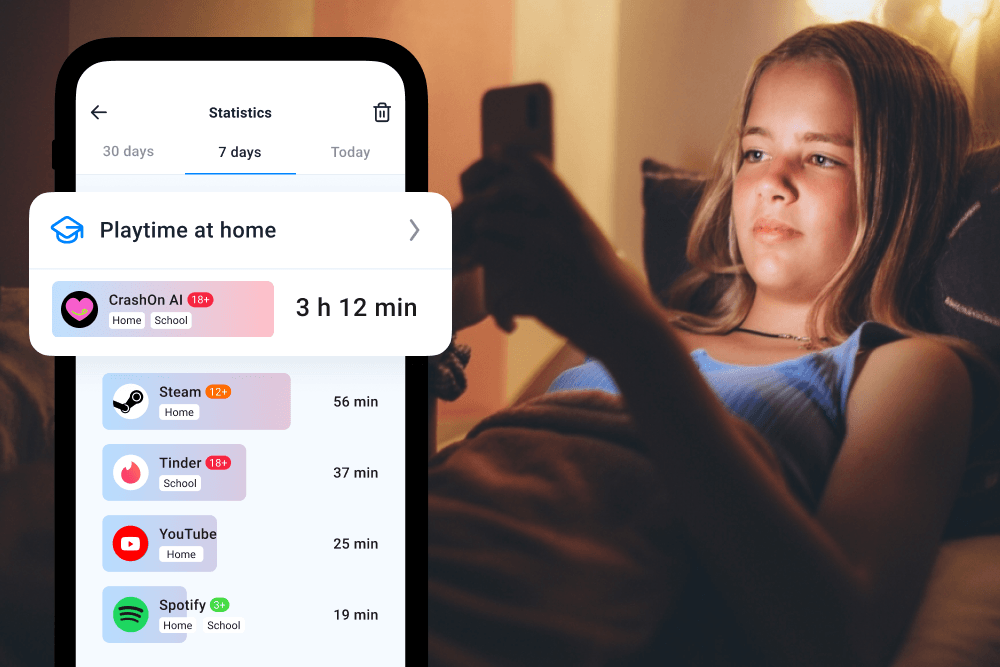
Instead of guessing, you can actually see how your child is interacting with technology. You can understand how much time they’re spending on different apps and identify patterns that might need adjusting.
If something starts to feel excessive (or distracting), you can step in, since the app allows you to limit access during school hours, bedtime, or other key moments in your child’s routine.
And if you ever feel like things are getting out of balance, you can take stronger action by restricting apps entirely or focusing access on educational tools only.
Getting Started Is Simple
Findmykids app
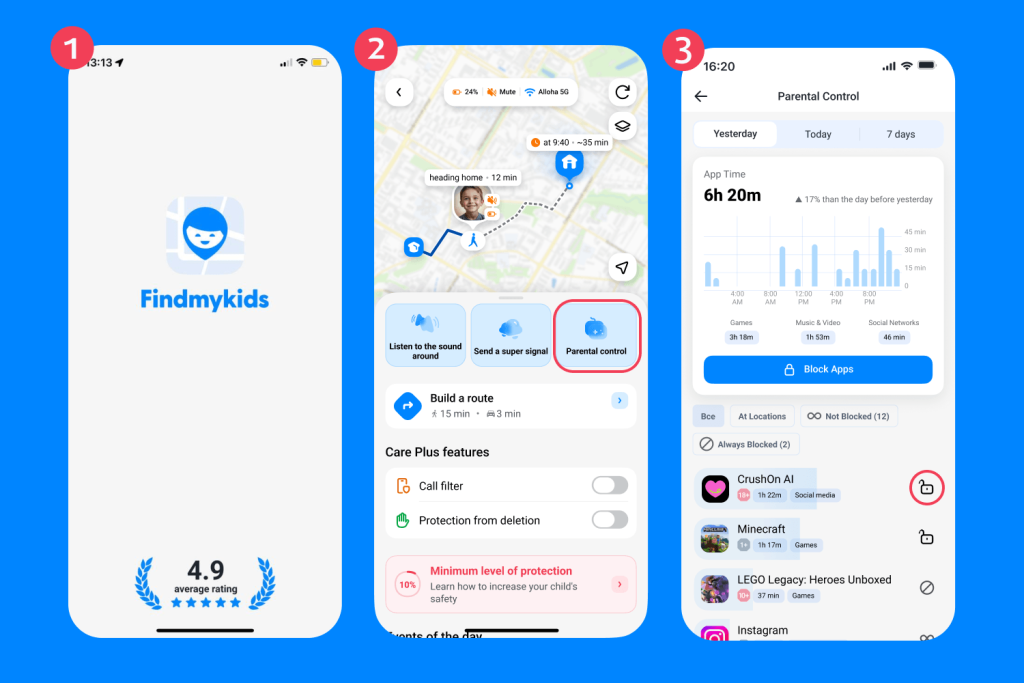
Download the app, follow the setup instructions to connect your child’s phone (it takes about five minutes), and open the parental controls section (Main screen → child’s profile → Parental control (or In games and social section in previous versions of the app)).
From there, you can:
- Monitor app usage
- Block all apps entirely
- Block specific apps or categories
It’s flexible, which means you can adjust what AI offers as your child grows and their needs change.
Physical Safety Features
Beyond digital monitoring, Findmykids also includes features that support a child’s physical safety in everyday life:
- Real-time GPS location tracking
- Location history and movement tracking
- Safe zone (geofencing) alerts for places like home or school
- “Sound Around” feature to hear the environment near the child’s phone
- Loud signal to reach a child even if the phone is on silent
- Low battery notifications so you know when a device may soon turn off
Why This Matters More Than Ever
As AI in education continues to expand, the line between helpful learning tools and distractions can get blurry. Some AI tools are incredibly valuable, while others can pull students away from meaningful learning.
Findmykids helps bring clarity to that space. It doesn’t remove technology, nor do we necessarily need to. But what it does do is help you manage that technology in a way that supports your child’s development.
If you want a clearer view of how your child is using digital tools, including AI study apps, Findmykids can help you stay informed and set healthy boundaries as they grow!
The Future of AI in Education
Freepik / Freepik.com
Looking ahead, AI in education is only going to grow. Artificial intelligence will continue to shape how students learn, how teachers teach, and how schools operate.
We’re already seeing early signs of what’s coming next:
- More advanced intelligent tutoring systems that feel almost like one-on-one instruction
- AI that can adapt entire lesson plans in real time
- Greater use across higher education and professional development
At the same time, educators and school leaders are working to address ethical considerations, data privacy concerns, and the role of human connection in learning.
The future isn’t about choosing between AI and traditional education—it’s about combining them in a way that truly benefits students.
Finding the Right Balance in an AI-Driven World
AI in education is here to stay, and it’s already changing the way students learn every day.
It brings incredible benefits, from personalized learning to better support for more students. But it also comes with challenges that parents can’t ignore.
The good news is that you don’t have to figure all this out alone. With the right balance of awareness, guidance, and tools like Findmykids, you can help your child use artificial intelligence in a way that supports real learning, not replaces it.
Because at the end of the day, the goal isn’t just to use AI. It’s to help your child learn, grow, and thrive in a world where AI is part of everyday life.
FAQs
What is AI in education?
AI in education means using artificial intelligence in education systems to support schoolwork, teaching, studying, or classroom tasks. Examples include homework chatbots, tutoring apps, language tools, and programs that give students practice questions.
How does AI help student learning?
AI can explain difficult topics, give quick feedback, create practice questions, and help students study at their own pace. It works best when children use it to understand the material, not to skip the work.
What are the risks of AI in schools?
The main risks are copying answers, relying too much on AI, getting incorrect information, sharing personal data, and spending too much time on screens. Younger children especially need adult guidance.
Can AI replace teachers?
No. AI can support teachers, but it cannot replace human connection, encouragement, classroom judgment, or emotional support. Teachers still guide learning in ways AI cannot.
What are examples of AI tools used in education?
AI tools in education appear in many forms, often within apps and platforms students already use every day. Some common examples include homework help chatbots, AI writing assistants, personalized tutoring apps, translation and speech-to-text tools, adaptive learning platforms, AI-powered study guides, and quiz generators.
Sources & References
- Guidance for generative AI in education and research, UNESCO, 2023
- A New Headache for Honest Students: Proving They Didn’t Use A.I., The New York Times, 2025
Cover image: Freepik / Freepik.com
Проверьте электронный ящик