


















Our children are growing up in a world filled with constant input, from screens that never sleep to peers who feel ever-present and digital conversations that move faster than families can process. In this landscape, parenting styles matter more than ever—especially approaches like authoritative parenting, which aim to balance connection and guidance rather than control or distance.
When our children are more peer-oriented than parent-attached, guidance becomes harder to hear and easier to push away. As a result, the way adults guide, correct, and connect with their children matters not just for their behavior, but for the attachment itself.
Child development research identifies several common parenting styles. Each is shaped by how adults balance warmth, structure, and expectations. Among them, one approach stands out as particularly effective for protecting attachment while supporting independence through a balance of emotional warmth and clear boundaries.
Contents:
- What Should the Goal Be? Connection vs. Power Struggles
- What Is Authoritative Parenting?
- Authoritative Parenting vs. Other Parenting Styles
- Authoritative Parenting Across Different Ages and Stages
- How Authoritative Parenting Supports Emotional and Academic Development
- How to Practice Authoritative Parenting: Practical Strategies for Parents
- Any Drawbacks or Limitations of Authoritative Parenting?
- Common Challenges and How to Overcome Them
- Authoritative Parenting in Practice: A Quick Check-In for Parents
- FAQs
What Should the Goal Be? Connection vs. Power Struggles
Skyline Graphics / Shutterstock.com
If parents want children to listen, cooperate, and accept guidance, they must lead, and children must follow, but this isn’t always as easy as it sounds. When parenting turns into a power struggle, attachment-based parenting research shows that children become less open to guidance as emotional connection weakens. This matters more than ever in today’s digitally complex world, where children are navigating pressures far beyond the home.
From a child development perspective, power struggles activate a child’s stress response. When children feel threatened, shamed, or overpowered, their brains shift into survival mode. Learning, problem-solving, and emotional regulation all decrease under stress. This is why fear-based or rigid parenting styles may stop behavior temporarily, but often lead to increased defiance, anxiety, or emotional withdrawal over time.
Authoritative parenting takes a different approach. Instead of asking, “How do I make my child obey?” it asks, “How do I guide my child while protecting our relationship?” This shift is subtle but powerful. When connection is prioritized, children remain emotionally available to influence. They are more likely to listen, cooperate, and internalize values rather than comply out of fear.
This does not mean avoiding limits. In fact, authoritative parents set firm boundaries and clear expectations. The difference lies in delivery. Guidance is paired with emotional support, calm communication, and consistency. Children learn that rules exist to keep them safe and supported—not to control or punish them. Over time, this balanced approach supports healthy self-esteem and self-regulation. Children raised with authoritative parenting are encouraged to think, reflect, and learn from mistakes. They experience natural consequences while knowing their parents remain emotionally available.
Choosing connection over power is not always easy, especially during stressful moments. But it lays the foundation for long-term trust. When children feel safe with their parents, they are more likely to seek guidance during difficult situations—particularly as they grow older and face more complex social and emotional challenges.
This is why authoritative parenting is not about perfection. It is about maintaining influence through relationships. When parents protect attachment while guiding behavior, they create the conditions for children to grow into confident, emotionally secure individuals who can navigate the world with resilience.
What Is Authoritative Parenting?
At its core, authoritative parenting is built on one simple truth: children need boundaries and love at the same time.
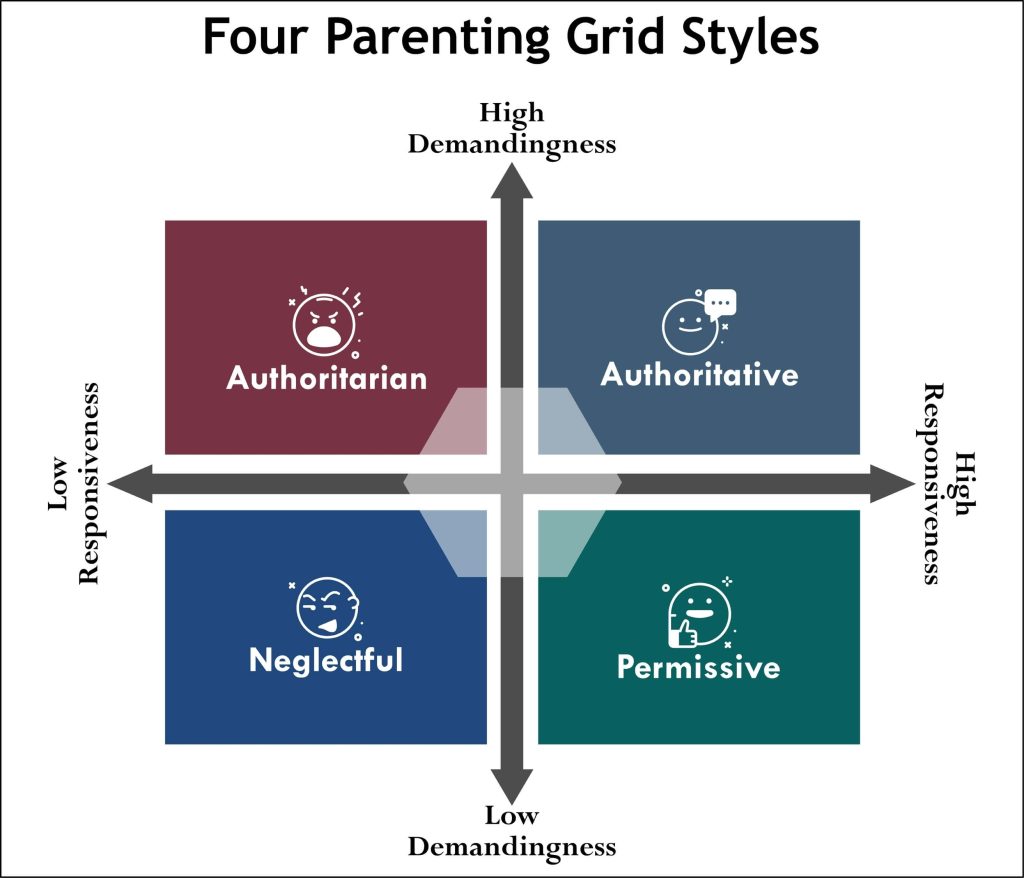
Authoritative parenting does not rely on control to maintain influence. Instead, it combines warmth, responsiveness, structure, and high expectations in a way that keeps children emotionally connected while they learn. Rules exist, but they are enforced without shame or fear. Discipline is not about punishment; it is about teaching. Guidance is firm, but the relationship always comes first.
Children raised by authoritative parents know they are deeply loved—even when their behavior needs correction. This allows them to develop autonomy without losing the connection to their parents.
Authoritative Parenting vs. Other Parenting Styles
Understanding how authoritative parenting differs from other approaches helps parents identify what is working—and what may be unintentionally causing harm. To understand what supports connection, it is equally important to examine the approaches that quietly undermine it.
Authoritarian Parenting
Authoritarian parenting is often mistaken for authoritative parenting, but the two are quite different.
The authoritarian approach emphasizes obedience, strict rules, and control. Emotional responsiveness is limited in this style, and discipline is often enforced through fear, shame, or harsh punishment.
While this style may reduce bad behavior in the short term, it is also associated with low self-esteem, anxiety, and poor self-regulation later in life. Love may exist in these parent-child relationships, but it often feels conditional.
Permissive Parenting
Permissive parenting is high in warmth but low in structure. Children often feel loved, yet the absence of clear boundaries can leave them feeling insecure—and at times, even unsafe.
Predictable routines like regular meals, bedtimes, and consistent expectations are not restrictive to children; they are grounding. Children sense when this structure is missing, even if they cannot articulate it. Without clear limits, children may struggle with self-discipline and emotional regulation, and permissive parenting can unintentionally place adult-level decision-making on children who are not developmentally ready.
In contrast, when emotional safety is paired with clear structure—as in authoritative parenting—children’s brains are better able to focus, learn, and problem solve.
Uninvolved or Neglectful Parenting
Uninvolved parenting is associated with the most concerning developmental outcomes. When caregivers are emotionally unavailable or disengaged, children may feel unseen, unsupported, and even unloved. This often leads to behavior problems as children seek attention or validation elsewhere. This is why, when parents feel burned out—and many do—quality of interaction matters more than quantity. Even brief moments of focused attention can strengthen attachment and emotional security.
Gentle Parenting vs. Authoritative Parenting
Gentle parenting and authoritative parenting share many values, including empathy and emotional validation. The difference often lies in follow-through.
Gentle parenting prioritizes understanding a child’s emotions, but without firm, consistent boundaries, it can drift into permissiveness. Authoritative parenting also centers empathy, while pairing it with clear guidance and consistent discipline. Feelings are always acknowledged, but behavior is still shaped.
Research consistently shows that children need adults to take the lead during emotionally charged moments, and authoritative parenting provides that leadership without relying on control or fear.
Authoritative Parenting Across Different Ages and Stages
Authoritative parenting adapts as children grow while its core principles remain consistent.
Preschool-Age Children
For preschool-age children, authoritative parenting centers on safety, routine, and emotional regulation.
At this stage, children simply do not yet have the brain development needed to manage big emotions on their own, which is why tantrums and impulsive behavior are a normal part of early childhood. Clear, predictable boundaries help children feel safe, especially when parents stay calm, name emotions, and guide behavior without shame.
Natural consequences can also be introduced gently at this age, always paired with reassurance and connection. As many parents come to learn, it’s okay for children to feel whatever they feel—what matters is how those feelings are handled.
Elementary-Age Children
As children enter elementary school, authoritative parenting begins to shift toward shared responsibility and problem-solving. Children are increasingly invited into
conversations about expectations, routines, and responsibilities, helping them understand not just what is required, but why.
This stage is especially important for developing emotional intelligence, as children learn to manage frustration and conflict by watching adults model calm responses, consistency, and fair discipline.
Tweens and Teenagers
For tweens and teenagers, authoritative parenting shifts toward collaboration and open communication. Independence naturally increases, but boundaries remain firm, with curfews, screen limits, and safety rules clearly explained and consistently enforced.
Teens are far more likely to cooperate when they feel respected and understood, which is why this approach supports healthier decision-making and long-term self-regulation.
How Authoritative Parenting Supports Emotional and Academic Development

freepik / Freepik.com
Authoritative parenting has a measurable impact on emotional and academic outcomes and is widely recognized in child development research as one of the most effective approaches to raising well-adjusted children. Children raised within this parenting style tend to demonstrate stronger emotional regulation, higher self-esteem, and better academic achievement over time.
In households where authoritative parents set consistent rules while remaining emotionally responsive, natural consequences become meaningful learning opportunities. Because children feel emotionally safe, their brains are better able to focus, reflect, and problem-solve. This foundation supports the development of self-control, self-efficacy, and long-term motivation—skills that influence success far beyond childhood.
Research consistently shows that the clear routines and expectations associated with the authoritative parenting style contribute to higher levels of self-reliance and encourage independence without sacrificing connection. These children are more likely to develop confidence in learning new skills, regulate their behavior, and show resilience when faced with challenges in school and social settings.
Cross-cultural studies further support these findings. Research on adolescents across different cultural contexts, including studies on Chinese teens’ prosocial behavior, demonstrates that structure paired with emotional responsiveness promotes empathy, cooperation, and emotional maturity. Such outcomes are closely linked to raising emotionally intelligent children who are capable of forming healthy relationships and navigating complex social environments.
Importantly, children raised by more authoritative parent figures often show higher academic achievement, not because of pressure, but because they internalize expectations and develop a sense of responsibility that carries into later life
Authoritative Parenting, Family Values, and Cultural Context
One of the strengths of authoritative parenting lies in its flexibility. Rather than enforcing rigid control, authoritative parents share expectations clearly while remaining open to discussion and feedback. This allows family values to be transmitted without fear, shame, or emotional withdrawal.
Across cultures, this balance of warmth and structure supports positive parentingpractices that help children stay connected to caregivers as they mature. Parents act as role models, demonstrating respectful communication, problem-solving, and emotional regulation—behaviors children naturally adopt and carry forward.
Because children feel heard and guided rather than controlled, they are more likely to grow into well-adjusted children, capable of decision-making, empathy, and maintaining close family relationships into adolescence and adulthood.
How to Practice Authoritative Parenting: Practical Strategies for Parents
In daily life, authoritative parenting shows up in small, ordinary moments—during disagreements, transitions, and emotional reactions. These situations reveal how parents balance limits and connection when it matters most.
Discipline Without Disconnection in Everyday Life
Discipline is where any parenting style becomes most visible—in everyday tantrums, defiance, and ongoing battles around screens, bedtime, and safety. To practice authoritative parenting, parents focus on regulation first. They stay calm, acknowledge emotions, and set firm limits, so consequences remain predictable, explained, and emotionally supported.
Within the authoritative parenting style, natural consequences become teaching moments rather than punishments. Children learn responsibility without fear because boundaries are enforced alongside connection. This balance helps guide a child’s behavior while preserving trust—a core principle of positive parenting.
What Authoritative Parenting Sounds Like in the Moment
Authoritative parenting is often less about what parents decide and more about how they communicate it. In emotionally charged moments, children listen for safety before they can hear guidance. The goal is to hold the limit while protecting the relationship — a hallmark of authoritative parents.
Examples of authoritative language during power struggles include:
- “I see that you’re really upset. I won’t let you hit, but I’m here to help you calm down.”
- “It’s okay to feel disappointed. The answer is still no.”
- “I hear what you want. I’m not changing the limit, but I can sit with you while this feels hard.”
- “We can talk about this when we’re both calm.”
- “You’re allowed to feel angry. You’re not allowed to hurt anyone.”
These responses do three things at once:
- Validate emotion
- Maintain firm limits
- Reinforce connection
Over time, children learn that limits do not threaten the relationship. This understanding supports emotionally intelligent children who are more open to guidance and cooperation.
When Parenting Styles Shift Under Stress
Under pressure, many parents drift away from their intentions. Some move toward control—becoming more like authoritarian parents, raising voices or demanding compliance because it feels efficient in the moment. Others withdraw, avoiding conflict out of exhaustion or uncertainty. These shifts are not failures; they are signs of a nervous system under strain.
This is where authoritative parenting becomes less about technique and more about awareness. Authoritative parents tend to notice when stress is driving their reactions. Instead of asking, “How do I stop this right now?” they pause to ask, “What does my child need in this moment, and how do I guide them without losing connection?”
When responses become unpredictable, children may show increased defiance or anxiety. These behaviors are not misbehavior but signals of dysregulation. Through calm authority and reasonable expectations, parents create safety—not through power, but through consistency.
The Parents’ Role: Regulation, Repair, and Modeling
Authoritative parenting does not require constant calm; it requires responsibility. Repair matters. When parents return to connection after conflict, they teach emotional maturity through action. This modeling shapes long-term resilience, helping raise self-confident children who trust both themselves and their caregivers.
Through this process, parents become role models for emotional regulation, reinforcing authoritative principles that support confidence, cooperation, and growth across the entire parenting journey.
Tools That Support Balanced Parenting

Findmykids app
Modern parenting includes new challenges—especially around screens, independence, and safety. Authoritative parenting meets this terrain by combining open communication with clear, consistent boundaries. Expectations are explained, not imposed, helping children experience guidance as care rather than control.
Used transparently, digital tools can support this balance. For example, Findmykids allows parents to stay connected to their children’s location and safety while preserving trust. When monitoring is discussed openly and framed as protection rather than surveillance, it reinforces security without undermining autonomy.
In this way, tools like Findmykids support authoritative parenting by helping parents hold high expectations while staying emotionally present—protecting both safety and connection as children grow.
Any Drawbacks or Limitations of Authoritative Parenting?
While authoritative parenting is widely supported by research, it is not without challenges. Practicing this approach consistently requires time, emotional availability, and self-reflection from parents. Maintaining warmth while enforcing boundaries can feel demanding, especially in moments of stress or fatigue.
Additionally, families transitioning from more rigid or punitive approaches—often associated with authoritarian parents—may find it difficult to shift toward dialogue and shared decision-making at first. Children accustomed to strict control may initially test boundaries as they adjust to increased autonomy.
That said, these challenges are not inherent flaws of the approach itself. With support and intention, parents who practice authoritative parenting often find that the long-term benefits—emotional stability, confidence, and healthier parent-child relationships—outweigh the short-term effort required to implement it effectively.
Common Challenges and How to Overcome Them
No parent has all the answers, and perfection is not the goal. Even within an authoritative parenting style, challenges are inevitable—especially in moments of stress, fatigue, or emotional overload. What matters most is not avoiding mistakes, but how adults respond to them.
One common challenge is slipping out of intention. Under pressure, parents may react more sharply than planned or become inconsistent with limits. These moments do not negate the parenting style itself; they reveal where support and awareness are needed. Children learn emotional regulation not from flawless behavior, but by watching authoritative parents navigate stress, acknowledge missteps, and take responsibility for their actions.
Another frequent mistake is focusing too heavily on outcomes—such as good behavior or good grades—while overlooking the process that leads there. When guidance becomes rushed or emotionally charged, children may comply temporarily, but the deeper skills of self-regulation and trust are weakened.
Helpful strategies for overcoming these challenges include:
- Responding rather than reacting, especially during emotionally charged moments
- Modeling calm behavior, even when setting limits feels difficult
- Allowing emotional expression without removing boundaries
- Setting consistent consequences that are explained and predictable
- Prioritizing connection before correction
These parenting techniques help restore balance when authoritative parenting feels hard to sustain. Over time, this approach supports not only cooperation and learning but also the emotional safety children need to grow with confidence and resilience.
Authoritative Parenting in Practice: A Quick Check-In for Parents
Authoritative parenting is not a fixed set of rules—it’s an ongoing parenting journey that requires awareness, flexibility, and intention. This checklist can help parents pause and reflect in everyday moments:
- Am I holding firm limits while staying emotionally present? Authoritative parents set firm limits without withdrawing connection, even when emotions run high.
- Are my expectations clear, consistent, and age-appropriate? Children feel safer when reasonable expectations stay predictable rather than changing with stress or mood.
- Am I responding to my child’s behavior, or reacting to my own stress? Regulation begins with the adult. Calm guidance supports learning far better than urgency or control.
- Am I explaining the “why” behind rules? Open communication helps children experience boundaries as guidance, not punishment.
- Do I allow space for independence while staying involved? Authoritative parenting supports growth by gradually expanding autonomy, not by removing structure all at once.
- Do I return to connection after conflict? Repair matters. Children learn emotional safety when parents model responsibility, not perfection.
- Am I focused on teaching rather than winning the moment? The goal is long-term development—raising confident, resilient children—not short-term compliance.
- Am I using tools that support safety and connection? Apps like Findmykids help parents stay aware of children’s whereabouts and safety in real time, without replacing guidance or trust. When framed as protection rather than surveillance, such tools reinforce authoritative principles and allow children to explore independence safely.
When these principles guide daily decisions, authoritative parenting becomes less about control and more about trust, learning, and relationship—even in challenging moments.
A Balanced Approach That Grows With the Child

Esther Pueyo / Shutterstock.com
Authoritative parenting is not about control; it is about guidance that grows alongside the child. By balancing firm boundaries with emotional support, parents create an environment where children feel safe enough to grow, learn, and become increasingly self-reliant. As children mature, the balance between structure and independence shifts, but the relationship remains the foundation that makes that growth possible.
In a world where parents cannot possibly keep up with every app, update, or digital trend, connection remains the most reliable form of protection. Tools like Findmykids can support authoritative parenting when they are used openly and explained clearly to children. When monitoring is framed as care rather than control, children are more likely to accept boundaries and come to their adults when something feels off. Technology should never replace relationships—but when used thoughtfully, it can help parents stay present, informed, and responsive as children navigate an increasingly complex digital world.
Ultimately, authoritative parenting is about setting children up for success—not by holding them back, but by walking beside them as they learn to manage freedom, responsibility, and independence with steady adult support.
FAQs
What is authoritative parenting with examples?
Authoritative parenting combines warmth, emotional support, and clear expectations. For example, when a child refuses to do their homework, an authoritative parent acknowledges the child’s feelings, explains why the work matters, and then sets a firm expectation that it must still be completed. This is how support is offered without removing the boundary.
What is an example of an authoritative parenting style?
An example of an authoritative parenting style is setting a consistent bedtime while allowing age-appropriate choices. A parent may enforce a lights-out time but let the child choose which book to read or which pajamas to wear. The structure remains firm, while autonomy is encouraged within safe limits.
What children of authoritative parents tend to show?
Children raised by authoritative parents tend to demonstrate strong self-regulation, emotional intelligence, self-confidence, and social competence. Research consistently links authoritative parenting with better academic performance, healthier peer relationships, and greater long-term resilience.
Why is authoritarian parenting considered effective by some parents?
Some parents believe authoritarian parenting works because it often produces immediate compliance. Strict rules and harsh punishments can quickly stop unwanted behavior. However, research shows that this approach is associated with lower self-esteem, increased anxiety, and weaker self-discipline over time, making it less effective for long-term development.
Cover image: freepik / magnific.com
Проверьте электронный ящик