










How to Help Your Child Relax and Ease Anxiety


School, activities, exams — all of this on top of an endless stream of information. This rhythm can leave children and teens feeling constantly tense and tired.
We’ve gathered simple exercises that help kids relax. Once a child learns them, it becomes easier to stay calm in stressful moments, concentrate, and take care of their emotional balance.
Relaxation Techniques
Research shows that breathing exercises and progressive muscle relaxation help slow the heart rate, ease tension in the body, and reduce stress.
Psychologists also recommend movement, music, creativity, and journaling.
Breathing Exercises
When we’re anxious, our breathing becomes shallow. But when we slow the pace, inhale deeply, and exhale slowly — as if through a straw — anxiety decreases and calmness grows.
For younger kids, you can turn this into a game: “Blow up the balloon” — a deep breath in through the nose, a slow exhale through the mouth, imagining a balloon filling up.
If the visualization is hard, start with a real balloon and then switch to the imagined one.
Another option: have your child lie on their back, place a soft toy on their stomach, and breathe so the toy moves up and down.
For teens, try box breathing: inhale for 4 counts, hold for 4, exhale for 4, hold for 4.
“Feather and Statue”
Offer your child a simple game. First, they are a feather floating through the air — light, soft, moving freely. Let them float for 10 seconds.
Then they suddenly become a statue: still, steady, not moving at all. Then again — a feather, relaxing the whole body.
Repeat the exercise a few times and finish in a calm state. At the end, give your child a hug if they’re comfortable with it.
Muscle Relaxation
This exercise is based on tensing and relaxing different groups of muscles.
For children ages 7–10, present it as a playful challenge: “Squeeze your fist like you’re holding a lemon — now let it go.”
For teens, you can offer a more intentional practice: slowly, from the bottom up, tense each muscle group — feet, calves, hands, shoulders, face — and then relax everything step by step.
Calming Music
Calm music or nature sounds help reduce anxiety and improve mood.
For younger kids, soft, simple melodies work best. Teens may enjoy creating their own relaxing playlists.
Kids of all ages often like white noise, ocean sounds, or forest ambience.
Physical Activity to Release Tension
Movement or a quick stretch is a great way to release built-up stress. Turn on upbeat music and jump, stretch, wave your arms, or have a mini dance session together.
Visualization
Imagination can be a powerful tool for relaxation. A child may enjoy a game called “The Journey”: ask them to close their eyes and imagine a peaceful place — the ocean, a forest, a sunny field.
Teens can use visualization before tests or presentations: imagining themselves staying focused and confident.
Art and Creativity
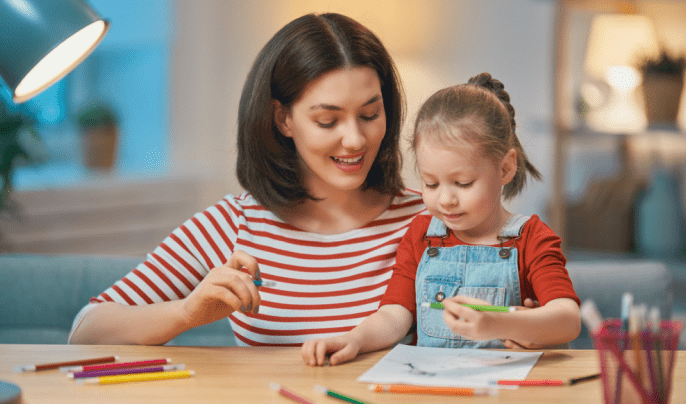
Drawing, clay modeling, or writing helps kids express emotions, understand them, and let them go.
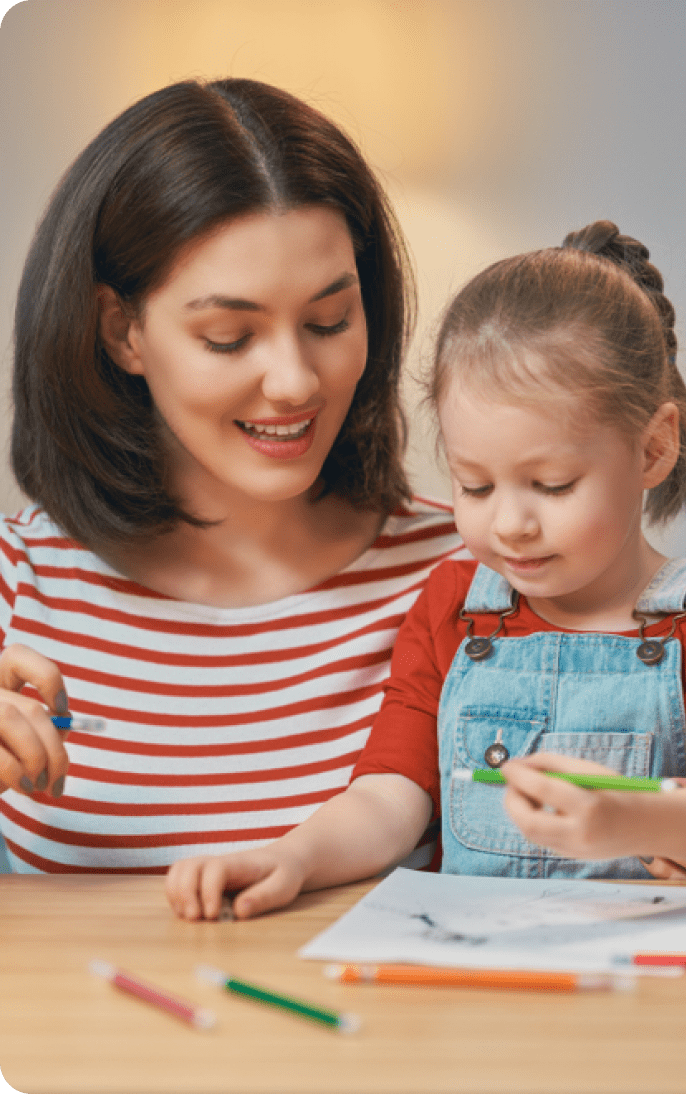
Try drawing your mood together — whatever colors, lines, or shapes come to mind. Then talk about it: which colors you chose, how you felt, what changed after drawing.
Personal Journaling
For kids ages 10 and up, a journal — paper or digital — can be a wonderful tool. Writing down thoughts and feelings helps them notice emotions, understand themselves, and reduce anxiety.
⠀
You don’t need to use every technique at once — one or two is enough if your child enjoys them. Practicing together not only reduces tension but also creates more calm, joyful moments side by side.
And we’ll keep sharing helpful guidance about childhood and parenting.
References
- Breathe Deeply, The Center for Parent and Teen Communication, 2021
- Self-Regulation of Breathing as a Primary Treatment for Anxiety, Volume 40, 2015
- 12 Simple Relaxation Strategies to Share with Your Children, Advanced Psychology Services
- Quick Guide to Anxiety in Children, The Child Mind Institute
Проверьте электронный ящик