


















Children and teens are spending more time than ever on social media, and with that increased access comes increased exposure to social media scams.
These scams are designed to trick young users into sharing information, sending money, or compromising their accounts. Understanding how these scams work—and how to prevent them—is essential to protect your child’s safety, privacy, and well-being.
Contents:
What Are Social Media Scams?
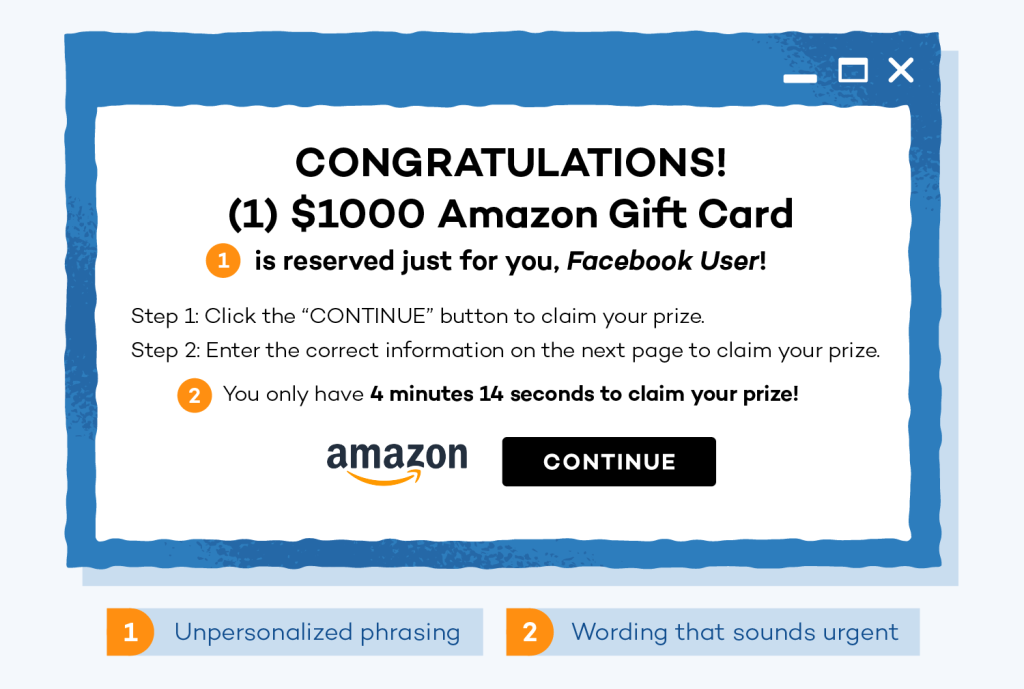
Credit: pandasecurity.com
Social media scams are deceptive schemes that use a social media platform to trick users into sharing personal details, clicking a harmful link, or sending money. Scammers create convincing messages, fake accounts, and fake websites to appear legitimate and gain trust.
The Independent revealed “A total of 95 billion scam ads were seen in total by UK users during 2025, culminating in an average of £1,258 in money lost per scam.”
Children and teens are especially vulnerable because of how frequently they use social media. According to the Pew Research Center, over 95% of teens report using at least one social media platform, with YouTube, TikTok, Instagram, and Snapchat among the most popular.
Surveys show teens spend an average of nearly five hours per day across various apps. The more time a child spends on social media sites, the greater the likelihood they will encounter scams or suspicious contacts.
The FTC has identified Instagram and Snapchat as major sources of fraud contact among younger users, especially through direct messages and fake investment opportunities.
Child protection organisations such as the NSPCC warn that scammers target people on platforms where messaging features allow private contact with minors.
This overlap—high youth usage and high scam activity—makes social media a key environment where scams occur.
The Most Common Social Media Scam Types
Scammers use a variety of tactics to trick children and teens. These media scams often rely on urgency, emotional manipulation, or promises of money.
Investment Scams and “Easy Money” Offers
Investment scams often target teens and young people with promises of quick profits, particularly through cryptocurrency, NFTs, or bogus trading platforms.
Research by Internet Matters found that nearly one in four UK teens aged 13–16 have already invested in, or are planning to invest in, cryptocurrencies, with many motivated by the idea of earning fast money or securing their financial future.
Scammers create fake adverts and endorsements to lure young investors, persuading them to send funds to fraudulent wallets or download malicious apps. The combination of social media hype, peer influence, and the allure of easy money makes teens particularly susceptible.
A report published by Lloyds Bank found that two-thirds of UK cryptocurrency and investment scams now originate from social media platforms like Instagram and Facebook, with victims losing an average of £10,741 per incident.
Card-Cracking and Money Mule Scams
Card-cracking scams involve scammers offering teens “free money” if they provide access to their bank account or debit card. The scammer deposits stolen funds and instructs the teen to withdraw and transfer the money elsewhere.
While teens may believe they are helping someone or earning money, they can face serious legal consequences, including fraud charges.
Charity and Disaster Relief Scams
After major disasters or crises, scammers often create fake charity accounts on social media. They appeal to young people’s desire to help others, asking for donations through unofficial payment methods.
Because these scams use emotional appeals and urgent language, children and teens may not question their legitimacy.
Marketplace and Deal Scams
Teens who use social media marketplaces to buy gaming consoles, clothes, or electronics may encounter fake sellers offering exclusive deals. Scammers request payment through bank transfer or payment apps, but the item never arrives.
These scams exploit urgency and scarcity, pressuring young buyers to act quickly before the “deal” disappears.
Phishing and Account Verification Scams
One of the most common scams across all ages.
Phishing scams targeting young people often begin with a message claiming there is a problem with their account. These scams are particularly effective because they mimic legitimate platform notifications.
Once scammers gain access, they impersonate the victim to send phishing links to their friends, multiplying the damage and increasing their credibility.
Modelling and Talent Scams
Another scam type involves fake modelling or influencer opportunities targeting teens. Scammers contact children through social media, claiming to represent talent agencies or brands, offering modelling contracts or influencer partnerships.
They may request upfront “registration fees,” personal photos, or financial details. In some cases, these scams also involve attempts to obtain sensitive images or personal data that can later be used for blackmail or identity theft.
Fake Giveaways and Influencer Impersonation
Fake giveaways are another common scam targeting children and teens. Scammers impersonate influencers, gaming brands, or popular companies, claiming the child has won a prize. They then ask the victim to click a link, enter personal details, or pay a “shipping fee” to claim the reward.
Scammers often clone influencer and celebrity profiles, copying usernames, pictures, and branding so that victims believe they are interacting with a familiar or trusted public figure.
In a UK case reported by ITV News, a woman was convinced she was contacted by an actor from a popular soap opera. She was scammed into sending £20,000 in gift cards and payments before realising the account was fraudulent.
Fake Profiles & Sextortion (Impersonation Scams)
Scammers use fake profiles to gain emotional trust, then exploit that trust to demand money, images, or compliance. For children and teens, the emotional consequences can be severe, including humiliation, anxiety, and long-term trauma.
a major UK case reported by The Guardian illustrates how fake profiles can be used to manipulate and blackmail children.
In Northern Ireland, a 55-year-old man created dozens of fake Snapchat and Instagram accounts posing as teenage boys and used them to contact children as young as eight. He established trust over weeks, persuading victims to share private images before threatening to send the images to their friends and classmates unless they complied with further demands.
One victim said the offender pretended to be a boy from a nearby school and later blackmailed her when she tried to stop contact.
Police confirmed he used more than 40 usernames and targeted 47 victims.
Romance Scams and Emotional Manipulation
Children are increasingly targeted through social media platforms and gaming communities. Scammers create fake identities, establish emotional relationships, and gradually request money, gift cards, or financial help.
These scams often begin with casual conversations that develop into what appears to be a genuine friendship or romantic relationship. Once emotional trust is established, scammers invent emergencies or financial problems to persuade the victim to send money.
Sky News reported that an eight‑year‑old girl on Snapchat was contacted by someone posing as a 17‑year‑old boy while she was playing an online game. At first, the messages seemed harmless, but they quickly took a disturbing turn as the stranger groomed the child with inappropriate language and pressure. Thankfully, in this instance, the girl went to her mother when she started to feel uncomfortable with their interaction.
BBC News reported on a case in Missouri where a 16-year-old boy was contacted on Snapchat by someone posing as a girl. Within minutes, “Jenny” persuaded him to share explicit images of himself and immediately threatened to share the photos online: “I have your nudes and everything needed to ruin your life”. Just 90 minutes after receiving the first message, the child took his own life.
This tragic example demonstrates the severe psychological harm these scams can cause, especially for adolescents who may feel panic, shame, or isolation.
Read also: Virtual Friendship: How to Keep the Child Away from Dangerous Encounters on the Internet?
Warning Signs Your Child May Be Involved in a Scam
freepik / Freepik.com
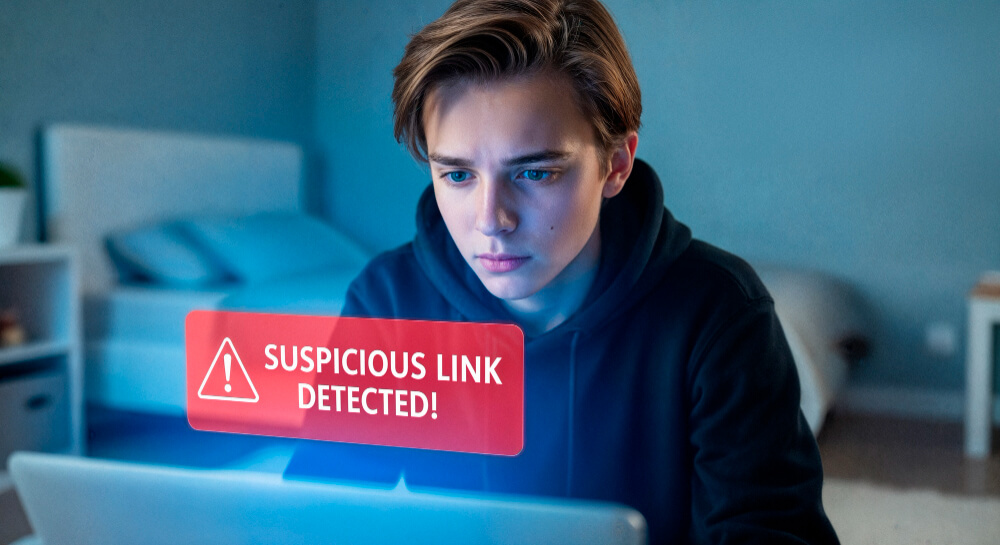
Recognising warning signs early can prevent further harm. Watch for sudden secrecy around devices, unknown contacts, or unusual requests involving money. Your child may become anxious after receiving a message or hesitate to explain online activity.
Other red flags include unexpected password resets, unknown login alerts, or being asked to provide financial information.
| Warning Sign — Your child…: | Possible Meaning | Suggested Action |
| receives messages from strangers on social media or gaming apps | Strangers reaching out can be grooming or scam attempts | Review friend lists, teach your child not to accept unknown contacts, report suspicious accounts |
| talks about “easy money,” cryptocurrency, or investment opportunities they saw online | Likely exposure to investment or “easy money” scams | Discuss risks of scams, check the platforms they’re using, and review with you before sending money |
| is being asked to provide sensitive information (address, phone number, bank info) online | High-risk for phishing or identity theft | Reinforce that personal/financial information should never be shared online, enable parental controls |
| has been asked to click on links or download apps from unknown contacts | Could install malware or steal credentials | Scan devices, teach safe link practices, verify sources before downloading |
| is secretive about online chats or suddenly deletes messages | Hiding activity may indicate discomfort or coercion | Open a non-judgmental conversation, reassure them it’s safe to talk, monitor activity where appropriate |
| has received friend requests from fake or unusual profiles | Could indicate social media impersonation or scam attempts | Check profile authenticity, teach your child how to spot fake profiles, report suspicious accounts |
| mentions people they “met online” wanting money, gifts, or access | Strong red flag for romance scams or card cracking scams | Intervene immediately, review all communication, educate about money scams, block contacts |
| exhibits sudden stress, anxiety, or withdrawal after online interactions | Emotional response to exploitation or grooming | Talk openly, provide reassurance, seek professional help if needed, review online safety practices |
Related: 15 Warning Signs That Help to Identify a Child Predator.
How to Protect Your Child on Social Media

freepik / Freepik.com
Start with Open Conversations
Talking openly about scams helps children recognise risks. Explain that scammers exist and may try to gain trust or manipulate emotions.
Encourage your child to double-check unexpected messages or contact requests.
Teach Your Child to Recognise Scams
Help your child understand that legitimate companies rarely ask for passwords, account information, or personal information through social media sites.
Give them a simple checklist to remember:
- Is this person rushing me or creating urgency?
- Are they asking for passwords, bank account details, or payment?
- Are they asking me to move the conversation to other sites?
- Is this profile new, suspicious, or too perfect?
- Would I share this private information with a stranger in real life?
If the answer feels uncomfortable, it’s time to pause.
Adjust Privacy Settings Together
Review privacy settings on social media platforms and limit who can contact your child or view their profile.
Reducing public access decreases exposure to scammers.
Monitor App Usage and Activity Patterns
Changes in behaviour or sudden increases in social media use can signal a scam contact — especially if a child becomes secretive or spends unusual hours online.
Findmykids helps parents stay informed with detailed app usage statistics, showing exactly how much time is spent on each app. If social platforms use spikes late at night or a new app suddenly dominates screen time, you’ll see it immediately.
This data-driven visibility allows you to step in early, ask questions calmly, and prevent risky interactions before they escalate.
Use a Child Safety App for Added Protection

Findmykids app
Conversations and privacy settings matter—but they work best when supported by real tools.
Findmykids gives parents full oversight without constant confrontation. In addition to app usage statistics, it allows app blocking to restrict access to unsafe platforms and customizable white list settings to limit device use to approved contacts only.
For real-world reassurance, the app also includes real-time location tracking, safe zone alerts, Sound Around, and an emergency SOS signal your child can trigger if they feel unsafe.
This combination of digital monitoring and physical safety tools creates a proactive protection system—not just damage control after something goes wrong.
Download Findmykids today to monitor app activity, block risky platforms, and protect your child’s digital and real-world safety with confidence.
Review Account Activity
Regularly reviewing account activity helps identify suspicious access.
Encourage your child to report unusual messages or login alerts.
How to Report Social Media Scams
If your child encounters a scam, taking prompt action is critical—not just to protect your family, but also to help safeguard other users from falling victim.
Begin by reporting the scam directly through the social media platform where it occurred. Most platforms, including Instagram, TikTok, Snapchat, and WhatsApp, have built-in reporting tools for:
- Suspicious messages or links
- Fake or impersonated accounts
- Fraudulent advertisements or investment schemes
- Harassment, grooming, or inappropriate contact
Teach your child not to delete the messages immediately, as keeping a record of the scam can help the platform’s moderators investigate and may be required if law enforcement becomes involved.
Beyond reporting to the platform, you can escalate serious scams to national consumer protection or law enforcement agencies. For example:
- United Kingdom: Action Fraud
- United States: Federal Trade Commission (FTC)
- Other regions: Check local consumer protection authorities for online scam reporting options.
For scams involving financial loss, such as sending money, gift cards, or banking information, contact your child’s bank or financial institution immediately. They can often help freeze accounts, reverse unauthorised payments, or monitor suspicious activity.
Scammers often rely on secrecy or embarrassment. By reporting together, parents and children can turn the experience into a lesson about online safety while protecting other users from falling victim to the same scams.
Helping Your Child Stay Safe in a Connected World
Social media offers incredible opportunities for connection, creativity, and learning—but it also introduces risks. By understanding how scams work, recognising warning signs, and maintaining open communication, parents can help children navigate social media safely.
Tools like Findmykids provide additional protection by helping parents monitor activity and detect risks early. Combined with education, awareness, and proactive guidance, parents can help children build safe, confident digital habits while avoiding scams.
FAQs

DisobeyArt/Shutterstock.com
What are the most common social media scams?
The most common scams on social media sites fall into a few predictable categories—and many target teens just as often as adults.
One major category is impersonation scams. Scammers set up fake social media profiles to impersonate celebrities, brands, or even a friend or family member. The goal is usually to steal account information or trick someone into sending money.
Another common threat is romance scams, where someone builds emotional trust before asking to receive payment for an “emergency.” Teens can also fall victim to fake giveaways, gaming rewards, or influencer collaborations that require them to share personal or financial information.
Phishing links sent via direct messages are also widespread. These messages often claim there’s a problem with your bank account, that you’ve won a prize, or that someone tagged you in shocking content. Clicking the link can lead to stolen passwords or malware.
The key pattern? Urgency + emotion + a request for private information.
How do I spot fake social media profiles?
Fake profiles often look convincing at first glance. Scammers set accounts with polished photos, short bios, and very little real interaction.
Here are red flags parents can teach kids to watch for:
- Very few original posts or recently created accounts
- Stolen or stock profile photos
- Overly dramatic stories or quick emotional attachment
- Requests to move conversations to other sites or messaging apps
- Pressure to accept friend requests quickly
A real friend won’t rush a child into secrecy or ask for sensitive account information. Teach kids to stay wary if someone they don’t know starts asking personal questions or pushing conversations into private channels.
What should I do if I clicked a suspicious link in a DM?
First—don’t panic. Many scams rely on fear to make people freeze.
If you or your child clicked a suspicious link:
- Immediately close the page.
- Change passwords on the affected social media account and any other sites using the same password.
- Enable two-factor authentication.
- Run a security scan on the device.
- Monitor your bank account or payment apps for unusual activity.
If personal or financial information was entered, contact the bank right away. Even if no money has been taken, acting quickly can prevent future damage.
It’s also important to report the account through the platform. Reporting helps protect other families from the same scam.
How do romance scams usually start?
Romance scams typically begin with a friendly message. The scammer may compliment the person, claim shared interests, or say they found the profile “by accident.”
Over time, they build emotional trust. Then comes a crisis—a medical emergency, travel issue, frozen bank account—and a request to receive payment. Some scammers even pretend to be a deployed soldier, a wealthy entrepreneur, or someone working overseas.
Teens are especially vulnerable because scammers set up fake profiles that appear close in age. The conversation often moves off major social media sites to private messaging apps where monitoring is harder.
The warning signs include secrecy, urgency, and requests for gift cards, wire transfers, or cryptocurrency. A healthy online relationship never asks for money or private information.
What should my child never share on social media?
Parents should regularly remind children not to share:
- Full name paired with home address or phone number
- School name, daily schedule, or real-time location
- Account information or passwords
- Bank account or payment details
- Photos of IDs or travel documents
- Answers to common security questions
If the information could help someone access a bank account, impersonate a family member, or track a person offline—it doesn’t belong online.
How can parents reduce the risk of social media scams?
Start with open conversations about social media use. Make sure your child knows they won’t be in trouble for reporting something suspicious.
Encourage them to:
- Accept friend requests only from people they know in real life
- Be wary of anyone asking to move conversations off-platform
- Double-check unexpected messages from a friend or family member
- Report suspicious accounts immediately
And most importantly, keep communication ongoing. The goal isn’t fear—it’s awareness.
References
- Teens, Social Media and Technology 2023, Monica Anderson, Michelle Faverio and Jeffrey Gottfried. Pew Research Center, 2023
- Revealed: 95 billion scam adverts shown to Britons on social media last year, Karl Matchett. TheIndependent, 2026
- Social media: a golden goose for scammers, Emma Fletcher. Federal Trade Commission, 2023
- Data shows how criminals are using private messaging platforms to manipulate and groom children. NSPCC, 2025
- ‘Heinous child predator’ jailed for 27 years in Northern Ireland, The Guardian. Lisa O’Carroll, 2024
- Report reveals concerns over children being targeted by online cryptocurrency scams. Internet Matters, 2023
- Celebrity Scams: Are You At Risk?ITV News, 2025
- Mother reveals how she created fake Snapchat account to help catch paedophile who targeted daughter. Sky News, 2025
- BBC tracks down sextortion scammer targeting teenage boys. BBC News, 2025
Cover image: lemonsoup14 / Freepik.com
Проверьте электронный ящик