














Wondering whether attachment parenting is right for you and your family? This parenting style has come to the fore in recent years, with several high-profile celeb parents, including Alanis Morrisette and Kourtney Kardashian, adopting attachment parenting techniques. To help you decide whether or not to give attachment parenting a go, we’re going to take a deep dive into its fundamental principles, possible benefits, challenges, and ways to make it work in practice.
Contents:
- What is Attachment Parenting?
- The 7 Bs of Attachment Parenting
- Benefits for Children
- Insecure Attachment and Its Consequences
- Common Challenges & Criticisms
- Attachment Parenting vs. Other Parenting Styles
- Attachment Parenting in Practice
- Attachment Parenting by Age: Tips for Parents
- Using Tools to Support Balanced Parenting
- Attachment Parenting Books and Resources
- FAQs
What is Attachment Parenting?
At the heart of attachment parenting is emotional responsiveness, with the aim of creating a secure bond between parents and children. The core focus of the attachment parenting philosophy is connection, emotional availability, and responsiveness. By offering consistent, reliable, loving, and responsive care, parents provide their child with healthy “emotional scaffolding” that offers a plethora of benefits in terms of brain development, emotional regulation, and more, according to the theory. Attachment parenting includes things like birth bonding, bed sharing, on-demand breastfeeding, and believing in (and reacting to) the baby’s cry.
In terms of its theoretical background, attachment parenting has its roots in attachment theory, which was developed by the British psychologist John Bowlby. He was interested in understanding the distress and anxiety that children separated from their primary caregiver experience.
According to attachment theory, the early bonds children form with their caregivers have a major impact on the child’s life well into adulthood. Bowlby suggested that this drive for attachment—resulting in the child staying close to the mother—ultimately best ensured the baby’s survival.
The Canadian-American developmental psychologist Mary Ainsworth subsequently contributed to attachment theory, in work that continues to inform how the theory is discussed and understood to this day. Ainsworth’s “Strange Situation” experiment examined the attachment between children and their mothers when in an unknown environment. It aimed to assess the form of attachment between the pair by analyzing how the child behaved during the separation and subsequent reunion. As a result of the “Strange Situation” experiment, Ainslie identified three styles of attachment: secure, anxious-ambivalent, and anxious-avoidant.
Attachment Styles: How Early Bonds Show Up in Real Life
These identified attachment styles describe the patterns that emerge from a child’s repeated experiences with their primary caregiver. In other words, they reflect how consistently a child’s needs were noticed, interpreted, and met over time. While attachment styles are not a fixed personality trait, they help explain how children learn to seek comfort, manage stress, and relate to others as part of their overall child development.
Secure attachment develops when caregivers respond to a child’s signals in a warm, predictable, and emotionally available way. Children with secure attachment tend to feel confident exploring their environment, knowing they can return to a trusted adult for support when needed. This outcome is often associated with sensitive parenting and aligns closely with the goals of the attachment parenting philosophy, which emphasizes responsiveness and emotional connection.
Anxious-ambivalent attachment may form when caregiving is loving but inconsistent. In these cases, children often seek closeness yet struggle to feel reassured, showing heightened distress during separation and difficulty calming down afterward. Anxious-avoidant attachment, by contrast, is more likely when caregivers are emotionally distant or dismissive of a child’s needs, leading children to minimize their expressions of distress and rely more heavily on self-soothing.
For parents, understanding these styles is not about assigning blame or fitting their family into a rigid category. Instead, it offers insight into how everyday parenting practices—from how we respond to tears to how we handle separation—shape a child’s sense of safety and trust.
An attachment parent approach focuses less on perfection and more on building a relationship where the child feels seen, supported, and emotionally secure over time, regardless of the specific parenting style a family follows.
The 7 Bs of Attachment Parenting
Credit: pregnancymagazine.com
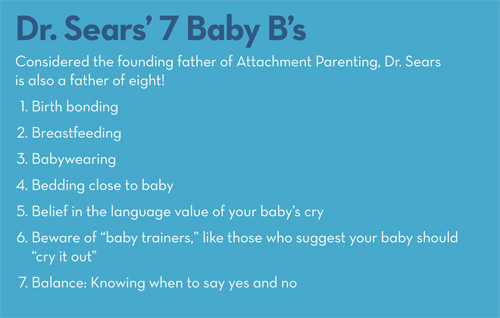
attachment parenting is a highly child-centered approach that aims to form secure, early attachment between the child and their primary caregiver. Pediatrician Dr William Sears, who coined the term “attachment parenting,” identified seven practices fundamental to this parenting style:
1. Birth bonding
Plenty of skin-to-skin contact is good for both mother and baby, and should ideally begin as soon after birth as possible. This type of nurturing, physical contact is an important element of attachment parenting.
2. Breastfeeding
While it’s generally recommended that, where possible, babies are breastfed for the first six months, William Sears suggests that extended breastfeeding has many benefits for young infants.
3. Baby wearing
This kind of parenting involves baby wearing, where the mother “wears” her baby in a sling or carrier as much as possible throughout the day. Dr Sears believes that this helps with the child’s physical sense of balance, creates secure attachment, and even has language value, which manifests in later childhood.
4. Bedding close to the baby
Co-sleeping is an important element of William Sears’ attachment parenting theory; he suggests that it lowers SIDS risk. Parents keen to try this, however, should always practice safe co-sleeping when bed sharing to avoid risks such as the baby becoming too warm or falling out of bed. It’s generally recommended that babies sleep in the same room as their parents for at least the first six months.
5. Belief in the baby’s cry
Secure attachment, according to the tenets of this parenting style, is a result of developing trust and empathy. This means responding quickly, consistently, and appropriately when the baby cries, and being sensitive to what they’re trying to communicate.
6. Beware of baby trainers
Baby training is generally not recommended by Dr William Sears. He suggests parents avoid any form of sleep training to help their little one fall asleep or self-settle, and that feeding is one on demand.
7. Balance
Sears recognizes that attachment parenting is more intensive than most mainstream parenting styles. To this end, he recommends balance to ensure that such “intensive mothering” doesn’t result in burnout. He stresses the importance of balancing family life by, for example, delegating tasks and allowing other caregivers to help out where possible.
Benefits for Children
Those who endorse attachment parenting point to its many benefits, including in child development. Here are the key benefits that this parenting behavior may deliver.
Creates a Strong Bond
For AP parents, physical and emotional closeness, and paying careful attention to a baby’s signals, create a strong bond. Parenting practices such as breastfeeding, babywearing, co-sleeping, and paying close attention to the baby’s cries promote trust and emotional development and lay the foundations for a strong relationship both now and in the future.
Lays the Groundwork for Healthy Future Relationships
The benefits that children experience through attachment parenting can set them up for healthy relationships in later life. By putting empathy, trust, and connection at the fore, children are more likely to grow up with higher levels of self-esteem and healthier relationship standards.
Develops Better Emotional Regulation Skills
Many parents who practice attachment parenting point to its ability to develop important emotional regulation skills. Conversely, insecure attachment, which can be the result of emotionally unavailable or inconsistent caregiving, may result in increased anxiety and other negative emotions that could make it more difficult for the child to build friendships and other connections as they get older.
Advanced Language Acquisition
Children who are attachment-parented often excel in the area of language acquisition. Along with the other benefits of being kept close to the mother’s body, these babies get much more interaction with their primary caregiver, giving a powerful boost to brain development.
Builds Problem-Solving Skills
Attachment parenting promotes trust, empathy, and patience, all of which can help with self-esteem. Through consistent, responsive caregiving, a baby learns how to approach challenges. In older infants and children, this can translate into better problem-solving skills, resilience, and the confidence to experiment with solutions.
Decreases the Risk of Behavioral Problems
From a behavioral development viewpoint, babies who are securely attached are often less likely to exhibit behavioral problems as they grow older. Studies have shown that attachment parenting may even lessen the likelihood of older children developing mental health issues, such as depression.
Better Stress Response Mechanisms
Babies who receive plenty of skin-to-skin contact—especially in the first weeks of life—have been shown to develop healthier stress control mechanisms, something which offers life-long benefits. As well as being better able to regulate their emotional states, these young children may also have healthier sleep patterns and more developed cognitive control.
Insecure Attachment and Its Consequences

FAMILY STOCK/Shutterstock.com
While securely attached children experience many benefits, there may be consequences when it comes to insecure attachment.
Insecure attachment refers to attachment patterns that develop when a child’s emotional needs are met inconsistently, unpredictably, or in ways that feel unsafe.
According to attachment parenting theory, these include:
- Problems with emotional regulation
- Low sense of self-esteem and emotional resilience
- Behavioral issues, potentially anxiety and depression in later childhood
- Trust issues and problems forming healthy relationships
- Difficulties with social interactions
- A lack of coping skills and mechanisms
Many of these issues can manifest in—or last well into—adult life. According to psychologists, there are three main types of insecure attachment: anxious, avoidant, and disorganized. Children who are anxiously attached may become very distressed when separated from their caregiver and manifest consistently clingy behavior. Even when their caregiver returns, they may struggle to find comfort and reassurance.
Avoidant attachment, meanwhile, is marked by self-reliance and emotional distance. Children experiencing this type of insecure attachment may exhibit little distress when separated from their caregiver, even appearing indifferent to this person’s presence or absence. This attitude, however, may mask an underlying fear of rejection or a deep-rooted feeling of insecurity.
Finally, disorganized attachment is the most severe type of insecure attachment. Kids experiencing this may manifest confusing, erratic, and even contradictory behaviors, or display a mix of anxious and avoidant responses when interacting with their caregiver. Disorganized attachment, according to psychologists, may be the result of experiencing trauma or fear associated with a caregiver.
Common Challenges & Criticisms
Attachment parenting isn’t without its challenges. Critics of the approach suggest that mothers risk burning out in their attempts to follow its tenets. The demands of this type of intensive parenting may, they warn, cause many women to feel significant emotional and physical strain, and that they’ve failed to live up to the style’s standards.
Other criticisms include that AP mothers could face difficulties with discipline and establishing boundaries as their child gets older, with an attachment focus leading to permissiveness, along with the potential for over-dependence. Those who aren’t fans of attachment theory suggest that it may, in time, restrict a child’s ability (and willingness) to explore their world independently.
Due to the challenges of this parenting style, many parents choose to adopt a mixed approach that balances a high level of maternal sensitivity with the practical realities of daily family life.
Attachment Parenting vs. Other Parenting Styles
Skyline Graphics / Shutterstock.com
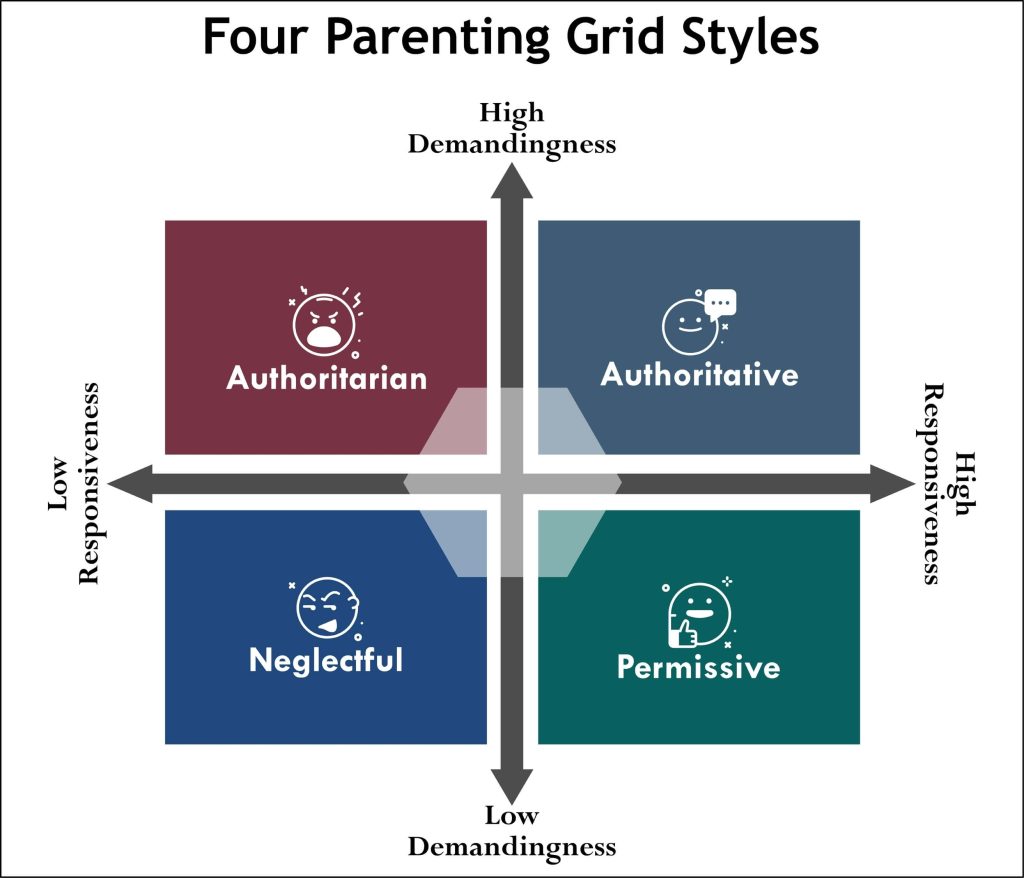
While attachment parenting emphasizes responsiveness and emotional connection, it’s helpful to see how it compares with other common parenting approaches. Each style carries its own philosophy, strengths, and potential challenges, and understanding the differences can help parents choose the approach—or combination—that works best for their family.
| Type of Parenting | Core Concept | Pros | Cons | Example |
| Attachment | Responsiveness, emotional and physical connection | Develops strong bonds, builds trust and empathy | Intensive form of parenting | Babywearing, consistent, quick response of baby’s cries |
| Authoritative | High level of control, low warmth | Promotes self-discipline, confidence and independence | Can be demanding for parents to balance warmth and rules | Clear expectations, consistent but flexible rules, open communication |
| Authoritarian | High control, low warmth | Can encourage obedience and order | May lead to anxiety, low self-esteem, and reduced independence | Strict rules enforced with little flexibility, harsh consequences |
| Permissive | Low control, high warmth | Nurtures emotional security and creativity | Can lead to difficulty following rules and a lack of self-regulation | Avoid discipline, allow child to make most decisions |
| Neglectful | Low control, low warmth | May promote some level of independence | Lack of guidance, potential emotional detachment | Minimal supervision, emotional distance |
Attachment Parenting in Practice
But what does being an attachment parent look like on the ground? Here are some tips to get started, or incorporate into your routine:
- Enjoy plenty of skin-to-skin contact. This could be in the form of lots of cuddles, gentle touch, and babywearing.
- Sleep in the same room as your child—or consider safe co-sleeping.
- Make consistent, gentle eye contact with your baby during interactions to develop connection and trust.
- If possible, breastfeed your baby, and consider extended breastfeeding if this is right for you and your family.
- Be responsive and consistent, and pay close attention to your baby’s cries and signals.
- Look for opportunities to communicate your presence and love, whether this is through talking calmly, sensitive touch, or singing.
- As children get a little older, encourage exploration while staying present, offering gentle guidance as they learn and grow.
Creating a safe, predictable environment is also an important element of attachment parenting. This means coming up with routines and establishing boundaries to help your child feel more secure and confident as they develop.
Establishing a soothing bedtime routine is a good place to start with this, and is something that can be done even when your baby is very young. A bedtime routine could incorporate, for example, a bath, a feed, a nappy change, and a story before settling your little one to sleep. By following the same routine every bedtime or naptime, your baby will soon pick up on the “sleepy” cues, and you’ll likely—in time—find it easier to settle them even when you’re away from home.
Attachment Parenting by Age: Tips for Parents
Babies grow quickly—at this young age, it seems as if almost every day brings new changes. To get the most out of attachment parenting, whether you choose to fully endorse this method or incorporate elements into your approach, it’s important to adapt as your child changes and grows.
Establishing the Bond — 0 to 2 Months
During these very early days, focus on plenty of skin-to-skin contact, breastfeeding on demand, frequent holding, and responding quickly and sensitively to your baby’s needs. This sets the foundation for secure attachment.
Interaction and Response — 2 to 6 Months
Consistent emotional care and response remain key. At this stage, babies begin to distinguish between those they are and aren’t familiar with. Maintain lots of gentle eye contact while interacting with your baby, and respond promptly to their cues and cries.
Growing Independence — 6 to 12 Months
At this age, babies usually start to crawl and explore their world—parents should encourage this while remaining present, to provide a secure base. Stay nearby while allowing safe exploration and, when the baby returns for comfort, offer plenty of reassurance.
Testing Limits — 1 to 3 Years
Testing limits and the growing level of their independence is what the toddler years are all about! For parents, this stage is about balancing guidance with freedom and bolstering a child’s sense of security and stability. Respond with empathy to outbursts, set clear boundaries, and deploy positive reinforcement.
Building Social Skills — 3 to 5 Years
As young children begin to develop connections outside the family, continue to provide a secure and supportive base. It’s a good idea to regularly discuss feelings, encourage playdates, and model healthy relationships.
Developing Emotional Intelligence — 5+ Years
As your child continues to grow, it’s important to remain emotionally available while nurturing their ever-developing independence. Maintain open communication, validate their emotions, and promote good problem-solving skills.
Read more: Attachment Stages in Children: What Do Parents Need to Know.
Using Tools to Support Balanced Parenting

Findmykids app
Parenting is hard, full stop, and we all need a little help now and then. As well as a range of attached parenting books (you can find details of some of these below), there are lots of online resources you can use to support a balanced parenting approach.
These include:
- MamaZen, which is designed to help parents feel calmer and more confident, emotionally grounded, and energized.
- Uplifty, with tips on mindful parenting or the Natural Parent online magazine. The latter is full of natural parenting advice and information, including articles on gentle discipline, breastfeeding, baby-led weaning, and natural health.
- Parent Cue, a digital tool that provides age-specific parenting insights and daily prompts to connect with your child.
- Insight Timer – Parenting Meditation, offering guided meditations to reduce stress and cultivate patience in everyday parenting.
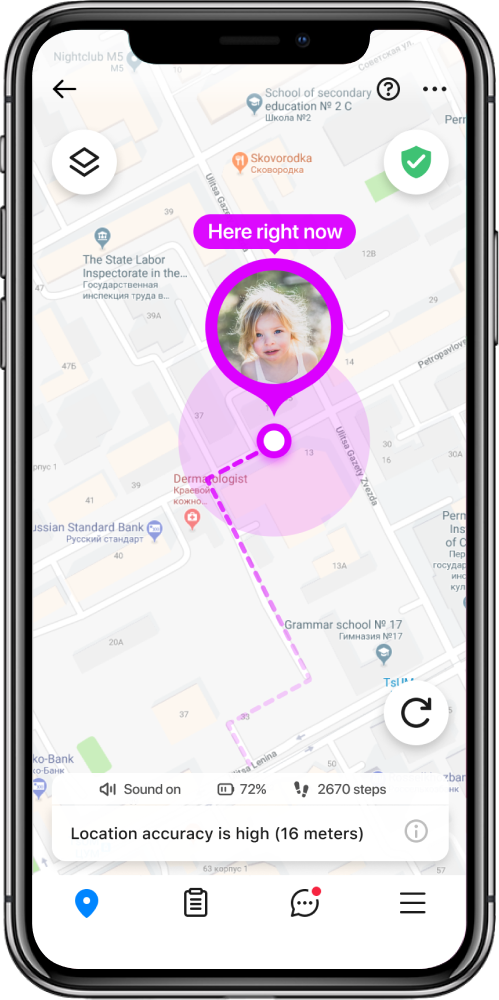
As your child grows, a parental-control app like Findmykids becomes invaluable. This app allows you to track your child’s real-time location, view their location history, monitor app usage and screen time, and receive alerts when they leave Safe Zones such as school or a friend’s house. With Findmykids, you can balance care and independence, ensuring your child has freedom while you maintain peace of mind.
Try Findmykids today and experience how technology can support thoughtful, connected, and safe parenting.
Attachment Parenting Books and Resources
- The Attachment Parenting Book by William Sears and Martha Sears—a wide-ranging guide covering all aspects of attachment parenting from birth to the toddler years, based on the authors’ experience raising their own eight children.
- The Baby Book by William Sears and Martha Sears—from sleep issues to breastfeeding, this book offers attachment parenting advice and guidance for newborns and young babies.
- Attached at the Heart by Barbara Nicholson and Lysa Parker—explains the theory behind attachment parenting, its benefits, and offers plenty of practical tips and advice.
- The Continuum Concept by Jean Liedloff—takes a look at child-raising practices within indigenous South American communities, offering fascinating insights into how human infants develop.
- Parenting from the Inside Out by Daniel Siegel and Mary Hartzell—helping parents understand how their experiences as infants shape interactions with their own children.
- Raising a Secure Child by Kent Hoffman, Glen Cooper, and Bert Powell—this book is a practical guide for parents keen to nurture secure attachment in their child.
- Attachment Parenting: Instinctive Care for Your Baby and Young Child by Katie Allison Granju and Betsy Kennedy—an exploration of the importance of parents listening to their own instincts, along with practical tips on adopting an attachment parenting approach.
- The Steps: 12 Secrets to Raising Happy and Successful Kids by Andrew Watson— drawing on decades of experience, this book looks at positive parenting approaches and why they can be so beneficial.
- Behavioral Development Bulletin—published by the American Psychological Association, the bulletin offers a wealth of articles on issues including child development, the acquisition of basic skills, socialization, and much more.
Using Attachment Parenting to Nurture a Strong Connection and Healthy Development
With many American parents turning to the principles of attachment parenting, it’s becoming obvious that this parenting approach is much more than a passing fad. It’s clear to see why it’s become so popular. As well as helping develop a strong bond with your baby, attachment parenting has been linked to many other benefits, including better cognitive development and the ability to form healthy, happy relationships in childhood and adult life.
However, the attachment approach is intensive and, for many, following its tenets to the letter may simply be unrealistic, in busy households where one or both caregivers are going out to work.
If it’s not possible for you to adhere to every single aspect of attachment parenting (or you choose not to), don’t beat yourself up. Parenting is already full of enough pressure. Consider, instead, adopting some of the approach’s methods into your parenting routine, in a way that works for you and your family.
FAQs
What is attachment parenting?
Attachment parenting puts a strong focus on building a secure bond between the baby and its primary caregiver, responsiveness, and physical and emotional proximity and availability. It’s associated with practices including birth bonding, babywearing, breastfeeding, and believing in the baby’s cry.
What are the 7 Bs of attached parenting?
According to William Sears, the 7 Bs of the attached parenting approach are:
- Birth bonding. Which involves plenty of skin-to-skin contact is good for both you and your baby.
- Breastfeeding. William Sears suggests that extended breastfeeding has many benefits for young infants.
- Baby wearing. This involves wearing the baby in a sling or carrier as much as possible.
- Bedding close to the baby. Such as sleeping in the same room or co-sleeping. Parents keen to try this, however, should always practice safe co-sleeping when bed sharing to avoid risks
- Belief in the baby’s cry. This means responding quickly, consistently, and appropriately when the baby cries, and being sensitive to what they’re trying to communicate.
- Beware of baby trainers. Baby training (such as sleep training) is generally not recommended by Dr William Sears.
- Balance. This is about the importance of balancing family life by, for example, delegating tasks and allowing other caregivers to help out where possible.
What are the downsides of attachment parenting?
While lots of benefits have been linked to attachment parenting, it is, for many, a particularly intensive style of parenting that can lead to burnout and stress. Some moms also feel the method adds pressure to be the “perfect” parent, and that, in busy households, it may be impossible to follow its principles to the letter.
What are the four principles of attachment parenting, and why do they work?
The four principles of attachment parenting are nurturing touch, responsive parenting, emotional availability, and the creation of a safe environment. Nurturing touch is effective because it provides security and reassurance to the child while helping to form a strong bond with their caregiver. Responsive parenting means consistently, quickly, and sensitively meeting a child’s needs, and is at the heart of attachment parenting. It’s believed that doing so nurtures trust, empathy, and attachment.
Emotional availability is vital to help children form secure attachments and can result in children who are better able to form healthy connections in adult life. Finally, by creating a safe environment with predictable routines, parents give their children a secure base from which to explore the world and become more independent.
Cover image: fizkes / Shutterstock.com
Проверьте электронный ящик