
















Parents going through a divorce or separation are faced with a major decision about how they’ll continue to raise their children. While many families go to court to dispute custody of their children, a new parenting model is emerging: co-parenting.
In this article, we will outline what co-parenting is, practical strategies for success, and how it benefits children in the short and long-term.
Contents:
- What Is Co-Parenting?
- Principles of Successful Co-Parenting
- Types of Co-Parenting
- Co-Parenting Benefits for Children
- Practical Strategies for Effective Co-Parenting
- Using Technology to Support Co-Parenting
- FAQs
What Is Co-Parenting?
Co-parenting is a parenting model where divorced or separated parents continue to raise their children together, even if they are no longer in a romantic relationship.
Instead of going to family court and having lawyers fight for custody agreements of the children, parents work together to find a parenting plan suitable for their new family dynamic.
This could mean the child splits their time with both parents evenly or has a schedule to see the parent they do not live with. Additionally, parents work together to stay aligned in their child’s upbringing, including discussing major milestones, attending parent-teacher conferences, and attending important doctors’ appointments.
It’s important to understand that co-parenting isn’t a cookie-cutter style. There are different ways to co-parent, and finding the one that works for you is part of the co-parenting planning process.
Principles of Successful Co-Parenting

fizkes / Shutterstock.com
It can take time to get the hang of co-parenting. And while being a successful co-parent doesn’t mean you’re perfect or that there is no pain, it is an excellent way to create safety, stability, and security for your child.
Your Child’s Needs Always Come First
It might sound obvious, but this is what you should always keep in mind when figuring out co-parenting.
It’s not about you and your ex-partner. Co-parenting means raising your child with the best possible love and support. This is the time to let go of your ego and any anger or resentment you hold towards your former spouse and put your child’s needs first.
Separate the Adult Relationship from the Parenting Relationship
Moving on from the romantic relationship you once had with your ex-partner to a parenting-focused relationship can take time. However, this is one of the key principles of success when it comes to co-parenting.
Let go of old arguments, avoid emotional conversations unrelated to your child, and treat your relationship as a professional matter. You don’t necessarily have to like each other, but you do have to put your emotions aside and work together for the sake of your child.
Respect the Other Parent’s Role
Children greatly benefit from having positive relationships with both of their parents. So, what does this mean when co-parenting? It means showing respect for the other parent’s role.
Avoid speaking poorly about the child’s other parent, as this could make the child feel like you are making them choose sides. Additionally, putting your child in the position of the messenger instead of confronting the other parent yourself is also a sign of disrespect.
When you are both able to respect each other, your child is able to enjoy relationships with both of you.
Communicate Clearly, Calmly, and Briefly
Communication is key in any relationship, especially a co-parenting relationship. It’s important to keep your conversations clear, calm, and to the point. This can remove the emotional element and keep the conversation factual and logistical.
Remember, there is no “winning” in co-parenting relationships. The only “win” is when you both coordinate and come to solid agreements.
Create Consistency Across Homes
Children tend to feel safer and more secure when they have predictable expectations at home. When co-parenting, try to align rules for your children across both homes.
This could be as simple as having the same bedtime and routine, similar chores, and clear rules regarding respect and behavior. When your child knows the rules and what to expect at both of their parents’ homes.
Manage Conflict Away from Your Child
Conflict is inevitable. Even the most successful co-parents experience bouts of conflict. However, it’s important to handle them away from your child. No child wants to see their parents arguing, especially if they are at the center of it.
Be Flexible, But Set Boundaries
Flexibility is one of the most important aspects of co-parenting. Even when you have a set schedule and rules, things change. It’s just the way life works.
While it’s important to stay flexible with plans and not get too hung up on last-minute changes, you should still have firm boundaries with your ex. A good rule of thumb is to be flexible when it benefits the child, not the other parent.
Types of Co-Parenting
Just like there are different parenting styles, there are also different types of co-parenting. Finding the style that best suits your lifestyle is one of the first steps to success in this parenting journey.
Remember, you’ll need to allow yourself and your child to adjust to these new parenting responsibilities. The child and family will have to find a new way to handle everyday life, and while it may seem difficult now, it is possible, and it can get better.
Cooperative Co-Parenting
This is the gold standard of co-parenting. It most likely takes place in low-conflict separations where the parents have strong communication skills and mutual respect.
This is when parents openly communicate, share information about their child, and make decisions together. They attend school events, sports events, and doctor appointments together, coordinate schedules, discuss discipline approaches for a child’s behavior, and change plans when it benefits the child.
Parallel Co-Parenting
If the parents have a high-conflict relationship where communication always ends in an argument, parallel co-parenting might be the best method. This is where parents have limited direct contact. They manage their household independently, but follow a basic parenting plan.
Most of the time, communication takes place through texting or email, and hand-offs are quick and neutral. They operate independently of each other and keep the child away from seeing conflict between them.
Conflict-Driven Co-Parenting
This type of co-parenting is strongly discouraged, but it can take place after a difficult divorce or separation. There’s often a lot of conflict where parents argue frequently.
In most cases, parents will use the child as a messenger to share information about schedule changes or grievances one parent has with the other. This is not a great approach for either the child or the parent. The child can have negative feelings of anxiety, loyalty conflicts, emotional stress, and behavioral issues.
If your co-parenting style sounds like this, it’s best to seek mediation, coaching, or therapy to find solutions.
Disengaged Co-Parenting
If there is one parent who is minimally involved, then you may be following a disengaged co-parenting style. This is when one parent assumes responsibility for the child, while the other may be inconsistent or emotionally distant.
When one parent is absent, a young child may feel rejected or confused if they don’t understand the situation.
Related: How to Raise a Happy Child with an Absent Father.
Protective Co-Parenting
A protective co-parenting style is used when the situation has safety concerns, such as manipulation or emotional abuse. These cases often involve legal channels and structured systems to maintain clear boundaries in the parenting relationship.
When parents communicate, it’s often done through a legal mediator or parenting app. Exchanges are usually supervised by a third party, and all expectations and boundaries are firm and documented.
Child-Centered Co-Parenting
Co-parents find that if they are both committed to their child’s life, focusing on growth and emotional well-being, child-centered co-parenting may be the best option.
This is where parents intentionally make decisions based on their child’s developmental stage and emotional needs. They are willing to compromise and be flexible for the sake of the child.
This approach makes children feel seen, heard, and prioritized over the conflicts between their parents.
Co-Parenting Benefits for Children

DREAM INSPIRATION/Shutterstock.com
Co-parenting done correctly can have numerous benefits for the child’s development, mental health, and self-confidence. Family studies show that co-parenting is found to offer more support to the child and has better outcomes than other parenting styles in separation situations.
Emotional Security and Stability
When children feel secure and stable in their emotions, it can reduce anxiety and behavioral issues. Divorced parents who can provide this emotional stability and keep conflict away from their child can help them feel calm, self-assured, and relaxed.
Stronger Relationships with Both Parents
Healthy co-parenting allows children to maintain meaningful relationships with both of their parents. They’re encouraged to love two parents freely, without being made to feel bad or disloyal to the other parent for doing so.
These positive relationships help your child feel safe and secure, especially when time spent with parents is consistent. These attachments support healthy self-esteem and positive emotional development in children.
Many separated parents still want their children to continue to see the family members as a family unit, even if the parents live separately. Just because parenting responsibilities are now split doesn’t mean the child and family aren’t still working together.
Reduced Anxiety, Guilt, or Stress
When divorce or separation is high-conflict, with plenty of arguing between the parents, the child can develop internalized stress. However, when co-parenting is done well, children are less likely to have chronic worrying, feelings of guilt when spending time with one parent, or anxiety about transitioning between homes.
Better Emotional Regulation and Coping Skills
Never underestimate just how much your child sees and internalizes. Children are constantly watching their parents, learning from them about how they handle conflict and certain situations.
When you successfully co-parent with calm communication, boundaries, and respect, your child also learns how to do this in their own relationships. They’ll develop better emotional regulation and coping skills that carry into friendships, school, and future romantic relationships.
Healthier Identity and Self-Worth
It’s quite common that children see themselves as part of both their parents. So, when they see respectful co-parenting, they can develop a healthier identity and self-worth. They feel accepted for who they are, integrate both sides of their identity from both parents, and feel free to be themselves.
Positive Long-Term Relationship Patterns
The goal as parents is to give children the skills and building blocks they need to be successful adults. Co-parenting can help equip them with the skills they need to build healthy relationships in adulthood.
By setting an example of how to communicate, set boundaries, and show respect towards others, children learn how a healthy relationship works.
Practical Strategies for Effective Co-Parenting
Approaching co-parenting after a separation can feel overwhelming. It’s an adjustment that both parents need to navigate, and it can take some trial and error. Below are practical strategies to incorporate into your co-parenting to ensure success.
Managing Conflict and Emotions
You’re likely to experience conflict after a separation, but it’s how you manage it that makes the difference for your child. Effective co-parenting requires parents to recognize their own emotions and triggers and learn how to keep communication focused on the child rather than their past relationship.
However, managing conflict doesn’t mean avoiding it. Instead, parents should address disagreements calmly, privately, and respectfully. The most important thing is to handle it with the other parent, leaving the child out of the situation entirely. Children exposed to parental stress and arguments can experience a negative effect.
Over time, the more you handle and resolve conflicts, the better you will be at managing them successfully with the other parent.
Co-Parenting Across Ages
Children experience separation differently depending on the child’s age and developmental stage. That’s why co-parenting requires flexibility as the child grows older.
Young children might need more reassurance and consistent routines, while school-aged children benefit from clear expectations and a safe place to express themselves. Teenagers will seek more autonomy, but will still rely on parental communication and a supportive environment for emotional stability.
Understanding how to cater to your child’s developmental stage to ensure they receive the emotional support they need while co-parenting is fundamental to its success. Remember to stay responsive to your child’s changing needs and remain flexible in your parenting cooperation.
Clear Communication and Boundaries Between Parents
Clear, respectful communication is one of the most practical tools for successful co-parenting. When parents can communicate directly, calmly, and with clear boundaries, they prevent misunderstandings and unnecessary issues.
In co-parenting, communication often focuses on logistics and the child’s needs. It avoids hashing out previous arguments or grievances from the relationship. In fact, it’s best to keep emotions out of these conversations altogether.
Choosing appropriate channels to communicate with the other parent can also be helpful. If phone calls are too much, then stick to texting or emailing. There are even dedicated apps where you can co-parent seamlessly and communicate about children’s schedules and your child’s needs.
Over time, consistent and structured communication will create predictability for both parents and allow children to experience cooperation without adult conflict.
Consistent and Predictable Routines Across Homes
Children thrive on consistency and predictability. When the child has consistent routines and rules across homes, they can feel more at ease and less anxious about transitioning from one parent’s home to the other.
For example, routines such as bedtime, school responsibilities, and daily expectations are relatively aligned across the homes. Homes don’t need to operate identically, but maintaining shared expectations and core routines can provide the stability your child needs to reduce confusion and behavioral changes.
Having homes with two different rules can make it difficult for your child’s adjustment to post-divorce life.
Read also: How to Make Things Work as a Blended Family.
Using Technology to Support Co-Parenting
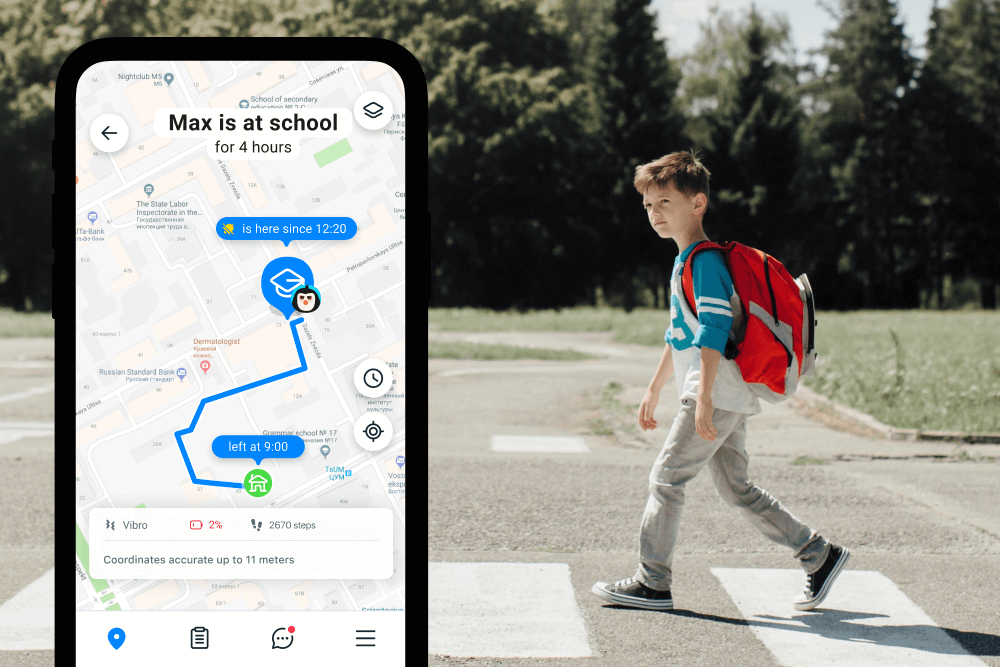
Findmykids app
Modern-day co-parenting with an ex-spouse or former partner has become more manageable thanks to technology. Through mobile apps, parents can keep tabs on their children, share up-to-date information, communicate, and even update schedules if needed.
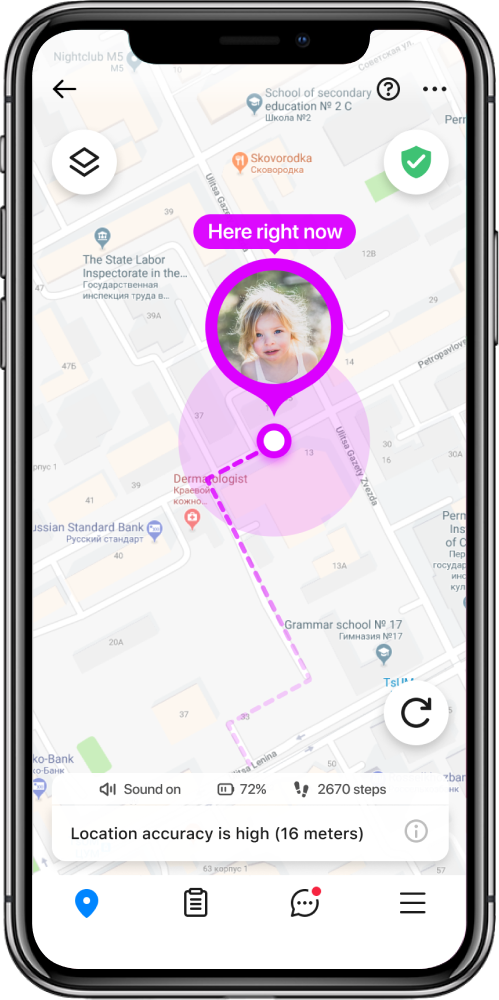
Findmykids is a parenting app that can be a valuable addition to the co-parenting approach. While it is not a dedicated co-parenting app, it helps parents know their child’s location at all times, which is especially useful when parents switch off on weekends.
The app provides real-time location tracking, allowing parents to see exactly where their child is. Additionally, parents can use the Sound Around feature to listen to what is happening around their child in case they didn’t pick up their phone call. It’s a way to make sure they are safe.
But the app isn’t just for parental overview. Children can also use the SOS button if there is an emergency. Once they press this button, emergency services and the parents are notified and provided with the child’s location.
Lastly, one of the most helpful features of the app is the screen time limit settings and parental controls. Parents can set time limits on certain apps and keep track of how their children use mobile devices. This helps parents keep consistency when it comes to rules and expectations, no matter which home the child is in.
Ready to make co-parenting smoother and safer? Download Findmykids for free today and stay connected no matter where your child is!
Find a Co-Parenting Style That Works for You and Your Child
Co-parenting is a great alternative for separated parents who want to avoid stressful family law attorneys and procedures. When parents can come together and agree on joint custody arrangements and create a cooperative relationship outside of family court, it’s best for everyone, including the child.
Finding a healthy co-parenting arrangement can have lasting positive effects on your child’s development and mental health. Additionally, you can maintain respectful, cordial family relations even during conflict. And that’s one of the hardest parts of parenting with a former partner.
If you found this article helpful, make sure to send it to a friend who might also benefit from the information. And don’t forget to check out the Findmykids app to help make your co-parenting agreement easier and have more peace of mind when your child stays at the other parent’s house.
FAQs
What is the meaning of co-parenting?
Co-parenting refers to a collaborative parenting arrangement where two individuals—typically separated or divorced parents—work together to raise their child. It involves shared responsibilities, joint decision-making, and consistent communication, all centered on the child’s best interests. Effective co-parenting requires mutual respect, emotional stability, and coordinated efforts to provide a secure and supportive environment, regardless of the parents’ personal relationship.
What is the difference between co-parenting and joint custody?
Co-parenting refers to the approach parents take to raise their child after separation. Joint custody is a legal arrangement that determines how much time and decision-making are share between parents.
It’s possible for parents to have a joint custody arrangement without effective co-parenting, and they can co-parent successfully even with different custody schedules.
What are the three types of co-parenting?
There are three common ways separated parents manage raising a child: Cooperative, Parallel, and Conflicted. The first is marked by teamwork, mutual respect, and shared decisions. In parallel arrangements, parents minimize contact and handle responsibilities independently to avoid friction. The conflicted model involves ongoing disputes and poor coordination, which can create stress and instability for the child.
Can co-parenting work if parents don’t get along?
Yes, co-parenting does not require parents to be friends or agree on everything. In high-conflict situations, parallel co-parenting is the best option. It allows parents to limit interaction while still meeting the child’s best interests and needs.
How do you co-parent with a difficult or high-conflict ex?
Co-parenting with a difficult ex-partner often requires clear boundaries and strong communication that focuses on logistics instead of emotions. The most important thing is to keep conflict away from the child and to never involve them.
What are common co-parenting mistakes to avoid?
Common co-parenting mistakes include speaking negatively about the other parent in front of the child, using the child as a messenger, and arguing during hand-offs. These behaviors can increase stress and anxiety for children over time.
Is co-parenting better for children than sole custody?
In many cases, children benefit from co-parenting when it’s done respectfully and safely. Maintaining relationships with both you and the other parent, reducing conflict exposure, and providing consistency can support emotional security and development. However, co-parenting should always prioritize the child’s safety and well-being.
What is an example of failure to co-parent?
A clear example of failed co-parenting is when one parent withholds school or medical information, refuses to communicate directly, or uses the child as a messenger. This includes actions like ignoring agreed schedules, badmouthing the other parent in front of the child, or making decisions unilaterally. These behaviors shift focus from the child’s well-being to personal conflict, creating instability and emotional stress for the child.
What is the 7 7 7 rule parenting?
The 7-7-7 rule has two key interpretations. One encourages daily bonding through 21 minutes of focused attention—7 minutes in the morning, after school, and before bed—to strengthen emotional connection. The other outlines three parenting phases over 21 years: ages 0–7 (Play), 7–14 (Teach), and 14–21 (Guide), helping parents align their role with each stage of development. Both approaches promote secure, resilient children through consistent, age-appropriate engagement.
Cover image: FotoHelin / Shutterstock.com
Проверьте электронный ящик