















How to stop phone addiction in kids has become a major concern for families, as smartphone overuse increasingly affects children and young people around the world. It can lead to a range of troubling consequences, and many parents, teachers, and guardians are rightfully worried about their kids’ well-being. This guide explores practical methods and tips to help curb screen time and restore balance.
Contents:
- Phone Addiction — What Is It?
- When to Seek Help
- Useful Strategies to Stop Smartphone Addiction
- Guiding Your Kids Away from Smartphones
- Psychological Perspectives & Why Punishment Doesn’t Work
- FAQs
Phone Addiction — What Is It?

Ground Picture/Shutterstock.com
Phone addiction, as the name suggests, is a phenomenon in which people become obsessively attached to their smartphones, spending excessive time per day on them, unable to enjoy or participate in other activities, and needing to have their phones on their person at all times.
Phone addiction is not currently recognized as a clinical condition by the American Psychiatric Association (APA) in the DSM-5 (Diagnostic and Statistical Manual of Mental Disorders). However, it is starting to get recognition as a worldwide public health issue and is often looped into behavioral addiction patterns.
Cell phone addiction can affect people of all ages, but is most prevalent in young people who tend to use and rely on their phones more than older generations.
Key Statistics
- 46% of americans admit to being addicted to their smartphone. (Reviews)
- The average person in the US checks their phone over 353 times daily. (Asurion)
- Children between the ages of 8 and 18 spend 7.5 hours on their phones per day. (AACAP)
- ⅓ of parents feel their teens are distracted by phones during conversations. (Pew Research)
- 44% of americans feel anxious without their phones. (YouGov)
What Causes Phone Addiction in Children?

Julija Sulkovska/Shutterstock.com
Children and young adults seem to be more addicted to their phones than adults. While most kids receive their first cell phone between the ages of 11 and 12, they are exposed to screens much earlier.
From an early age, parents place tablets in front of their children during crucial developmental years to watch shows, play games, or video chat with family members. Research shows that early overexposure to screens increases the risk of smartphone addiction.
as kids grow older and receive their own phones, this is when cell phone addiction can become more prevalent. One study shows that 76% of young adults spend most of their free time on their phones than interacting with others.
But how do kids spend time on their phones and develop this Internet addiction? A majority of their time is spent playing online games, scrolling social media, or chatting with friends over messaging apps. This all sounds quite normal, until you look deeper into why kids are so sucked into these smartphone apps.
Below are sneaky ways smartphone app developers keep your kids engaged and glued to their phones:
- Social Media: With infinite scrolling feeds and short-form videos, kids are inadvertently searching for their next short-lived dopamine hit. Additionally, social pressure to post and get as many likes and followers as possible keeps them engaged on these apps. They often see digital social interactions as more comfortable than real-life relationships, so they feel the need to use social media more.
- Mobile Games: Think of mobile games as a little casino in your child’s pocket. They are designed to keep you engaged through bells and whistles, instant rewards, and flashing graphics and lights. Just like casinos make it difficult for adults to leave, online games further enhance phone addiction in kids.
- Peer Pressure: Kids often fall victim to peer pressure. If they are with their friends, who are all using their phones, they will likely also pick up their own to look at their phone screen, further feeding into their cell phone addiction.
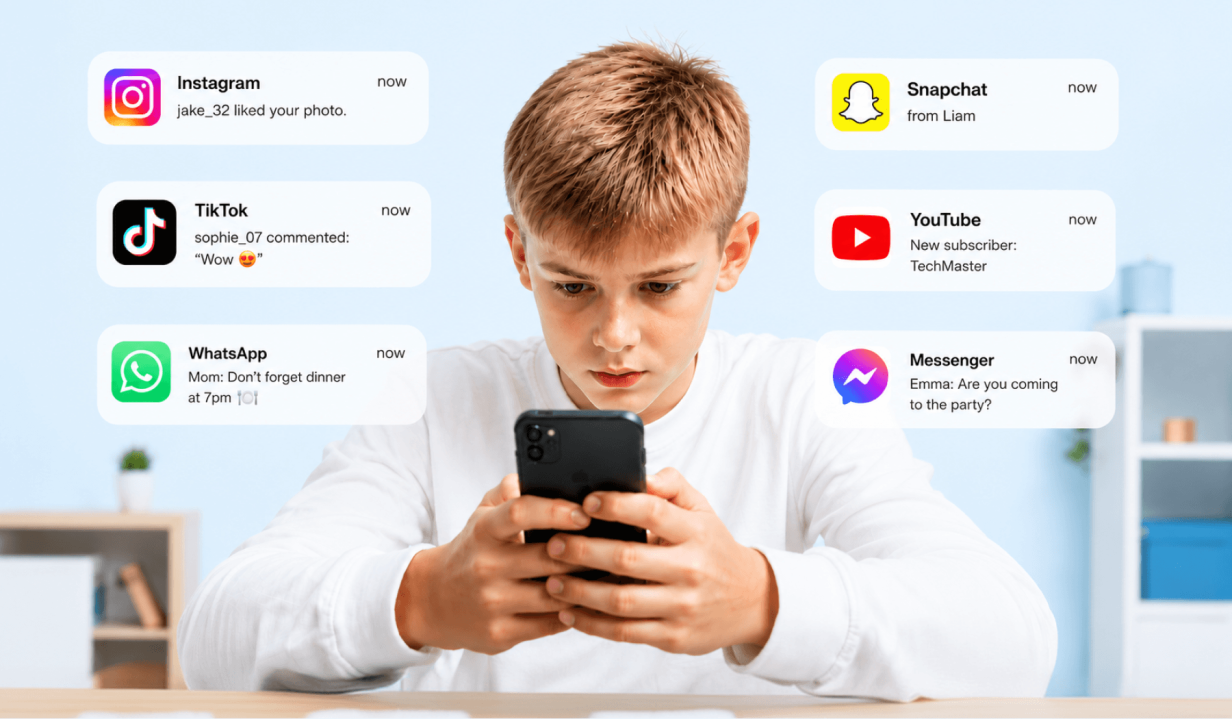
- Constant Notifications: Notifications from mobile apps like social media, text messaging, or games can cause distractions in young adults and children. They feel the need to pick up their phone and check the notification, which then leads them to getting sucked into their phone and not realizing how much time passes by.
Parents may be surprised to learn just how much time their children are spending on their phones. One report from the UK found that young boys between the ages of 15 and 17 spent more time playing online games than they spent in school each week. And when considering the average American teen, who spends more than 7 hours on their mobile phone every day, this is cause for concern.
But how do kids spend so much time satisfying their smartphone addiction? The answer is a lack of screen time limits.
When kids don’t have limits on their smartphone use, including web browsing, gaming, social media interactions, and more, they can spend excessive time on their cell phones. For this reason, we believe that parents should consider implementing screen time limits and encourage healthy digital habits (more on that later!).
Recently, we conducted a large-scale study involving children to determine how much time they spend on gadgets and what activities they engage in. Be sure to familiarize yourself with the results!
Symptoms of Cell Phone Addiction

DimaBerlin/Shutterstock.com
Spotting the signs of cell phone addiction can be tricky, but here are some of the most common symptoms to watch out for, either in yourself or in your children:
- Feelings of anxiety when the phone isn’t nearby or has no service.
- Finding that daily tasks and activities don’t get done due to excessive phone use.
- Needing to look at or use a cell phone even during face-to-face discussions.
- Physical effects, like neck aches, headaches, and eye strain.
- Losing track of time during mobile phone use.
- Fewer real-life relationships and connections.
- Losing friends or having trouble with family members due to smartphone usage.
- Attempts to limit phone use tend to fail.
- Feeling of phantom vibrations even when you don’t have your cell phone with you.
How Mobile Phone Addiction Affects Kids
Smartphone addiction can have a wide range of negative effects on a person’s life, especially when it comes to children. It’s common for social relationships to suffer when a person spends so much time on their cellphone and fails to engage with friends and family in person.
Mental health can also take a toll on people addicted to their cell phones. They have higher risk factors of developing stress and anxiety when they can’t engage in smartphone use, and it can negatively impact their social development, career prospects, and physical health, too.
Risk factors and warning signs of cell phone addiction in kids include:
- Increased risk of mental disorders: Excessive smartphone use, especially when scrolling news feeds and social media, can lead to high levels of depressive symptoms and anxiety in young age groups.
- Suicidal thoughts and behaviors: Teens with smartphone addiction, especially those who spend too much time on social media, have a higher risk of suicide related outcomes and ideation compared with low phone use peers. There is a direct link between excessive social media screen time and use to increased suicide rates in teens.
- Sleep problems and insufficient rest: Many children and teens (about 86% of them) use their phones between the hours of 11 p.m. and 5 a.m., disrupting melatonin production and sleep patterns.
- Characteristics of addictive behavior: Smartphone addiction, which exhibits addictive characteristics like compulsively checking their phone or withdrawal symptoms when they do not have their phone.
- Shortened attention span: Excessive social media and smartphone use has been linked to decreased attention span in young age groups.
- Poor emotional regulation: Cognitively, children tend to have poorer emotional regulation and coping skills when they experience cell phone addiction, which can negatively impact social interactions and their overall social life.
- Increased risk of obesity: When kids spend most of their free time alone and in front of a screen, they are more at risk of obesity issues. Studies show that children who owned a smartphone at 12 years old had a 40% higher chance of obesity.
- Loneliness and reduced face-to-face interaction: a major problem of cell phone addiction and excessive use is feelings of loneliness due to less in-person engagement. This can show up as children have difficulty making calls to strangers or feeling awkward or unsure of themselves in social situations.
As you can see, smartphone addiction can have a major impact on your child’s development, mental health, and daily life. However, there are ways to set limits on smartphone usage and encourage your child to break away from their phone addiction.
Unlock a better future for your child with the Findmykids app. Say goodbye to gadget addiction and hello to balanced screen time. Take control now and give your child the gift of a healthier digital lifestyle. Try Findmykids today!
When to Seek Help
If you are concerned about your child’s smartphone usage or internet addiction and aren’t sure if you should seek professional help, there are some warning signs to look out for:
- Extreme distress when separated from their phone: When your child becomes increasingly dependent on technology use and shows panic, agitation, or intense anxiety when they do not have their smartphone.
- Loss of interest in other activities: When your child prefers to spend more time on their cell phone and social media rather than hobbies like sports, hobbies, or friends.
- Irritability or anger when asked to set limits on mobile phone use: When smartphone users have outbursts when you suggest they limit the time they spend using their mobile device and other apps.
- Secretive behavior or lying about phone use: When your child hides apps, how much time they spend on their phone, or their online activity.
- Sleep issues tied to phone use: When your child stays up late on their phone and impacts their energy during the day.
- Declining academic performance: When your child’s grades are dropping, or they are skipping assignments because of excessive social media screen time or mobile phone use.
- Unable to focus on school or activities: When your child has trouble focusing on a task and constantly picks up their cell phone to check apps and notifications.
- Withdrawal from in-person social interaction: When your child prefers to spend time on their phone and social media over real-world relationships.
- Mood changes and mental health issues: When your child exhibits signs of anxiety, depression, or irritability that seem tied to social media or online games.
If your child exhibits these signs of smartphone addiction, it may be time to request professional help from child psychologists. Most people recovering from phone addiction also join support groups like Internet Tech Addiction Anonymous to find communities dealing with the same issues.
Useful Strategies to Stop Smartphone Addiction

Ground Picture/Shutterstock.com
Fortunately, even though phones can be very addictive, especially for teenagers and children, there are many ways in which addicts can take steps to control their addiction and stop it from having too big of an impact on their lives.
Here are some tips and tricks for how to stop your phone addiction.
Hobbies and Activities
Those who feel they spend too much time on their phone could consider engaging in other hobbies and activities. There are many different ways to spend your free time, and it’s healthy to have a balanced mix of tech-related activities, like phones, and real-life hobbies, like playing a sport, taking walks, or joining a club.
Other Devices
Another interesting and effective way to cut down on the amount of screen time you have on your phone is to spend time using other devices. While this may seem counterintuitive, it can be very beneficial for easing people away from their phones. You could try reading an eBook on an eReader, playing games on a console, watching films on TV, or using a computer.
Screen Time Rules and Boundaries
Setting rules and boundaries is a clear and efficient way to get phone usage under control. Try to set precise rules for how and when your phone should be used. For example, you could try to limit your screen time to a certain number of hours, or set a rule that you never use your phone at the dinner table or when chatting with a friend or family member, face-to-face.
Phone-Free Times

fizkes/Shutterstock.com
Following on from the previous point about rules and boundaries, another method you can try is to designate times of the day when you don’t use your phone. For example, most people try to switch off their phones in the evening, after 7 or 8 pm, so that they can spend quality time with the family and get into a more relaxed state of mind before going to bed.
Digital Locks
If you find that simply making up your own rules and boundaries doesn’t work because you have a habit of breaking them, you could also try a technological approach by using digital locks. There are various apps and features you can use on your phone to effectively lock it at certain times of the day, blocking you from using it, except in emergencies. You can also block certain apps or websites to prevent procrastination.
Related: How to Lock Apps on Android – All Possible Ways Revealed!
Device-Free Rooms
A family that wants to cut down on phone usage might also like to designate device-free rooms in the home. The dining room is a popular example. You might decide, for example, that your family will keep all phones out of the dining room, allowing you to all eat together without any distracting calls or messages.
Change Your Mindset
A big part of overcoming any addiction is to change your mindset and adjust the way you think and feel about the source of your addiction. Think carefully about how you use your device, and try to identify the root factors or triggers that make you rely on it so much. If you can adjust some of those triggers, you’ll be able to stop your phone from having such control over you.
Opt for Real-Life Interactions
Speaking to people on the phone can be fun and convenient, but it shouldn’t be your only source of interaction with others. Hanging out in real life can be much more fulfilling, and there’s so much you can do with other people if you actually meet up with them. Try to find a balance between chatting with people online and meeting them in reality.
Guiding Your Kids Away from Smartphones

Ground Picture/Shutterstock.com
For parents, it can be frightening and frustrating in equal measure to see that their children are suffering from any kind of technology addiction, including smartphone addiction.
The constant pull of mobile devices and the constant buzz of notifications can create unhealthy habits and lead to negative consequences.
And it may feel like there’s little you can do, but there are steps you can take to help guide your kids away from their devices and help them enjoy healthier, happier, and more balanced lives.
Set the Example
Kids often copy their parents and look up to them as their main role models. If children see their parents glued to their mobile phones all the time, they’ll assume that it’s natural, normal behavior, and they won’t see anything wrong with behaving the same way.
Over time, this can lead to bad habits that are hard to break. Parents and guardians should set an example by not using their phones excessively. As a parent, you can set the tone by limiting your own cell phone usage. This not only reduces your exposure to blue light (which can affect mental health and sleep patterns) but also demonstrates a balanced approach to using electronic devices.
Use Helpful Apps

Findmykids app
There are also many different mobile apps you can install on your kids’ phones to help track and control their usage. These are powerful tools that support parenting efforts without creating unnecessary friction.
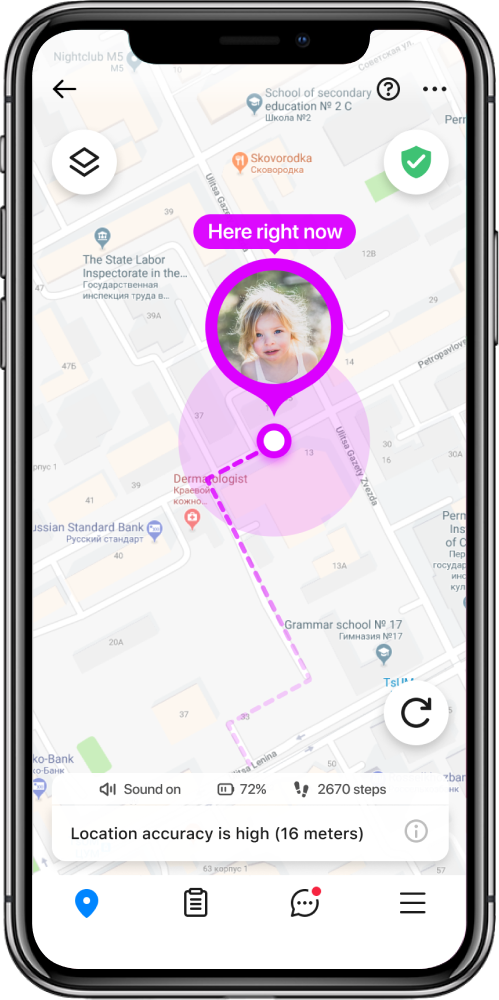
Findmykids, for example, helps parents monitor overall screen time and view app usage statistics. You can see how much time your child spends on different apps, including games and social media.
At the same time, you can set limits on individual apps or the entire device, either for a set period or until you choose to lift the restriction. Recurring schedules can be created for screen-free times like homework, meals, or bedtime.
In addition to digital awareness, Findmykids also supports real-world safety through location tracking and safety zone notifications—helping parents feel more confident both online and offline.
Ready to take control of your child’s screen time? Discover the power of the Findmykids app and help them build a healthy relationship with technology. Get started today!
Have Rules
Ultimately, it’s up to parents to set rules for their kids to follow. If you feel that your children are using their phones far too much, set a rule for how much screen time they can have each day, or create rules and times when the phones need to be switched off and put away. If the children refuse to follow the rules, discipline and communication can help them understand.
Go Offline
Having an “offline day” of the week or “offline hours” each night where you disconnect from the internet and avoid using online devices can be a great way to bring the family back together. This forced period of offline time can help children see that they don’t need their phones to have fun and that there are lots of other ways to spend their time. It can also combat issues like poor posture and mental health strain from endless scrolling, all while fostering meaningful connections.
Communicate
One of the best ways to get through to your children and help them understand the risks of phone addiction is simply to talk to them. Try to find a time when they’re available and open to discussion, and speak with them about how much they’re using their phones and why it might not be healthy in the long term. Chat about the time spent on apps, their phone settings, and the negative consequences of consistent screen use. Through communication, you can find a compromise and a resolution.
Offer Alternatives

Monkey Business Images/Shutterstock.com
Some kids simply pick up their phones so much because they’re bored and have no other source of interest or entertainment. If you can give them alternative ways to have fun, like family outings, sports activities, or board games, they’ll be much more likely to leave the phone behind or use it less often, thereby developing a healthier relationship with their phones. Plan family days out and activities, like games and sports, to show your child that there are so many more ways to spend their days.
Psychological Perspectives & Why Punishment Doesn’t Work
Remember, your child’s smartphone addiction isn’t always their fault. The apps they use are designed to feed on addictive behaviors. Through habit loops and reward systems, peer pressure to use their phone, and an increasing dependency on social media all contribute to cell phone addiction.
Parents’ first instinct might be to punish their children by taking away their phones to reduce their screen time. However, this method can backfire and induce withdrawal symptoms like anxiety, irritability, and feeling lost without their phone.
Punishment doesn’t address the underlying issue of smartphone addiction. It simply exacerbates the effects and makes your child crave mobile phone use even more.
Instead, consider teaching your child the self-regulation skills they need to feel present and at peace with not having their phone available. Some ways you can do this are by scheduling “phone-free” periods, replacing screen time with meaningful activities, and setting screen time limits with apps like Findmykids.
Additionally, having an open discussion about why limiting phone use is important can help your child understand why you want to set limits around it. When they have a sense of the impact smartphone addiction has on their development, mental health, and social life, they may be more inclined to follow your digital boundaries.
⠀
Phone addiction can be damaging in more ways than one, and it’s so easy for kids to fall into the trap of using their phones excessively. But parents don’t have to simply suffer and watch their kids succumb to this addiction.
If you’re wondering how to get your child to stop using the phone, start by setting clear boundaries and sticking to them consistently. Use tools like Findmykids to limit screen time automatically, and offer fun offline alternatives like board games, outdoor activities, or family outings. Open conversations about screen use can also help your child understand why balance matters.
Remember, the key to breaking free from addiction in children lies in empathy, consistency, and the right tools. Start today, and guide your kids toward a brighter, healthier future away from the traps of technology addiction and all of its potential consequences.
FAQs
How do I break my child’s screen addiction?
To help your child overcome their mobile phone addiction, start by setting screen time limits using apps or phone settings. Introduce offline activities, encourage outdoor activities, and focus on family time over digital interaction to promote a balanced life.
How do I get my child to stop using the phone?
Foster better habits by offering engaging alternatives like sports or creative offline activities. Use parental controls to enforce boundaries and regularly discuss the detrimental effects of excessive screen time with them.
What are the 12 steps to recovery from addiction?
Though typically associated with substance dependencies, preventing mobile phone addiction can follow similar principles of awareness, commitment, and consistent actions. Build custom rules (like screen-free time) based on your child’s needs and consistently enforce them to form healthier habits.
How to help a child addicted to their phone?
Leverage parental control apps, set strict screen time limits, encourage physical activity, establish routines with effective strategies, and keep the lines of communication open to address their challenges empathetically.
Проверьте электронный ящик