
















From a very young age, children use devices and gadgets to learn, entertain themselves, and connect with friends; however, the time they spend in front of screens can have significant implications for their health and development.
This raises concerns about how much time children spend on devices at night when parents cannot limit their screen time or monitor their behavior. At Findmykids, we have conducted research and analyzed data to reveal exactly how much time children spend on their devices at night and what parents can do about it.
Key Takeaways
- Children of all ages are using screens late at night, including toddlers
- Pre-teens (ages 6-12) make up the largest group of nighttime device users
- The average child spends between 1 and 3 hours on screens at night
- YouTube, TikTok, and Roblox dominate nighttime use across all age groups
- Teens gravitate toward more interactive and social apps at night
- As children get older, they transition from game-focused apps to social media platforms
The findings in this article align with data from Common Sense Media and several systematic reviews and meta-analyses publications on nighttime media use and children’s health.
Contents:
- New Findings from Findmykids: How Much Time Kids Actually Spend on Screens at Night
- Why Kids Use Devices at Night: What Parents Don’t See
- Connection Between Cyberbullying and Nighttime Device Use
- Tween vs. Teen Device Use at Night
- What Experts Say: How Nighttime Screen Time Impacts Health
- What Parents Can Do: Practical Ways to Reduce Nighttime Phone Use
- How Technology Can Help Parents
- When Nighttime Device Use Signals a Bigger Problem
- FAQs
New Findings from Findmykids: How Much Time Kids Actually Spend on Screens at Night
In September 2024, Findmykids analyzed the nighttime phone habits of 68,000 children in the UK and 55,000 children in the USA. The results show a clear trend: children of all ages are using smartphones late into the night—and much more frequently than many parents might expect.
This report breaks down the key findings, explains what they mean for families, and offers insights to help parents navigate nighttime screen use in a healthy and balanced way.
How Common Is Nighttime Screen Use?

Nighttime Phone Use Among UK Children (11 p.m. – 5 a.m.). Findmykids research data
Findmykids’ analysis shows that more than 86% of children use their smartphones between 11 p.m. and 5 a.m. This applies to nearly every age group—from preschoolers to older teens.
Nighttime phone use has become the norm, not the exception.
Researchers and child psychologists warn that this pattern can have consequences. Insufficient sleep has been linked to emotional imbalance, trouble concentrating, and increased stress. Children are also more likely to encounter cyberbullying or disturbing content late at night, when supervision is limited and online communities are more active.
How Long Do Children Spend on Their Phones at Night?

Average Nighttime Screen Time by Age Group. Findmykids research data
Findmykids’ data shows that nighttime usage stays surprisingly high across all age groups:
- Under 6 years: ~63 minutes per night
- Ages 6–12: ~51 minutes per night
- Ages 13–18: ~54 minutes per night
Even the youngest children—including those under six—regularly exceed an hour of nighttime screen time.
Teens, meanwhile, stay up later and often use their phones socially, engaging in conversations, group chats, and content sharing long past bedtime.
What Apps Do Children Use at Night?
Nighttime app preferences reveal what draws children in most during late hours. Based on daily average usage (within each age group, apps are listed from most to least popular):
Under 6 in the UK
- YouTube
- TikTok
- YouTube Kids
- Roblox
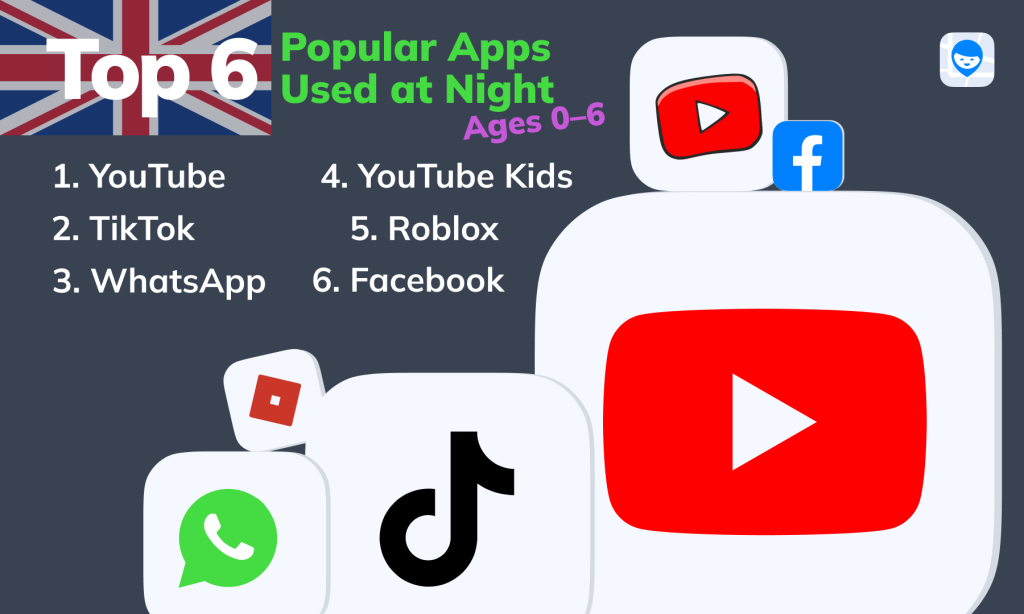
Most Popular Apps Used at Night (Ranked by Popularity) for Ages 0-6. UK. Findmykids research data
Under 6 in the USA
- YouTube
- YouTube Kids
- Chrome
- Roblox
- TikTok
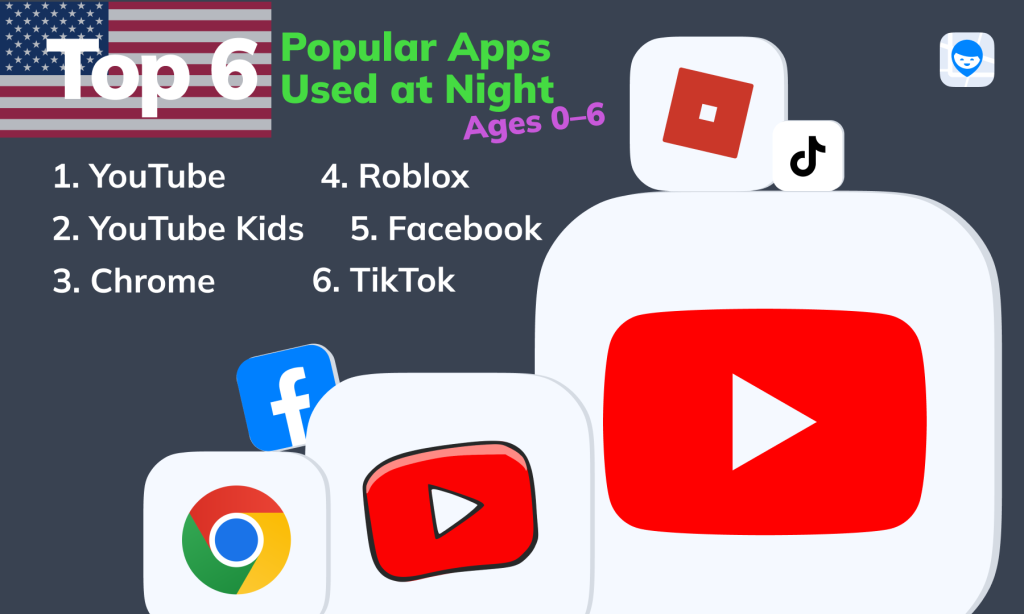
Most Popular Apps Used at Night (Ranked by Popularity) for Ages 0-6. US. Findmykids research data
UK kids socialize earlier, US kids consume more
⠀
UK preschoolers are more likely to use their phones for social-style interaction, with apps like WhatsApp and TikTok appearing among their nighttime favorites, while their US peers mainly use devices for watching content and browsing, with YouTube Kids and Chrome ranking higher.
Ages 6–12 in the UK
- YouTube
- TikTok
- Snapchat
- Roblox
- Netflix
- Character.AI
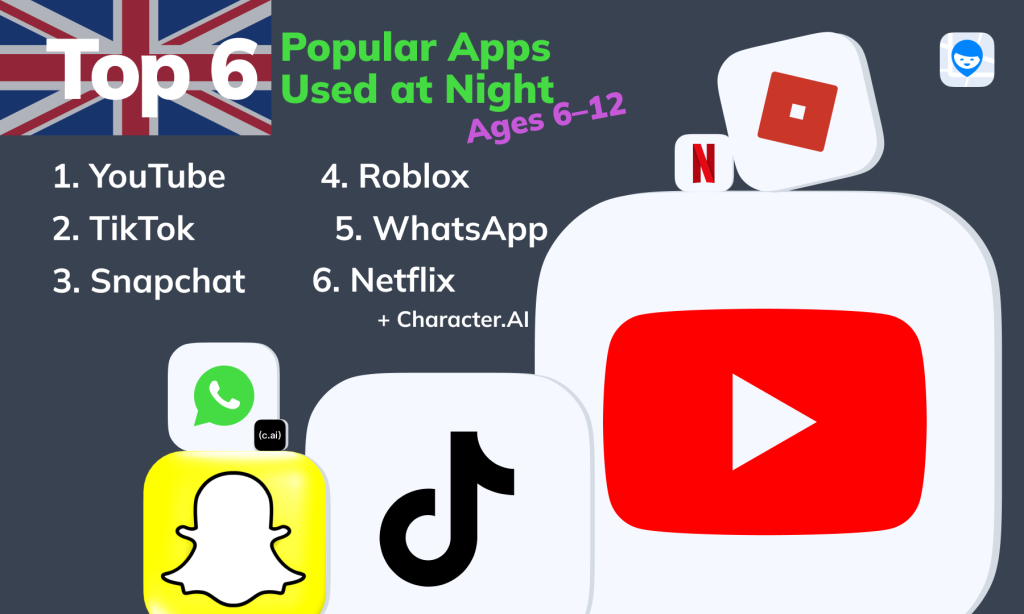
Most Popular Apps Used at Night (Ranked by Popularity) for Ages 6-12. UK. Findmykids research data
Ages 6–12 in the USA
- YouTube
- Roblox
- TikTok
- Chrome
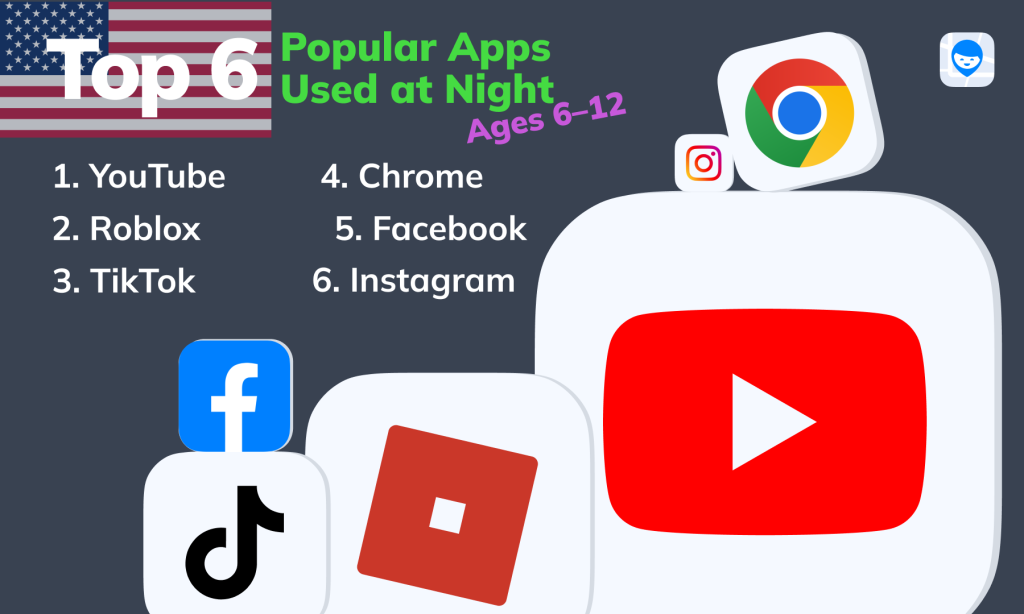
Most Popular Apps Used at Night (Ranked by Popularity) for Ages 6-12. US. Findmykids research data
UK kids chat more, US kids browse and game more
⠀
UK children aged 6–12 are more likely to use their phones at night for communication, with Snapchat, WhatsApp, and even AI chat apps ranking highly, while US kids in this age group lean more toward browsing and gaming, with Chrome and Roblox playing a bigger role.
Ages 13–18 in the UK
- YouTube
- TikTok
- Snapchat
- Chrome
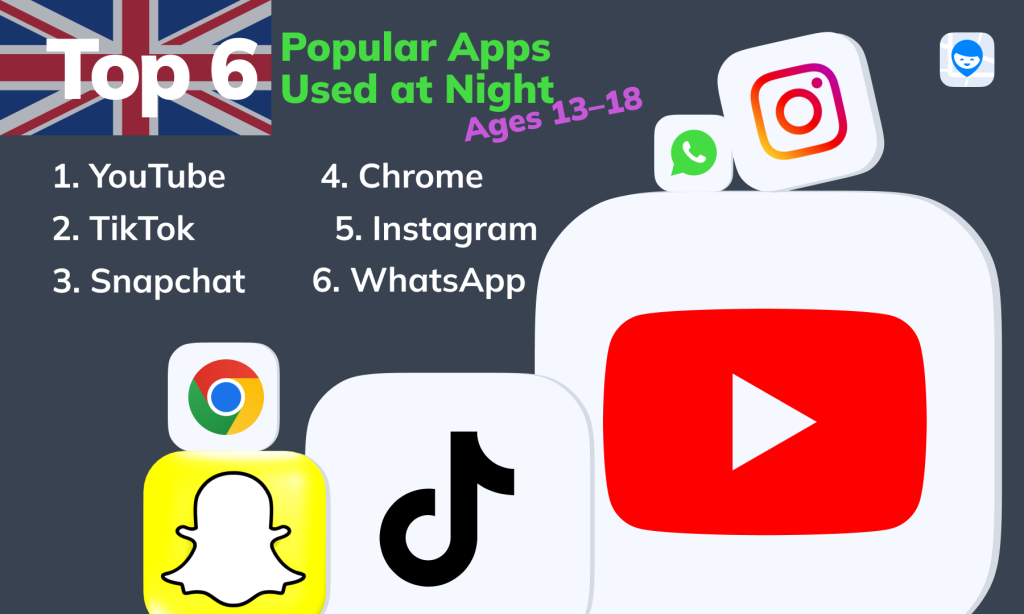
Most Popular Apps Used at Night (Ranked by Popularity) for Ages 13-18. UK. Findmykids research data
Ages 13–18 in the USA
- YouTube
- TikTok
- Chrome
- Roblox
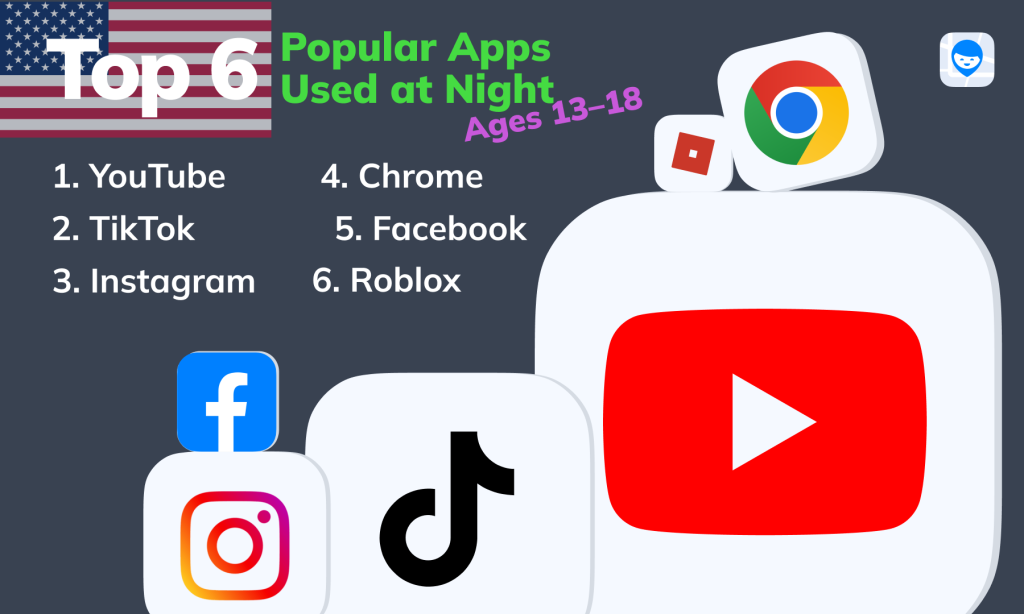
Most Popular Apps Used at Night (Ranked by Popularity) for Ages 13-18. US. Findmykids research data
UK teens message more, US teens scroll more
⠀
UK teenagers continue to favor direct communication through apps like Snapchat and WhatsApp, while US teens are more drawn to social feeds and passive scrolling, with Instagram and Facebook ranking higher in their nighttime app use.
Key Points for Parents:
- Video platforms dominate nighttime use across all ages. YouTube remains the #1 night app for every age group—even for very young children. This suggests that video content is the easiest way for kids to stay awake longer than intended.
- TikTok is a major driver of late-night overstimulation. From toddlers to teens, TikTok ranks in the top 2 spots. Short, fast-paced videos make it harder for the brain to wind down, which can disrupt sleep quality.
- For ages 6–12, social interaction becomes more important at night. TikTok, Snapchat, WhatsApp, and Roblox all point to a desire to connect, chat, or play with friends after hours—often unsupervised.
- Roblox and TikTok dominate for children ages 6–15 in the US. Kids and young teens prefer video and game-based apps at night. However, after the age of 16, teens are more likely to use TikTok and Instagram than Roblox.
- Teens gravitate toward socializing and browsing rather than gaming. Snapchat, Instagram, and Chrome show that teens spend nighttime hours messaging, scrolling, or browsing—activities that tend to stretch late into the night.
- Character.AI appearing in middle-grade use signals a new trend among kids in the UK. Kids aged 6–12 are experimenting with AI chatbots at night, which can lead to unmonitored conversations and exposure to age-inappropriate content.
- Across all age groups, UK children consistently integrate smartphones into their social lives earlier and more actively, while US children tend to use their devices more for content consumption, browsing, and entertainment—a difference parents may want to consider when setting nighttime rules and digital boundaries.
- Notably, neither Snapchat nor WhatsApp appear in the US rankings at all, while both are among the most popular nighttime apps in the UK. This reinforces a clear pattern: British children rely more on private messaging, whereas American kids are more focused on open platforms, feeds, and content consumption.
How Do These Patterns Compare to Daytime App Use?
Interestingly, children use slightly different apps during daytime hours:
| Age Group | Most-Used Apps (Day) | Most-Used Apps (Night) |
| Under 6 | — YouTube
— YouTube Kids — Roblox — TikTok |
— YouTube
— TikTok — YouTube Kids — Roblox |
| 6–12 years | — YouTube
— TikTok — Roblox — Snapchat — Chrome |
— YouTube
— TikTok — Snapchat — Roblox — Netflix — Character.AI |
| 13–18 years | — TikTok
— YouTube — Snapchat — Chrome |
— YouTube
— TikTok — Snapchat — Chrome |
⠀
Although the top apps remain largely the same during the day and at night, the time spent on them changes: children spend more hours on YouTube, TikTok, and messaging apps in the evening and at night. For younger and middle-aged children, streaming and educational apps (Netflix, Character.AI) also feature more prominently, highlighting the importance of monitoring screen time before bedtime.
All the findings from the Findmykids study point to a worrying trend in children’s nighttime screen use, signaling that parents should pay close attention. Before jumping to solutions, it’s important to first understand the reasons behind this behavior, and only then move on to strategies for managing it effectively.
Why Kids Use Devices at Night: What Parents Don’t See
How many times have you found yourself scrolling on your phone mindlessly while lying in bed? It’s often seen as a way to relax and unwind after a long day for adults. It’s the same for kids, but using devices at night for children could be more focused on entertainment and connecting with friends and peers.
This is especially true for school-aged children, children younger than 6, and older children who are developing lifelong habits influenced by their screen media habits. The patterns we found are well documented in children and adolescents through research within public health, behavioral sciences, and adolescent psychiatry.
Social Pressure
Social media apps, such as Snapchat, which reward “streaks” for users who send Snaps daily, can create social pressure to keep using the devices. Group chats where members send messages at night can also keep children online and using their phones.
These notifications and calls to use apps and respond to messages can create pressure on your child to use their electronic devices at night. It establishes a sense of urgency and responsibility for avoiding “breaking streaks” or “leaving people on read.”
These pressures significantly shape social skills and real-life peer relationships. This is also how children learn how to communicate digitally early on.
Fear of Missing Out (FOMO)
Pre-teens are especially worried about missing out on conversations, what friends are posting online, or active group chats. This sense of FOMO can make them feel isolated and left out of their friend group, which can negatively impact their social life and self-esteem.
For this reason, many children, especially pre-teens, will constantly be on their phones to ensure they do not miss out, even at night.
Gaming
Kids love playing games. According to the American Academy of Pediatrics, more than 90% of children older than 2 years old play video games. And now with gaming apps like Roblox, it’s even easier to get pulled into a game, especially at night. These electronic games are highly addictive with bright colors, fun animations, rewards, and unpredictable reinforcement.
Every time your child passes a level or earns points in their game, they get a rush of dopamine. And that is a feeling of accomplishment and happiness, which keeps them playing and hoping to get more of that dopamine release.
Excessively playing video games at night can be harmful to children. It is linked to sleep loss, weight gain, and lack of physical activity.
Messaging
If your child is actively messaging or video chatting with friends, they may stay up late into the night texting or Facetiming. This ties into the social pressure they feel and need to always be engaged and involved.
However, there could be another, more dangerous side to your child messaging people late at night: secrecy and privacy. They may be speaking with strangers online, which they may know their parents do not approve of.
Stress or Anxiety
Scrolling through our phones at night is a way to self-soothe and wind down after a long day. But they can also serve as a distraction from stress or anxiety.
Whether it’s watching calming videos or gentle shows on YouTube Kids or scrolling through endless feeds on TikTok or Instagram, some children and pre-teens could use their phone at night to calm anxieties.
Difficulty Falling Asleep
It might sound counterintuitive to use your phone at night to help you fall asleep, but many children (and even adults) do so. When they have difficulty falling asleep, they may use their phone to play games or scroll through social media to keep themselves occupied until they are tired enough to fall asleep.
Connection Between Cyberbullying and Nighttime Device Use
myboys.me/Shutterstock
Increased screen time at night for children has more implications than simply spending too much time on their electronic devices—it could expose them to cyberbullying.
When there are fewer adults around to see what children are doing on their gadgets, it creates an opportunity for cyberbullying. It can often peak when kids are bored or emotional, which often happens at night when they are feeling lonely, tired, or self-conscious.
With 15% of adolescents experiencing cyberbullying, it is an important issue for parents to be aware of, especially because it can happen at night. Cyberbullying could lead to depression, anxiety, loss of sleep, and behavioral changes.
Tween vs. Teen Device Use at Night
Tweens (ages 6-12) and teens (ages 13-18) exhibit different patterns of nighttime screen time.
Teens often stay awake later, using their devices to access social media apps such as Snapchat, TikTok, and AI chatbots. They experience more intense FOMO and want to be available to respond to messages from friends and group chats.
Tweens tend to use devices earlier in the evening and primarily for entertainment, such as playing games, watching YouTube Kids or other streaming platforms, rather than for social media. They are online less to build and maintain social relationships and more to consume content and entertainment.
What Experts Say: How Nighttime Screen Time Impacts Health
Аccording to recent studies, the average 12-year-old in the UK spends about 21 hours on their devices during the week. Meanwhile, the AACAP found that children ages 8 to 18 in the United States spend an average of 7.5 hours per day (52.5 hours per week) watching or using screens. Compared to the recommended 2 hours per day, this is a drastic difference. However, while too much screen time can come with negative effects, nighttime screen time has its own impacts on well-being to be concerned with.
Sleep Disruption
Screen time at night can negatively impact children’s sleep quality. The first concern is the blue light from the screen. This can disrupt the natural sleep-wake cycle by delaying melatonin release. Additionally, studies show that for each additional hour spent in front of a screen while in bed comes with a 63% increase in insomnia and 24 minutes less sleep.
This is especially evident when young people use devices as part of their daily routine or as compensation for sleep deprivation. Sleep patterns and healthy sleep are disrupted, leading to a long list of sleep problems that can affect cognitive and physical health.
Аccording to J Youth Adolescence, when a phone is in the child’s bedroom, they experience shorter sleep duration one year later, especially if the ringer is turned on.
Psychological Distress
Spending too much time in front of a screen during critical development years can cause emotional and psychological problems in children. The American Psychological Association found that increased screen time leads to emotional problems, and kids turn to screens to cope with issues in their lives.
Additionally, interrupted sleep due to spending too much time on their phones can cause emotional dysregulation in kids. They could become more irritable during the day.
Lastly, feelings of fear, loneliness, and amplified emotions are more common. Kids tend to have more intrusive thoughts and feel more sensitive to social media use and the content they see while using their phones.
Cognitive Impact
If your child’s sleep is disrupted or they aren’t getting enough sleep due to screen time use at night, it could impact their cognitive performance. Lack of deep sleep can make it difficult to focus during the day, difficulty following instructions, slower processing times, and problem-solving issues. This can also lead to lower academic performance, which can have lifelong consequences for your child.
Experts recommend eliminating background TV noise, removing screens from the child’s bedroom, and replacing screen time activities with calming routines to improve sleep health and maintain cognitive function.
Behavioral Issues
When your child uses their screens at night, it could also change the way that they behave. You might notice that they wake up cranky, upset, or more reactive to small frustrations throughout the day. They are more likely to have meltdowns and resist getting out of bed in the morning.
Kids who lack sleep due to screen time use can also present increased emotional outbursts. During the day, you might deal with more tantrums, crying “for no reason,” and have difficulty calming your child down.
These behaviors have been found in multiple social and behavioral sciences studies.
Eyesight Problems
Excessive use of screen time to consume electronic media has also been linked to eyesight problems, such as myopia. This can cause objects at a distance to appear blurry. Using a screen for too long and too close to your eyes, which is very common at night or while in bed, can increase the development or progression of myopia in children.
What Parents Can Do: Practical Ways to Reduce Nighttime Phone Use
А recent study shares that nearly half of parents struggle to set screen time limits for their kids. It can be especially difficult to track and regulate your child’s screen time usage at night.
Some easy and practical steps you can take to reduce phone use at night include:
- Keep all devices outside the bedroom
- Use “Downtime” or app limits
- Establish a screen-free bedtime routine
- Set a digital curfew limiting screen use after a certain time
- Replace nighttime scrolling with other activities
- Model healthy nighttime tech habits for your kids
- Turn off notifications after a certain hour
- Encourage educational programming or high-quality programming to watch instead of mindless scrolling
Setting digital boundaries within your household for your children will help reduce screen time use at night. It’s important to talk to your child and explain why these rules are in place and that they shouldn’t be seen as punishment. Let your children know that they can use their devices during the day, but there are limits for their own safety and health.
How Technology Can Help Parents

Findmykids app
While setting digital boundaries and household rules can be helpful, parental control apps can make it even easier to limit screen time use for your children.
Findmykids is a parental control app that allows parents to set strict screen time limits on their children’s mobile devices. It also provides insights and analytics into just how much time their children spend on certain apps and their online activity.
Additionally, Findmykids helps parents keep their children safe offline as well with real-time location tracking features. It’s an all-around safety and parental controls app that provides peace of mind and healthy digital behaviors in children.
Ready to try it? Download Findmykids today to monitor your child’s screen time and keep them safe, both online and offline.
When Nighttime Device Use Signals a Bigger Problem
As you can see, it’s extremely common for children to spend too much time in front of screens. However, when they spend too much time at night, it could be a signal of bigger problems that need to be addressed.
Some of the tell-tale signs that parents should speak to their primary care provider or mental health professional about their child’s nighttime screen use include:
- Your child is exhausted every morning, despite going to bed on time
- Grades suddenly drop, or teachers report attention problems
- Your child becomes secretive or defensive about their devices
- They seem anxious, stressed, or emotional after nighttime use
- Your child receives messages late at night from peers
- Your child shows signs of compulsive or addictive behavior
- They avoid social situations or real-life interactions
- Their mood changes to be more irritable, angry, or depressed
- They isolate in their room with their device for long periods
- They have trouble sleeping without their phone or tablet
- You notice self-esteem issues or negative body image after nighttime use
- They show physical symptoms like headaches, stomach aches, or constant fatigue
Limit Nighttime Screen Time for Your Children
Overall, it’s important for parents to be aware of how much time their children spend in front of a screen. However, it’s even more important to be aware of how much they use their devices at night.
Setting screen time limits through the device’s built-in settings or third-party apps like Findmykids can help set digital boundaries for your child. Additionally, modeling good examples of digital habits for your children and encouraging activities and hobbies that do not require a screen can also be beneficial.
If you found this article helpful in learning about how nighttime screen time affects children and what to do about it, make sure to share it with a friend who might also find it interesting!
FAQs
How much time does a child spend on electronics?
The average child between the ages of 8 and 18 spends about 7.5 hours a day watching or using screens. Excessive screen time can affect children’s health and cognitive performance, so it’s important for parents to monitor their child’s screen time and set household rules around device use.
What is the 3 6 9 12 rule for screen time?
This rule, which was created by French psychiatrist Serge Tisseron, states that children younger than 3 should not be exposed to screens. Preschool children under 6 should not have access to personal game consoles. Before the age of 9, children should not have access to the Internet. And lastly, before the age of 12, they should not have access to social media. Following these guidelines can help prevent too much screen time at a young age.
What is the 30 30 30 rule for screen time?
This rule suggests that every 30 minutes, you should look away from your screen for 30 seconds to focus on something located at least 30 feet away. This is helpful for resting your eyes and refocusing, especially for children and adolescents who spend more than two hours a day on devices.
How long before bed should kids be off electronics?
It’s recommended that kids stop using screens at least one hour before they go to bed. Avoiding background TV or video chatting in the child’s bedroom helps them sleep better and supports healthy routines.
How can parents limit screen time effectively?
Parents can set household rules to limit screen time, encourage other activities, and make sure young children and preschool children get time away from devices. For older kids, involve them in setting boundaries so they learn problem-solving and responsible device use.
Does too much screen time affect learning and development?
Yes. Excessive screen time can interfere with how children learn, their attention span, and cognitive performance. Limiting hours a day spent on devices, balancing with offline play, and encouraging social interaction help support healthy development.
Resourses
- Findmykids research, September, 2024
- Media Use by Kids Zero to Eight, Common Sense Media, 2025
- The Health Effects of Video Games in Children and Adolescents, According to the American Academy of Pediatrics, 2023
- One in six school-aged children experiences cyberbullying, finds new WHO/Europe study, World Health Organization (WHO), 2024
- Kids’ screen time: How much is too much?, OSF HealthCare, 2024
- Screen time in bed linked to worse sleep, study finds, BBC, 2025
- Bedtime Screen Use Behaviors and Sleep Outcomes in Early Adolescents: A Prospective Cohort Study, Journal of Adolescent Health, 2024
Cover image: freepik / Freepik.com
Проверьте электронный ящик