


















When a child grows up with an absent parent, it can leave a lasting effect on their development. This can show up as slipping grades in school, anxiety and depression, or acting out as they reach adolescence. The reality is that absent parents are much more common, especially since they can be physically, emotionally, or financially absent from a child’s life.
In this post, you will learn what an absent parent actually is, the difference between absent and noncustodial parents, and the actual effects this has on children. Plus, at the end, you’ll find guidance on what the present parents can do to support their child.
Key Takeaways
- Absent parents can show up in many ways, including physical, emotional, or financial absence, or simply not being there for major decision-making.
- The effects of an absent parent on a child’s upbringing are real, but they aren’t permanent. Parental absence is linked to higher rates of anxiety, depression, behavioral problems, and lower academic performance in kids. But with the right support, kids can and do thrive.
- Legal status and emotional reality don’t always match. An absent parent can still have parental rights and a child support obligation, regardless of their involvement.
- One stable parent changes everything. A single loving caregiver is one of the strongest protective factors a child can have for their well-being.
Contents:
What Does Absent Parent Mean?
An absent parent is a mother or father who isn’t present in their child’s life. This can mean they don’t live with the child or that they’re physically present but emotionally absent.
Absence isn’t always a choice by the parent, though. Sometimes it’s out of their control. A parent can be absent because of addiction, mental illness, military deployment, incarceration, or death. The common thread is that the child is missing a parent in the family situation.
When a parent is emotionally absent, it can show up as missing major events like birthdays or not helping with schoolwork. They also aren’t available when their child needs them most. In other words, an absent parent is someone that the child does not have a relationship with and who doesn’t fulfill their parental duties.
In a legal context, “absent parent” has a specific meaning, though. It usually refers to a non-custodial parent or a non-resident parent, which is when a parent doesn’t live with the child and has a financial obligation to support them.
Absent Parent vs. Noncustodial Parent

Freepik / magnific.com
People use “absent parent’ and “noncustodial parent” in the same context. However, there is a clear difference.
- A non-custodial parent is a biological parent who doesn’t live with the child full-time, but they’re still legally connected. This person has visitation rights, pays child support, and shows up for the child.
- An absent parent, in the everyday sense, has emotionally or physically checked out. They may have disappeared entirely or come around spontaneously. Ultimately, it’s a parent who is unreliable, and the child cannot count on them.
There’s a reason for the confusion between the two terms. Family courts sometimes use “absent parent” to mean non-custodial. In this case, it’s legal shorthand, not a description of the relationship.
Here’s a quick look at the difference between an absent parent and a noncustodial parent:
| ⠀ | Absent Parent | Non-Custodial parent |
| Lives with the child | Yes or No | No |
| Legal custody | Varies | No (but defined rights) |
| Visitation rights | Varies | Typically yes |
| Pays child support | Often no | Usually yes |
| Emotionally involved | Rarely | Often yes |
| Defined by law | Sometimes | Always |
⠀
The biggest difference between an absent parent and a non-custodial parent is involvement in the child’s life. A noncustodial parent has a defined role, while an absent parent has left a gap in the family unit.
Types of Parental Absence
Parental absence isn’t one single thing. A parent can be gone physically, emotionally, financially, or in the decisions they make for the child. Sometimes the parent can be absent from multiple aspects of the child’s life, not just one.
Physical Absence
Physical absence is the most visible kind. This is when a parent doesn’t live with the child and isn’t regularly present. You can see the empty chair at the dinner table or notice the parent missing from important events.
This happens for many reasons. Divorce or separation are the most common. But incarceration, military deployment, immigration, and death also pull parents away physically. Meanwhile, some parents simply choose to leave and don’t come back.
Physical absence doesn’t automatically mean the parent stopped caring, though. A deployed parent or one who moved for work can still be deeply involved through calls, visits, and consistent effort. But when the physical distance comes with silence, that’s when kids start to feel it most.
Emotional Absence
Emotional absence is often harder to spot. The parent is right there in the house, but they’re not really present. They don’t ask about the child’s day or notice when something is wrong. They’re physically there, but the emotional connection is missing.
This type of absence often comes from untreated depression, anxiety, addiction, or trauma. Some parents just never learn or take the time to emotionally connect with their children. Meanwhile, other parents may be so overwhelmed with work or stress that they don’t have the energy to pay attention to their family. This isn’t an excuse, though.
For kids, this can be more confusing than physical absence. They can’t point to a missing parent because they are living in the same house with them. However, the child still feels alone, and that confusion tends to sit with kids for a long time.
Financial Absence
Financial absence is when a parent doesn’t contribute to their child’s basic needs. They don’t provide child support, help with school costs, or contribute to food, clothing, or healthcare. Instead, the present parent must carry all of it alone.
Job loss, poverty, and financial instability can make it difficult to contribute financially. But there are also parents who have the means and simply don’t offer financial support. This is when courts can step in with a legal support order, but getting money from an unwilling parent is a slow and exhausting process.
Kids can feel financial absence, even when adults try to shield them from it. Missed school trips, worn-out shoes, and overhead money arguments leave a noticeable mark.
Decision-Making Absence
Every child needs adults who think about their future. Decision-making absence is when one parent is completely cut out of, or opts out of, major choices concerning the child. These include schooling, healthcare, religion, and extracurricular activities.
Sometimes this happens because the absent parent has no legal sway. Sole legal custody means one parent holds all decision-making rights. But often, the absent parent just doesn’t engage in these decisions. For example, they won’t respond to messages about a school issue or show up to doctor’s appointments.
This places a heavy burden on the current parent. Every difficult decision falls on the parent who is actually there, and that weight can add up over time.
Can an Absent Parent Still Have Parental Rights?
Yes, an absent parent can still have parental rights. A parent can disappear for years and still have legal rights on paper. The only way to give up a parent’s rights or have them terminated is through court proceedings.
In the United States, the Supreme Court recognizes that the right to raise your child is a fundamental constitutional right. These biological parental rights can be terminated when a court finds that the parent is unfit or that it is in the child’s best interests to stop the relationship. In some cases, this can be due to domestic violence and harm or other federal crimes in the family home.
Something many parents don’t realize is that losing parental rights is different from losing custody. So, even if you do not have legal custody of the child, you still have legal parental rights, which can come with the responsibility of paying child support.
If you wish to have a parent’s rights severed, it is necessary to hire a family court attorney, file a case with documents, and then present your case in front of a judge.
Does an Absent Parent Have to Pay Child Support?

Marista777 / magnific.com
Being absent doesn’t cancel a parent’s financial obligation. Even a largely absent parent is still legally responsible for financially supporting their child.
Courts don’t see child support as optional. Instead, they treat it as the child’s right, not a favor to the present parent. Federal law imposes real implications in this situation, too. Skipping court-ordered payments can lead to wage garnishment, suspended licenses, and even jail time in serious cases.
The amount of child support owed is based on both parents’ incomes and the child’s needs. Being absent doesn’t lower that number, either. If anything, the present parent who is responsible for everything alone makes that financial support even more important.
How an Absent Parent Can Affect a Child
Every child responds differently to an absent parent. The age at which the absence began, the type of absence, and the support around them all play a role in the overall effects. But research is clear that parental absence definitely leaves a mark.
Emotional Effects
Kids can feel the abandonment of an absent parent. They may not have the words to describe it, but they know something is missing. That feeling tends to show up as anxiety, sadness, or a quiet kind of anger that’s hard to shake.
А child’s emotional well–being is negatively impacted by elevated levels of depression, anxiety, loneliness, and reduced self-esteem in children separated from a parent. One review estimated the rate of depression among these children at 26.4%, which is substantially higher than in the general adolescent population.
For younger kids, the confusion is often the hardest part. They don’t understand why a parent isn’t there, and many end up blaming themselves for the absence. A five-year-old who stops seeing their father regularly might start acting out at school, throwing tantrums, or becoming clingy with the parent they are with. A ten-year-old might go quiet and stop talking about their feelings altogether.
Teenagers often swing between anger and longing. They may seem fine on the surface, but struggle with trust in relationships. Parental absence is directly linked to deficits in emotional regulation, which is the ability to manage feelings in healthy ways. That skill, or lack of it, follows kids well into adulthood.
Behavioral Effects
A young child’s ability to process and communicate their feelings is often missing. So, those feelings show up in their behavior. Many children deal with these big emotions by acting out, while others may shut down and lose interest completely. Both of these behaviors are responses to the same pain, though.
However, there are clear gender differences here. Boys tend toward externalizing behaviors, such as aggression, defiance, and risk-taking. Meanwhile, girls are more likely to experience heightened emotional distress, which can be harder to notice.
For example, a boy who feels neglected by his father might start getting into fights by the time they reach middle school. A girl in the same situation might become a people-pleaser who struggles to set boundaries years later.
Usually, these behaviors show up in early adolescence, which can then predict circumstances of substance use in young adulthood. Parental involvement sets the trajectory of a child’s life course regarding delinquent behavior. What does this mean exactly? The absence a child feels at eight years old can ripple through the rest of their life.
School and Social Effects
School is where the effects of absent parents often become visible to outsiders. Teachers notice that children become distracted and their grades start to slip. The child who used to love reading stops finishing the books they pick up.
Parental absence is negatively linked to cognitive scores, academic test scores, and the likelihood of attending college. A mother’s absence in particular appears to have persistent negative effects on a child’s development.
The social side is just as real. Kids from absent-parent homes sometimes struggle to make and keep friends. Additionally, school activities that highlight family structure, like a Father’s Day card project or a family tree assignment, can feel like a quiet embarrassment nobody talks about.
Resilience and Protective Factors
There is some comfort knowing that just because a child has an absent parent, they are not destined to have issues growing up. Kids are remarkably adaptable, especially when they have the right support around them.
However, a child with a close bond with a consistently reliable adult can make a major difference. Establishing relationships with extended family members and caregivers can combat the negative effects of an absent parent.
For example, a grandmother who shows up every week or a coach who notices when something is off can help fill the gap of an absent parent. To back this up, a review of studies on mentorship programs found that kids with a stable, committed, supportive relationship have positive effects on social, emotional, and behavioral outcomes.
Related: Effects of Single Parenting on Children: Emotional, Behavioral, and Practical Insights.
How the Present Parent Can Support the Child

Media_Photos/Shutterstock.com
You can’t fill the exact space an absent parent leaves. However, you can build something solid enough that your child doesn’t feel the absence every single day.
Here are practical ways to show up for your child:
- Keep communication open: Let your child say the hard things without jumping in to fix it. Avoid speaking negatively about the absent parent in front of them, too. Kids internalize those comments more than adults realize.
- Stick to routines: Consistent bedtimes, mealtimes, and weekly rituals give kids a sense of safety and stability. When one parent is unpredictable, routine from the other parent becomes an anchor.
- Get professional support early: Therapy shouldn’t be a last resort. A school counselor or child therapist can give your child a space to process feelings they may not bring home.
- Build a support network: Grandparents, aunts, uncles, coaches, and mentors can show a child that they’re surrounded by people who care.
- Talk about the absence honestly: Age-appropriate honesty beats silence every time. Kids fill information gaps with self-blame, which can lead to quiet suffering. Therefore, a simple, calm explanation benefits more than protecting them from the truth.
Read also: How to Raise a Happy Child with an Absent Father.
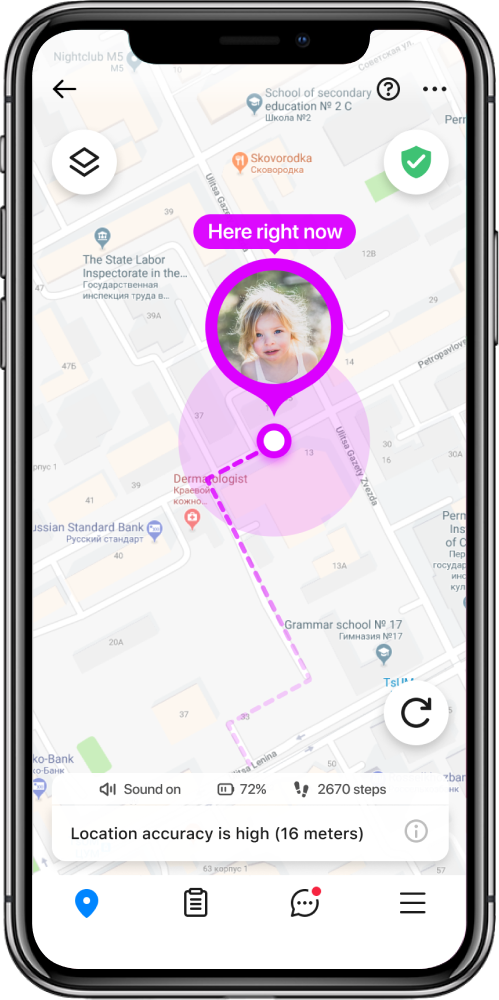
Solo parenting means managing everything alone, including the tension between giving kids independence and knowing they’re safe. As kids get older, they need room to grow. That’s where an app like Findmykids makes that balance easier.
With real-time location tracking, you can see where your child is at all times as you allow them to move freely. Additionally, with the parental controls and screen time limits, you can stay on top of what they’re doing when they’re using their devices. For a stretched-thin parent, that peace of mind is everything!
Try Findmykids right now for free and stay close to your child, even when you’re apart.
One Present Parent Is Enough
An absent parent leaves a real gap in a child’s life. But it doesn’t have to define their story. Kids who have one stable, loving, consistent parent have something powerful on their side.
The effects of parental absence are real, but so are the protective factors. Parents who can provide a routine, have honest conversations, and create a support network make all the difference.
You don’t have to do everything perfectly—no parent ever does. You just have to keep showing up for your child. For most kids, that one reliable parent is the difference between struggling and finding their way through life.
FAQs
What is an absent parent?
An absent parent is a mom or dad who isn’t present in the child’s life. This can mean they’re physically gone or that they’re emotionally checked out, even if they’re living in the same house.
Is an absent parent the same as a noncustodial parent?
Not exactly. A noncustodial parent doesn’t live with the child full-time but still has a defined legal role. They usually have visitation rights, pay child support, and are involved with the child. An absent parent has stepped back from all of that.
Does an absent parent still have parental rights?
Usually, yes. Parental rights don’t disappear just because a parent stops showing up. They can only be terminated through a formal court process, with clear legal grounds like abandonment, abuse, or neglect. Simply being uninvolved isn’t enough on its own to lose parental rights.
Does an absent parent have to pay child support?
Yes. Financial obligation exists regardless of how involved a parent is. Courts treat child support as the child’s right, not the parent who takes care of them. Walking away from the relationship doesn’t reduce what’s owed. And in serious cases, failing to pay child support can lead to legal challenges.
Sources & References
- Termination of Parental Rights Under the Law, Justia, November 2025
- Termination of Parental Rights | Voluntary & Involuntary, CustodyXChange, January 12, 2026
- Child Support: An Overview, Cornell Law
- Citizen’s Guide to U.S. Federal Law on Child Support Enforcement, Criminal Division U.S. Department of Justice, August 11, 2023
- Family Dynamics and Depression Among Children, PubMed Central, November 4, 2025
- Family Functioning and Anxiety in Children: A Narrative Review, PubMed Central, September 4, 2025
- Review of the Research Literature on the Impact of Father Absence on Child Development, Journal of Lifestyle & SDGS Review, March 25, 2025
- Not Just Academics: Paths of Longitudinal Effects from Parent Involvement to Substance Abuse in Emerging Adulthood, PubMed Central, January 12, 2016
- The Effects of Parental Absence on Children’s Development: Evidence from Left-Behind Children in China, PubMed Central, September 17, 2020
- About Resilience, Devereux Center for Resilient Children
- Individual Community-Based Mentoring Programs for Children and Youth Exposed to Adversity: A Scoping Review, ScienceDirect, April 2026
Cover image: Wirestock / magnific.com
Проверьте электронный ящик