













Parenting is a journey, not a destination. And let’s face it: there are many different roadmaps you can follow.
You’ve probably heard about a variety of parenting styles, but what about uninvolved parenting? This is a term that likely brings up strong images, but it’s important to understand what it truly means, not just for parents, but for the child at the center of it all.
Parenting is complex (an understatement), and recognizing different approaches can help you find the path that feels right for your family. Let’s talk about what uninvolved parenting looks like, its impact, and how parents like you can move toward a more connected style.
Contents:
- What Is Uninvolved Parenting?
- Characteristics of Uninvolved Parenting
- Uninvolved Parenting vs Other Parenting Styles
- Signs & Real-Life Examples of Uninvolved Parenting
- Causes & Contributing Factors
- Effects of Uninvolved Parenting on Children
- How to Recognize Early Warning Signs as a Parent
- Strategies to Move Toward Healthy Involvement
- FAQs
What Is Uninvolved Parenting?
Uninvolved parenting, sometimes called neglectful parenting, is a style that’s characterized by a general lack of responsiveness to a child’s needs. Uninvolved parents make few to no demands of their children. They’re often indifferent, dismissive, or even completely unaware of what their child is doing.
Some people view uninvolved parenting as a way to give a child independence, but really, it’s more about a lack of emotional connection and parental involvement. The parents may provide for the child’s basic needs, like food and shelter, but they are emotionally distant.
They offer little to no parental guidance, nurturing, or attention. Essentially, the child is left to raise themselves. This approach is one of the four main parenting styles identified by psychologists, and it’s often considered the most harmful to a child.
Characteristics of Uninvolved Parenting
So, what does this look like in practice? The characteristics of uninvolved parenting paint a clear picture of detachment. Uninvolved parents are not intentionally malicious; many parents are simply overwhelmed by their own problems, such as mental health issues, financial stress, or substance abuse.
Here are some key traits:
- Emotional distance: There’s a noticeable lack of an emotional bond, which can often make a child feel invisible. Uninvolved parents might not hug their child, say “I love you,” or offer words of encouragement.
- Low responsiveness: When a child reaches out for help, comfort, or attention, they are often met with indifference. Uninvolved parents tend to be disengaged from their children’s lives.
- Few to no rules: Uninvolved parents rarely set rules or expectations for their children’s behavior. Without boundaries, a child doesn’t learn self-discipline or understand what is considered acceptable.
- Lack of supervision: These parents often don’t know where their child is or who they are with. They show little interest in their child’s school life, friendships, or activities. They might miss parent-teacher conferences or not know their child’s favorite subject.
- Focus on own affairs: Often, uninvolved parents are wrapped up in their own affairs and busy lives. Their focus is on their own personal challenges, leaving little energy or attention for their own children.
Unfortunately, this combination creates an environment where a child feels more like a bystander in their own family than a cherished member.
Uninvolved Parenting vs Other Parenting Styles
Skyline Graphics / Shutterstock.com
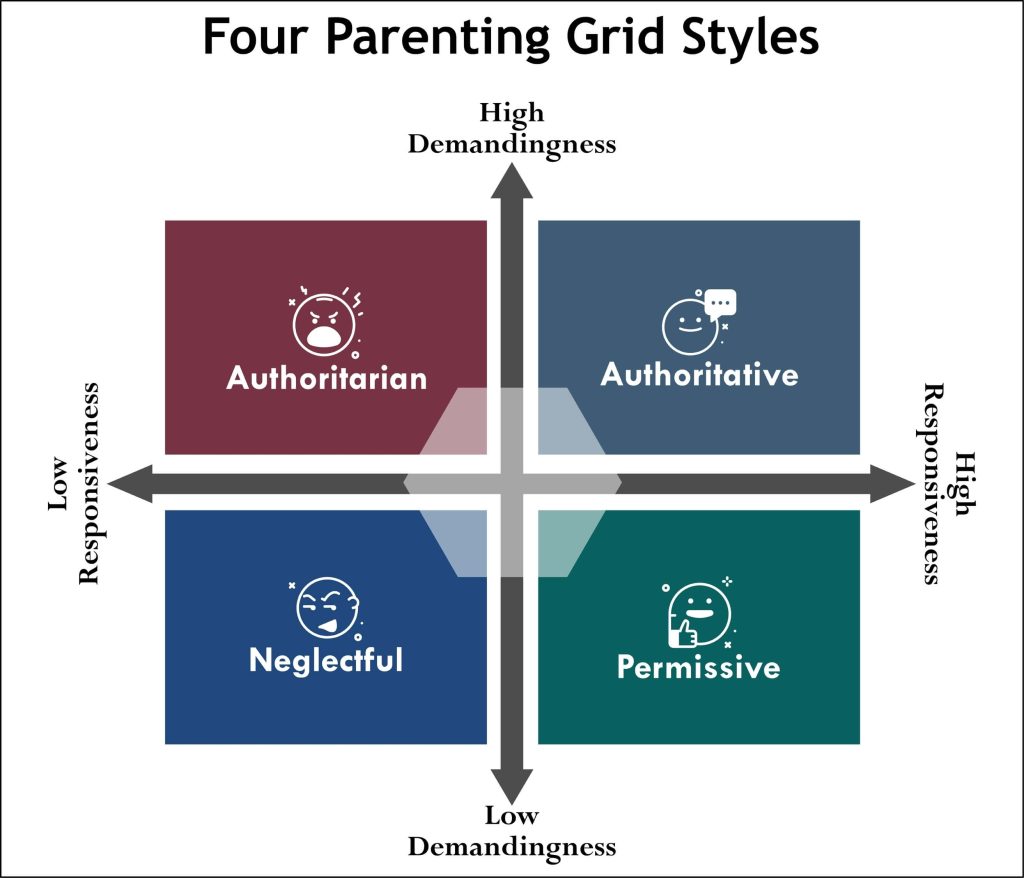
To get a better grasp of the uninvolved parenting style, it may help you to compare it to the other main parenting styles. Each one differs in its levels of warmth (responsiveness) and control (demandingness).
→→→
| Parenting Style | Warmth / Responsiveness | Control / Demandingness | Common Parent Behavior | Typical Child Outcome |
| Authoritative | High | High | Sets clear rules but is responsive and nurturing. Encourages open communication. | Happy, capable, and successful. Good social skills. |
| Authoritarian | Low | High | Strict, with high expectations and little warmth. Focuses on obedience and punishment. | Obedient but may have lower happiness and self-esteem. |
| Permissive | High | Low | Very loving and responsive but sets few rules or demands. Acts more like a friend. | Often struggles with authority and self-discipline. May have low self-esteem. |
| Uninvolved | Low | Low | Emotionally distant, with few rules or expectations. Provides little supervision or support. | Lacks self-control, has low self-esteem, and is less competent than peers. |
⠀
Let’s break down these different parenting styles further:
- Authoritative parenting is often seen as the gold standard. Authoritative parents balance clear expectations with warmth and respect for their child. They listen to their child’s point of view and provide reasons for their rules.
- Authoritarian parenting, on the other hand, is all about control. Authoritarian parents have a “because I said so” mentality and focus on strict obedience. This authoritarian parenting style can stifle a child’s independence.
- Permissive parenting is the opposite of authoritarian. Permissive parents are very loving but don’t set many limits. They want to be their child’s friend, which can lead to a child who struggles with boundaries.
Then you have, again, uninvolved parenting, which combines the worst of both worlds: low warmth and low control. A child with uninvolved parents gets neither the affection of permissive parents nor the structure of authoritarian parents. This makes the uninvolved parenting style uniquely challenging for child development.
Signs & Real-Life Examples of Uninvolved Parenting
Uninvolved parenting isn’t always marked by big, dramatic moments of neglect. Often, it’s a pattern of small, consistent disconnections.
A great example is a parent who never asks their child about their day at school. The child comes home, goes to their room, and the parent doesn’t check in. The parent doesn’t know the child failed a math test or got into an argument with a friend.
Other signs include:
- Skipping important events: An uninvolved parent consistently misses school plays, sports games, and parent-teacher conferences. They show little interest in the activities that are important to their child.
- Lack of knowledge about the child’s life: They may not know their child’s friends, teachers, or even their favorite food. This lack of awareness reflects a deep disconnection.
- No rules about screen time, bedtime, or homework: The child is left to their own devices, often staying up late, spending hours online, and falling behind in school. There’s no parental guidance to help them build healthy habits.
- Not providing emotional support: If a child is upset or crying, an uninvolved parent might ignore them or tell them to “get over it.” There’s no comfort or effort to understand what’s wrong.
We must also distinguish uninvolved parenting from free-range parenting. Free-range parents encourage independence but remain emotionally available and supportive. They provide their child with life skills and are present when needed.
Uninvolved parents, however, are simply absent, both physically and emotionally. While free-range parents aim to build self-reliance, uninvolved parents are just checked out.
Causes & Contributing Factors
Why do some parents adopt an uninvolved parenting style? It’s rarely a conscious choice to be distant; instead, the reasons are often complex and rooted in the parents’ own experiences and circumstances.
For example, many parents who exhibit uninvolved parenting behaviors were raised by uninvolved parents themselves. They may be repeating the same patterns they learned as a child because it’s all they know.
Similarly, parents struggling with depression, anxiety, or other mental health conditions may lack the emotional energy to be present for their own children. Their mental health can make it difficult to form a strong emotional connection.
A parent dealing with substance abuse is often consumed by their addiction, meaning their primary focus becomes the substance and leaves little room for parenting responsibilities. This is a significant risk factor for neglectful parenting.
Stress is another culprit. Financial hardship, a demanding job, or a lack of support can leave busy parents feeling completely drained. They may be so focused on survival that they have nothing left to give their child emotionally.
Lastly, some parents simply don’t know any better. They may not have good parenting skills or understand the importance of emotional responsiveness. They might benefit from parenting classes or parenting courses.
Effects of Uninvolved Parenting on Children

fizkes/Shutterstock.com
The impact of uninvolved parenting on a child can be profound and long-lasting, as children have a fundamental need for love, attention, and guidance. When these are missing, it affects every area of their development. The effects of uninvolved parenting are some of the most severe among all parenting styles.
Children of uninvolved parents often struggle with:
- Low self-esteem: A child who feels ignored by their parents may internalize the message that they are not worthy of love or attention. This can lead to deep-seated feelings of inadequacy and low self-esteem.
- Mental health problems: The lack of emotional support and connection is a major risk factor for mental health issues. Children of uninvolved parents have a higher risk of depression, anxiety, and other mental health problems in adult life.
- Poor academic performance: Without parental guidance or encouragement, these children often do poorly in school. Their academic performance suffers because no one is there to help with homework or stress the importance of education. Poor academic performance can limit their future opportunities.
- Behavioral issues: Children tend to act out when they lack boundaries and attention. They might exhibit relational aggression, impulsivity, and have trouble with self-discipline. They are also at a higher risk for substance abuse from a young age.
- Difficulty with social skills: Without a model for a healthy parent-child relationship, children of uninvolved parents struggle to form healthy attachments with others. They may have poor social skills and find it difficult to trust people, leading to a poor relationship with peers.
How to Recognize Early Warning Signs as a Parent
If you’re worried you might be slipping into uninvolved parenting, it’s a sign that you care. Self-awareness is a powerful tool. Take just a moment to reflect on your own parenting behaviors.
Do you find yourself:
- Frequently feeling detached from your child? You go through the motions of caregiving but lack an emotional connection.
- Not knowing the details of your child’s day? You don’t know their friends’ names or what they did at school.
- Avoiding conversations about feelings? When your child is upset, your first instinct is to withdraw or dismiss their emotions.
- Feeling overwhelmed to the point of complete disengagement? You’re so caught up in your own problems that you have no energy left for your child.
If you recognize these signs in yourself, don’t berate yourself. Instead, identify it as an opportunity to change course. After all, many parents experience periods where they feel disconnected. The key is to notice it and take steps to reconnect before it becomes a defining feature of your parenting style.
Strategies to Move Toward Healthy Involvement
If you recognize some characteristics of uninvolved parenting in yourself, please know that it’s never too late to change. Building a stronger parent-child relationship is possible. The goal is to move toward a more authoritative parenting approach, which balances warmth and structure.
Here are some strategies to help you become more involved:
- Seek professional help: If you’re struggling with your own mental health or substance abuse, the most important step is to get help. A mental health professional can provide you with the tools to manage your own challenges so you can be more present for your child.
- Start small: You don’t have to transform overnight. Begin by dedicating 15 minutes of uninterrupted, one-on-one time with your child each day. Put your phone away, turn off the TV, and just focus on them.
- Practice active listening: When your child talks to you, really listen. Ask open-ended questions. Show them you’re interested in your children’s actions, feelings, and thoughts. This helps build an emotional connection.
- Establish simple routines and rules: Start with one or two consistent rules, like a set bedtime or a rule about finishing homework before screen time. Structure helps a child feel secure.
- Enroll in parenting classes: Parenting courses can provide valuable parenting skills and support. You’ll learn about different parenting styles and effective strategies for connecting with your own children.
Supporting Connection While Respecting Independence

Findmykids app
As your child gets older, especially during the teen years, finding the balance between connection and independence can be tricky. You want to give them space to grow, but you also need to stay involved to ensure their safety and well-being. This is where modern tools can help bridge the gap.
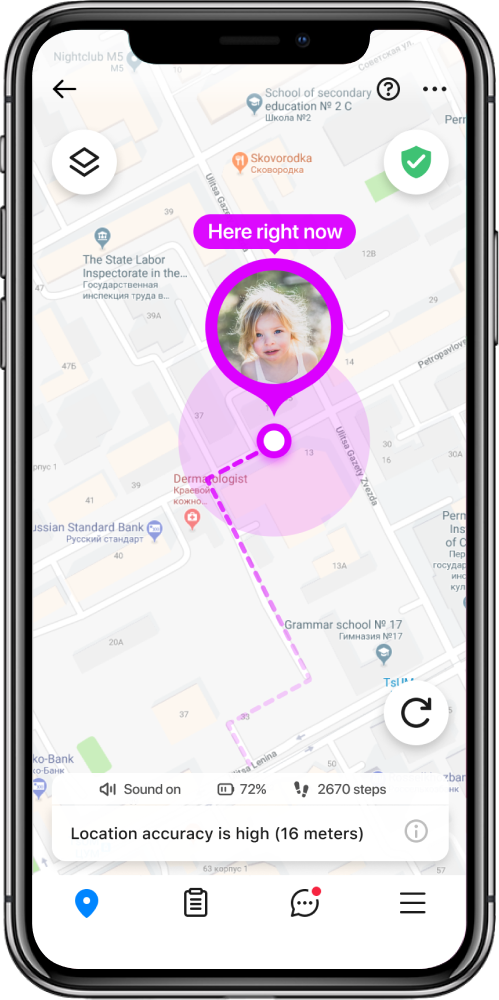
Findmykids is designed to give parents peace of mind while respecting a child’s growing autonomy. You can know where your child is without having to constantly text or call them. It allows you to create a secure environment where they can explore their independence safely.
With Findmykids, parents can:
- See their child’s real-time location and location history
- Set Safe Zones (like school or home) and receive alerts when a child enters or leaves them
- Stay connected through SOS alerts if a child needs help
- Monitor screen time and app usage to support healthier digital habits
- Reach their child even if the phone is on silent
Used thoughtfully, tools like this can be a practical part of moving away from uninvolved parenting toward a more engaged and authoritative parenting style. They help parents stay aware and responsive without being intrusive—supporting independence while maintaining connection, which is something uninvolved parents often struggle to provide.
If you’re looking for a way to stay present while still giving your child room to grow, try Findmykids for free today and see how supportive technology can help your family find the right balance!
Building a Brighter Future Together
Parenting is one of the most challenging and rewarding roles you’ll ever have. When you understand the different parenting styles, including uninvolved parenting, you can be more intentional in your approach.
Don’t make perfection the goal. Instead, just strive for connection.
If you’ve seen signs of uninvolved parenting in your own life, remember that awareness is the first step toward positive change.
You have the power to break old patterns and create a healthier, happier future for your child and your family.
FAQs
Is uninvolved parenting the same as neglectful parenting?
Yes, the terms are often used interchangeably. Uninvolved parenting is also sometimes called neglectful parenting because it involves a lack of emotional responsiveness and supervision, which can be a form of neglect.
What does uninvolved parenting do to a child?
Uninvolved parenting—also called neglectful or disengaged parenting—is marked by low responsiveness and limited involvement in a child’s life. When children grow up with little emotional support or structure, they often struggle with emotional regulation, self-esteem, and forming healthy relationships. Without consistent guidance or engagement, kids may feel unseen or unsure about how to handle challenges independently. This lack of connection and support can affect their confidence and social skills as they move through school and into adulthood.
What do children of uninvolved parents tend to be?
Children raised with uninvolved parenting often take on more responsibility than their peers at an early age. They may appear independent on the surface, but this independence can mask deeper challenges—like difficulty expressing emotions, forming close relationships, or trusting others. They’re more likely to struggle with self-esteem, have trouble with social skills, and show higher levels of anxiety or withdrawal. Because they didn’t receive consistent nurture or support, they may also find it hard to ask for help or believe their feelings matter.
Can a parent switch from an uninvolved parenting style to a different one?
Absolutely. With self-awareness, effort, and sometimes professional help from a mental health professional, parents can learn new parenting skills and shift toward a more engaged and supportive style like authoritative parenting.
What is the difference between uninvolved parenting and permissive parenting?
Permissive parents are very warm and loving but set few rules. Uninvolved parents are low on both warmth and rules. They’re emotionally distant and don’t provide much guidance.
Are all busy parents uninvolved parents?
No. Many busy parents make a conscious effort to stay connected with their children despite their demanding schedules. The key difference is intention, since engaged parents find ways to prioritize their child, while uninvolved parents remain disconnected.
What are the four types of emotionally immature parents?
When psychologists talk about emotional immaturity in parenting, they’re often referring to patterns that overlap with certain broad parenting styles. These include:
- Uninvolved/Neglectful parents — emotionally distant and minimally engaged.
- Authoritarian parents — rigid and demanding with little emotional warmth.
- Permissive parents — warm but inconsistent with limits and guidance.
- Helicopter parents — overinvolved to the point of limiting a child’s autonomy.
Not all emotionally immature behavior falls neatly into boxes, but these patterns help describe ways parents may struggle to meet their child’s emotional needs. Kids benefit most from caregivers who are attentive, consistent, and emotionally regulated themselves.
What is the 7-7-7 rule for parenting?
The 7-7-7 rule is a simple guideline to help parents respond thoughtfully rather than react impulsively. It suggests that when a parenting moment feels charged or stressful, you can:
- Wait 7 seconds before responding
- Take 7 deep breaths to calm your nervous system
- Think of 7 words that reflect your intended response
This technique encourages a pause, so you respond with intention, not stress. For kids of uninvolved parents (who may be especially sensitive to emotional cues), practicing this kind of mindful pause can strengthen emotional connection and help children feel heard and safe.
Cover image: fizkes / Shutterstock.com
Проверьте электронный ящик