













Is Polybuzz safe for kids? Since the app launched in early 2023 (under its original name, Poly AI), many parents are wondering the same thing.
AI chatbots and role-playing apps like Polybuzz are gaining popularity among kids and teens, but most parents don’t fully understand how they work. In this article, we’ll dive into what Polybuzz is, how it works, and whether it is safe for kids and teens.
Contents:
What Is Polybuzz and How Does It Work?
App Store
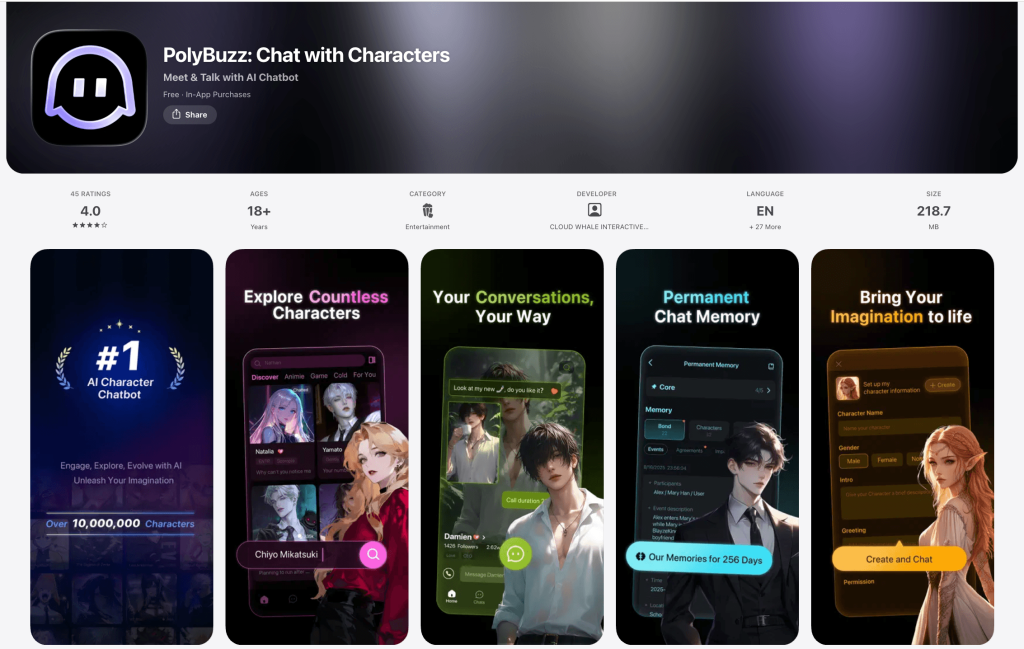
Polybuzz AI is an interactive platform where users can create and chat with AI personalities. It uses artificial intelligence to generate characters, create visuals, and support immersive, text-based conversations.
Available as both a mobile app and a web platform, it allows users to build their own personas and interact with millions of others, including characters inspired by anime, movies, games, and pop culture.
While the appeal to kids is clear, Polybuzz is officially rated 18+, and the app has been criticized for weak age verification that relies solely on self-reported birthdates. Technically, there is a Teen Mode available, intended to filter mature content, though parents have deemed these controls completely ineffective.
The app has a free version, making it easy for minors to download and bypass age verification. As of April 2026, Polybuzz has introduced paid subscription tiers to remove ads, create more AI avatars, and improve the AI’s memory. Plans start at $9.90 per month and scale up to $29.90. Users can also buy “coins” for one-off purchases and special features.
Is Polybuzz Safe for Kids?
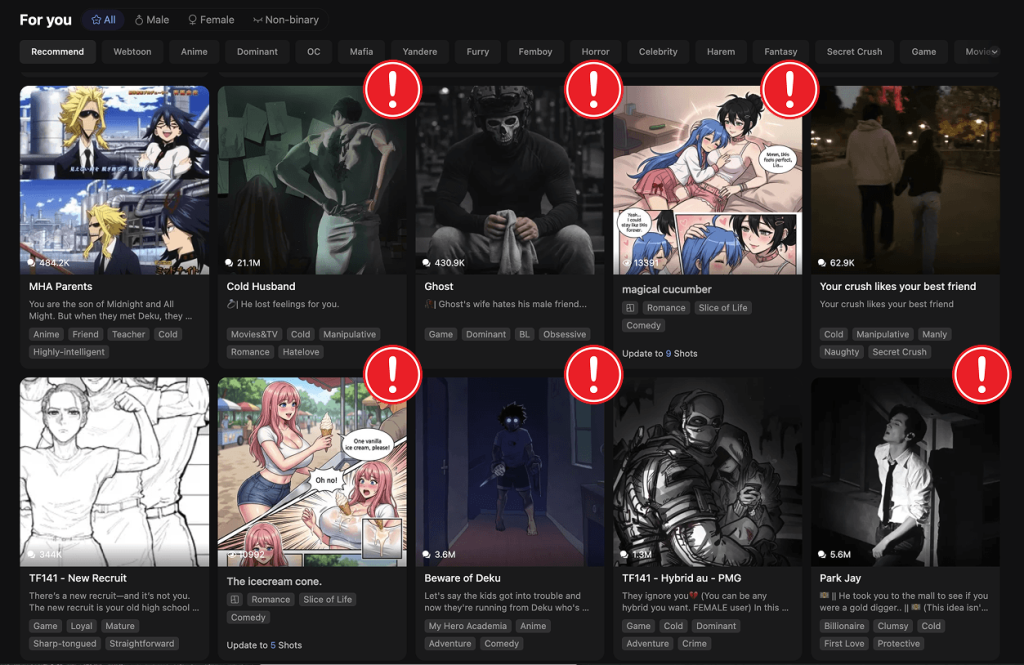
The short answer is no. Polybuzz is an 18+ rated app with mature, often sexualised or pornographic content. The platform, although marketed as fun, character-led, open-ended storytelling, is heavily skewed towards romantic content, with conversations often turning explicit.
Despite this, age verification is easy to bypass, and the app lacks any robust parental controls. Even with a teen account, there is no way for parents to oversee their child’s activity on the app or monitor their AI chat history remotely.
Harvard researchers also found that AI companions across five major platforms (including Polybuzz) use manipulation to avoid conversations ending, which young users may not have the emotional maturity to navigate.
To make matters worse, private character chats are only lightly moderated, allowing largely unregulated conversations and role-play scenarios.
Is PolyBuzz Private?
Polybuzz claims to offer more privacy than other AI platforms, but the answer is actually more nuanced than it appears in their marketing.
While both the mobile app and web versions use the same privacy policy, the Polybuzz mobile app collects more data and is subject to stricter store-level monitoring than the web version.
- Polybuzz mobile app (iOS/Android) collects data to track users across other companies’ apps and websites for advertising purposes. The app version also has stricter age-gating prompts due to Apple and Google Play policies, but these are still easy to bypass.
- With the Polybuzz website version, data collection is primarily limited to IP address, browser type, and network logs.
The web version is generally considered more private with regard to hardware and data tracking, but the mobile app offers better account security due to device locks and biometrics.
Importantly, Polybuzz states that all character chats are stored in encrypted cloud environments, and that conversations are completely private—neither the platform’s developers nor the creators of specific AI characters can read private message logs.
This privacy is a double-edged sword, though. Users don’t need to use their real name to sign up and can remain completely anonymous, allowing them to say pretty much anything as the account is not connected to their real-world identity.
@annieann735 Definitely check for these. read about them but also if you're curious download it. If you think they're harmless, make sure you try it out. #kids #protectingkids #fyp #parents #phones ♬ original sound – Annie ❤️ (Lianne)
Why PolyBuzz May Be Unsafe for Younger Users
Credit: polybuzz.ai
There are a number of reasons why Polybuzz isn’t suitable for younger users, including children and teens.
18+ Age Restrictions
The app was created for adults, so the AI models are trained on adult themes. Safety guardrails for younger users are weak, inconsistent, and easily bypassed. Signing up only requires entering a birthdate, so there is no way to safely protect children from adult content.
Mature Content
Although Polybuzz has content filters, these aren’t very effective. The app is well-known for its unfiltered AI roleplay, including graphic sexual and violent dialogue. Many AI characters are specifically designed to be “spicy” or “aggressive.”
AI Unpredictability
aI chatbots and tools are famously unpredictable. Even if your child starts an innocent conversation, an AI could easily steer the topic towards something less appropriate because of its training data.
Addictive Nature
Younger users may struggle to distinguish chats with AI bots from real conversations. The AI is designed to be engaging and addictive, which can lead to a blurred sense of reality or unhealthy attachments. A Stanford University report recently revealed how AI chatbots can exploit teenagers’ emotional needs and even encourage self-harming behavior.
Privacy
The Polybuzz app collects personal data. Younger children might share real-life information (such as names and addresses) with the AI or with other users.
Lack of Parental Controls
Unlike apps created for children and families, Polybuzz does not offer a parental dashboard or any robust parental controls. Parents cannot monitor character chats, set time limits, or restrict content in any way.
Does PolyBuzz Have Parental Controls?
No. The app does offer some safety features, but they are not very effective and are easy to toggle on or off.
Teen Mode
This is an automatic safety feature for users who enter a birthdate that shows they are under 18. It is designed to block restricted or mature content completely and cannot be manually disabled. As of late 2025, Polybuzz also created “viewing mode” for under-18s, so younger users can only view past chat history rather than actively chat with bots or other users.
Pure Mode
This is a toggleable “clean” mode intended for users who prefer non-romantic, more wholesome experiences. It is designed to filter out sexual violent themes, as well as inappropriate language. For teen users, Pure Mode is typically locked in the ON position.
Limitations of These Features
Despite these safeguards, inappropriate or suggestive content may still appear in chats or on the Explore page. This is partly due to the unpredictable nature of AI-generated responses and user-created content.
In addition, because age verification relies on self-reported information, restrictions can be bypassed—for example, by registering a new account with a different birthdate or accessing the platform through another device or version.
Signs Your Child May Be at Risk

De Visu/Shutterstock.com
If you think your child or teen might be using an app like Polybuzz, or you’re worried about their online safety, here are some red flags to watch out for.
Secretive Behavior
according to the NSPCC and Internet Matters, a sudden spike in time spent online, especially at night or in secret, is a red flag that something may be wrong. If your child suddenly becomes secretive—hiding their screen when you come in or becoming paranoid about you using their device—this is also a warning sign.
Mood Changes
If your child appears upset, distant, or angry after using a specific app or receiving a message, you may need to keep an eye on their online activity and start a conversation with them to find out what’s happening to cause the upset.
Signs of AI Attachment
according to a report by Common Sense Media, an unhealthy attachment to an AI companion can present as emotional dependence (such as becoming upset when they’re unable to talk to their AI companion), isolation, withdrawing from peers and social activity, and seeking validation online rather than with friends or family.
Not every change in behavior is a cause for concern—but patterns are worth noticing. If something feels off, the most important step is to stay calm and keep communication open. Instead of immediately restricting access, try asking open-ended questions and showing curiosity about how your child uses apps and what they enjoy about them.
⠀
If you’re concerned about your child’s emotional well-being, it may also help to seek guidance from a school counselor, psychologist, or trusted support organization. You’re not expected to navigate this alone.
How Parents Can Actually Keep Kids Safe With Findmykids
Findmykids app
When it comes to apps like Polybuzz, awareness is only part of the solution. What many parents need is a way to both understand and guide how their child uses their device in everyday life.
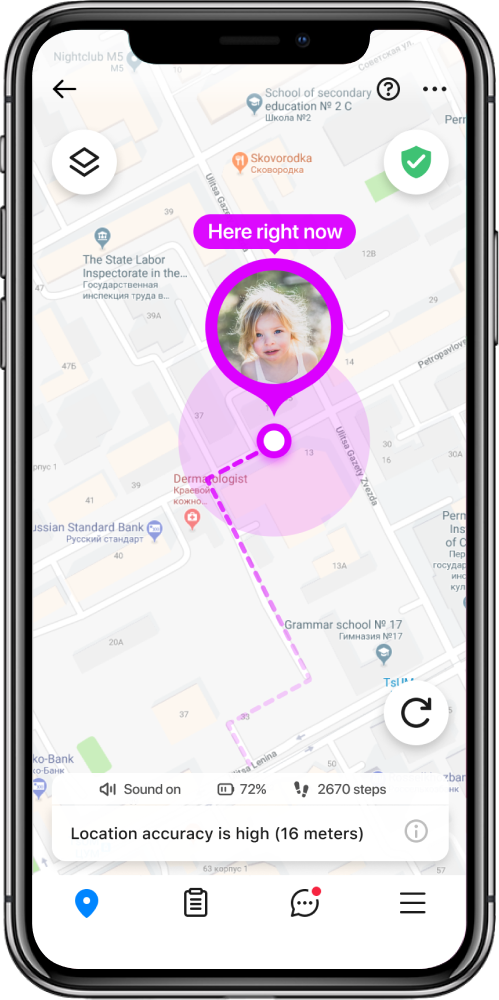
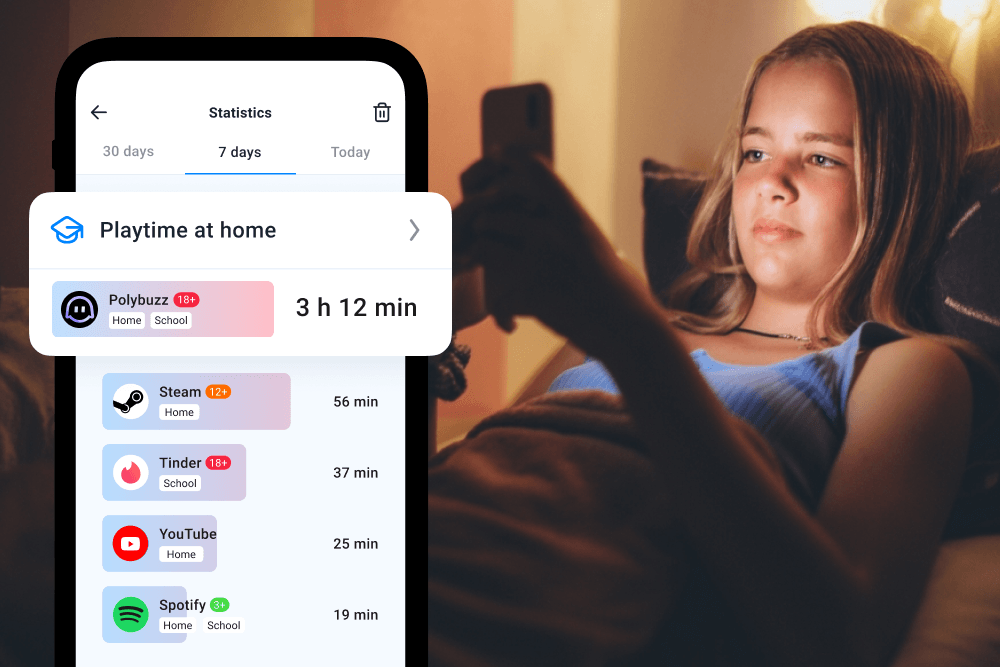
Findmykids is a family safety app designed to give parents better visibility into their child’s digital habits, along with tools to support safer and more balanced use.
One of the key features is app usage monitoring, which shows how much screen time a child spends in specific apps. This makes it easier to spot patterns—like excessive time on certain platforms—and step in when needed.
At the same time, Findmykids allows parents to take action. With flexible app blocking, parents can block apps like Polybuzz either completely or for a set period of time. For example, you can temporarily block access during homework or before bedtime by setting a timer when needed. This allows you to step in at the right moment without needing to create a fixed schedule.
The app also includes additional safety controls, such as the ability to block 18+ websites and restrict in-app purchases, giving parents more control over what their child can access.
Beyond digital monitoring, Findmykids supports real-world safety with real-time GPS tracking and features designed for offline situations, helping parents stay connected with their child throughout the day.
Want a clearer picture of your child’s digital habits—and more control when it matters? Explore Findmykids and see how it can support your family’s everyday safety.
Polybuzz vs Other AI Chatbots: Which Are Safe for Kids?
Polybuzz is not designed for children, and neither its app nor its web version offers the level of safety or moderation most parents would expect. But it’s not the only platform raising concerns.
Today, AI chatbots fall into two broad categories:
- tools built for adults or general audiences, often with limited safeguards
- and those designed specifically for children, with built-in protections
Understanding the difference is key to making safer choices.
AI Chatbots Parents May Want to Avoid
Some popular AI apps offer engaging experiences but lack strong safety features for younger users.
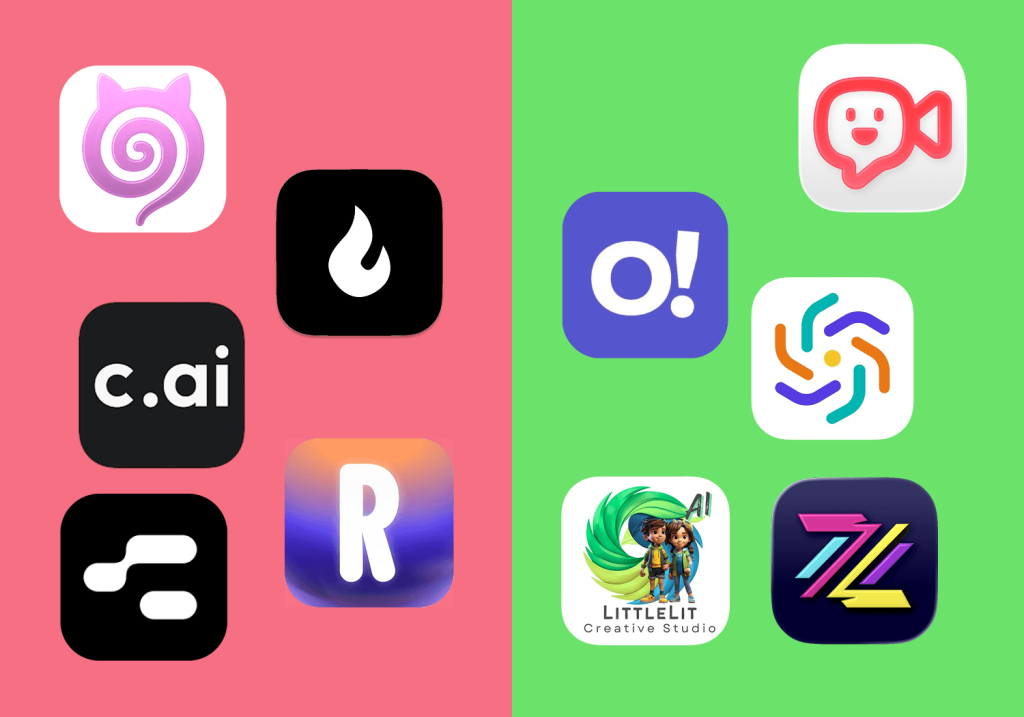
Avoid apps like Character AI and Replika. These are both rated 18+ with weak age verification and limited parental controls. Replika, in particular, creates romantic characters such as AI “boyfriends” and “girlfriends” with the ability to have explicit conversations.
Other chatbots parents may want to approach with caution:
- Chai AI: Known for unfiltered chatbot experiences, including user-created bots with minimal moderation.
- Janitor AI: A platform often associated with NSFW roleplay content and very limited safeguards.
- AI Dungeon: A storytelling tool that allows highly open-ended scenarios, which may include mature themes depending on how it’s used.
Safer AI Options Designed for Kids
Some platforms, however, are built with younger users in mind and include stronger safeguards, moderation, and parental involvement.
- HeyOtto: A chatbot designed for children with age-adaptive responses and parental controls.
- PinwheelGPT: A child-safe version of ChatGPT that lets children explore subjects of interest without explicit content. There is a parent app where you can monitor conversations.
- LittleLit: Creative and educational bots for kids, such as STEM genies and writing bots.
- Zigazoo: Safe social platform with 100% human-moderated video content.
- JusTalk Kids: A secure messenger app with “guardian controls” that includes educational features and parental oversight.
AI Chatbots for Kids: Quick Comparison
| App | Age Focus | Main Use | Safety Level | Key Concerns / Features |
| Polybuzz | 18+ | AI chat & roleplay | ❌ Low | Weak age checks, mature, dangerous content |
| Character.AI | 13+/16+ | Roleplay chat | ❌ Low–Medium | Unpredictable conversations |
| Replika | 18+ | AI companion | ❌ Low | Emotional/romantic interactions |
| Chai AI | 17+/18+ | Chatbots (user-created) | ❌ Low | Minimal moderation |
| AI Dungeon | 17+ | Story generation | ❌ Low–Medium | Open-ended, can include mature themes |
| HeyOtto | Kids | Learning chatbot | ✅ High | Age-adaptive responses |
| PinwheelGPT | Kids | Safe AI exploration | ✅ High | Parent monitoring |
| LittleLit | Kids | Educational AI tools | ✅ High | Creative + STEM focus |
| Zigazoo | Kids | Social learning platform | ✅ High | Human moderation |
| JusTalk Kids | Kids | Messaging | ✅ High | Parental controls |
How to Help Your Child Use AI Chatbots Safely
If your child is interested in AI tools, the goal isn’t always to say no—it’s to guide how they use them.
Start by choosing platforms that are specifically designed for children. Look for features such as:
- Clear age policies and COPPA compliance
- Parental dashboards or monitoring tools
- Content moderation (ideally human + AI)
- Limits on open-ended or roleplay-based interactions
As children grow older and gain more independence, open conversations become just as important as technical controls. Talk about how AI works, why it can sometimes respond unpredictably, and why it shouldn’t replace real friendships or emotional support.
AI tools can be creative, educational, and fun—but they work best when used with awareness, boundaries, and ongoing parental involvement.
FAQs
Is Polybuzz safe for kids?
No. The app was designed for 18+ users, and content filters are flimsy, meaning violent and sexual content can easily slip through. The app has a Teen Mode and Pure Mode, but reports show these are still unreliable and unsafe for children.
Does Polybuzz have parental controls?
No. The app does not have specific parental controls. Younger users are typically defaulted to Teen Mode, but inappropriate content still slips through, and filters can easily be bypassed.
Can kids use PolyBuzz through the web version?
Yes. Polybuzz can be downloaded from the App Store or Google Play Store, or users can use the web version. Neither is safe for kids, as Polybuzz is officially rated 18+.
Can parents access chat content on Polybuzz?
Polybuzz does not offer native parental controls that allow parents to monitor chat content or remotely access their child’s account. The platform is 18+ and operates on a high-privacy model, meaning even developers cannot read private user conversations.
Sources & References
- AI Chatbots Use Emotional Tricks to Keep You Hooked, Harvard study, The Tech Buzz, 2026
- FAQs, PolyBuzz.ai
- Kids and teens under 18 shouldn’t use AI companion apps, safety group says, CNN, 2025
- Why AI companions and young people can make for a dangerous mix, Stanford Report, 2025
- Online abuse, The National Society for the Prevention of Cruelty to Children (NSPCC)
- New report reveals how risky and unchecked AI chatbots are the new ‘go to’ for millions of children, Internet Matters, 2025
- Common Sense Media AI Risk Assessment: Social AI Companions, Common Sense Media, 2025
- Children’s Online Privacy Protection Rule (“COPPA”), Federal Trade Commission
Cover image: generated by ChatGPT / OpenAI
Проверьте электронный ящик