















You may have heard recently that a new law imposing a social media ban is set to take effect in Australia starting in December 2025. But there is a common misconception about what this “ban” really means and the motivations behind it.
In this article, we will explain what Australia’s social media ban actually means, why it’s being put in place, and what parents need to know.
Contents:
- Why Australia Is Considering or Implementing Social Media Bans
- What Apps Are Getting Banned in 2025? The List of Age-Restricted Platforms
- What Other Countries Are Banning or Restricting Social Media and Why?
- How Social Media Bans Affect Teens
- How to Manage Teens’ Screen Time and Avoid Addiction: Online Safety Tips
- Is Australia’s Social Media Ban a Good Thing for Young Australians?
- FAQs
Why Australia Is Considering or Implementing Social Media Bans

Camilo Concha/Shutterstock
Since the launch of social media platforms, such as Facebook, Instagram, and Twitter, teens with social media accounts have been drawn to connect and communicate with others. They use these platforms to post life updates, share photos and videos, and interact with friends and strangers.
The social media ban in Australia is set to limit access to social media platforms to those aged 16 and older. Therefore, they are turning them into age-restricted platforms.
In fact, 84% of Australian teens aged 8-12 have used social media, even though the minimum age requirement is 13. During these incredibly delicate years of development, teens are especially susceptible to mental health issues and radicalization through social media content.
For this reason, the Australian government has agreed to raise the age limit to access social media platforms to 16 years old. Their main reasons for enacting this social media ban include:
- Cyberbullying: Receiving threatening messages or harassment online from peers and even strangers can have a detrimental effect on teens. 44% of Australian children report experiencing cyberbullying at some point.
- Misinformation: In the new age of AI and the recurring theme of fake news, more misinformation is spreading online than ever before, which can be harmful for developing minds and shaping their beliefs.
- Teen Mental Health: Social media can cause depression, anxiety, and addiction. In fact, 40% of Australian teens’ mental health is impacted by social media use.
- National Security: The popular app TikTok is a concern for national security in Australia and is used by 31% of young teens aged 8 to 12.
Due to these concerns, the australian government introduced and passed the Online Safety Amendment (Social Media Minimum Age) Act ‘24 in November 2024. This is an addition to the Online Safety Act passed in 2021. It states that social media apps that allow users to post, share, and interact must impose an age limit of 16. This is supported by the eSafety commissioner, who emphasizes online safety as the sole purpose of these reforms.
It’s important to note that the user will not be punished if they access the app underage. Instead, the liability is on the social media companies. If their systems bypass the age restrictions implemented by the social media ban, they could face fines of up to $49.5 million AUD unless they take reasonable steps, such as implementing age-estimation systems or participating in an age-assurance technology trial designed for tech companies and online services.
Related: Social Media Is Toxic: How to Protect Your Kids from It.
Pushback on the Social Media Ban
There is some pushback from experts on the social media ban in Australia. Some cite violations of children’s and human rights. In an open letter signed by advocacy groups, the worldwide organization, UNICEF, states, “UNICEF Australia believes the real fix should be improving social media safety, not just delaying access.”
They believe that a blanket ban on social media apps infringes on children’s rights to express themselves online. There is a belief that this could further impact teens’ mental health as they may feel oppressed and kept from interacting and learning in the online world.
The social media platforms themselves also oppose the ban. However, their concerns are about its effectiveness and the technological implementation. Many argue that it would be easy to bypass the age-restricted platforms, rendering the ban meaningless and ineffective. Others warn of possible unintended consequences, including young Australians shifting toward less-moderated spaces like Steam Chat or darker corners of other platforms that don’t apply to the social media ban.
What Apps Are Getting Banned in 2025? The List of Age-Restricted Platforms

TY Lim/Shutterstock
The social media ban states that social media apps that allow users to interact with each other and post or share content will be forced to abide by the new age restriction. Some of the most popular social media apps to be banned included:
- TikTok
- X (formerly Twitter)
- Snapchat
- YouTube (except for YouTube Kids)
- Threads
Communication apps such as WhatsApp and Discord will not be affected. Online games and gaming platforms such as Roblox and Lego Play are also safe from the new age restrictions. Educational platforms and online spaces such as Google Classroom and YouTube Kids will not be affected either. These online services fall under certain types of education-focused technology often used in school.
Read more: The List of 65+ Inappropriate Websites to Block for Kids.
What Other Countries Are Banning or Restricting Social Media and Why?
There are different kinds of social media bans in the world. Some countries ban social media platforms altogether, prohibiting users of any age from accessing them.
Countries with total social media bans include:
- China
- North Korea
- Myanmar
- Nepal
- Afghanistan
- Turkmenistan
- Iran
The difference between these bans and the one Australia plans to implement? The intended purpose is to restrict the posting and sharing of content, limiting the ability to connect or support regional development.
However, some countries are imposing a social media ban for under-16s in an effort to keep kids and teens safe. These countries include:
- France: Users must be at least 16 years old to join without parental consent.
- Germany: Requires parental approval between ages 13 and 16.
- Spain: Introduced a draft law requiring parental consent for users under 16.
- Denmark: Plans to introduce a similar law to Australia, but parental consent could allow access for younger users.
How Social Media Bans Affect Teens
Limiting young people’s access to social media can have both positive and negative effects.
Positive Effects of a Social Media Ban on Young People
Reduced Exposure to Harmful Content
While major social media platforms have content moderation teams, some harmful content can slip through the cracks.
Whether it’s violence, radicalization, bullying, body-image triggers, exploitative ads, grooming, or online predators, they all cause negative mental health effects on teens. Delaying what age teens can access potentially harmful content can further protect them and their mental health by keeping platforms safer.
More Time for Offline Development
Teens spend an average of 5 hours per day on social media. Limiting who can access social media apps by implementing age restrictions allows teens to spend more time offline.
In these critical years of development, both mentally and socially, interacting with others in real life rather than online can be extremely beneficial. Two-thirds of children admit to interacting with people they do not know online.
During adolescence, teens learn how to express, understand, and manage their emotions in healthy ways. If they spend time alone in front of a screen, they may miss out on these essential life skills—skills often reinforced in school and extra-curricular activities.
Improved Digital Literacy
As parents, it’s important to teach and guide your children to learn about digital literacy. With so much misinformation online, they need to know how to find trustworthy sources and think critically about what they see or watch.
Kids Helpline highlights the need for curated information rather than an algorithm-driven dynamic list of content. They explain the online risks of getting stuck in the dopamine loop and how social media can be addicting—a helpful resource for parents to learn how to talk to their kids about digital literacy and how social media apps are designed to suck you in.
Helping your kids prepare to use social media by teaching digital literacy can help them make better use of online content and protect their mental health.
Potential Negative Effects of a Social Media Ban for Young People
Social Isolation or Missing Out on Positive Connections
Social media companies have opened the door, allowing people to connect with others they may never have met in real life. This is extremely important for vulnerable communities, such as LGBTQ+, as young people can find support online that they may not have in their hometowns or schools.
Young people under 16 years old may also feel left out and isolated, especially if they have peers or siblings who can access social media. This can cause social anxiety or even resentment because they are missing out on social connections.
Risk of Unsafe Work-Arounds
Teens might find ways to work around the age restriction ban. They could use other people’s accounts, lie about their age, or use VPNs to access social media apps. Usually, this is done without their parents’ knowledge, creating an even more unsafe environment.
While some companies may begin to issue age-assurance technologies that require a government ID, facial recognition, or age verification, there are privacy issues to consider as well.
Transition Period Stress
With 95% of teens already using social media, a hard stop once social media goes into effect is a big change. Completely restricting access could create feelings of anxiety, anger, resentment, and FOMO (the fear of missing out).
It could also cause families to struggle with adapting to their children not having access to social media. Parents could feel overwhelmed and uncertain about how to handle the ban or explain it to their children.
How to Manage Teens’ Screen Time and Avoid Addiction: Online Safety Tips

Doucefleur/Shutterstock
Social media is highly addictive, especially for kids and teens. The algorithms and app layouts are designed to keep users engaged, scrolling infinitely, and zoning out for hours.
If you allow your kids or teens to use social media, especially if you are in a country that does not have a social media ban, it’s important to know how to manage their screen time to avoid addiction.
Create Healthy Digital Boundaries
Setting boundaries around device use and scrolling on social media can reduce the risk of social media addiction.
This could mean certain rooms in the house are device-free. For example, at night, bedrooms should not have phones or computers switched on or used. Not only does this help promote better sleep, but it also draws a healthy boundary. Another device-free area could be the dinner table or when you’re eating.
Understanding when to use your phone or computer can help teens realize they can function without their phone by their side at all times.
Replace Excessive Screen Use
It’s easy for parents to say that their kids cannot use their phones, computers, or gaming stations at certain times of the day. But then kids are left wondering what to do instead.
Instead of removing screen and device use, replace it with an offline activity that can benefit them physically and socially. For example, you can have them work on an art or creative project, play a sport, dance, volunteer, hang out with friends (without their phones), or follow fitness or movement challenges.
Encourage Critical Thinking About Social Media
It’s impossible to keep your kids and teens from accessing social media forever—even if you have screen time limits and social media age bans. That’s why it is so important to encourage critical thinking when it comes to social media.
Teach your teens that social media is fake. Show them that people only post what they want others to see. This could mean posting a certain way, cleaning only a specific part of their room to take a photo, or making it look like they are somewhere they aren’t.
Promote Mindful Use Over Automatic Use
Too many people automatically reach for their phones to avoid awkward situations, stay busy, or calm nervousness. Encourage your teens to use their phones and social media intentionally, not just to zone out or scroll endlessly.
Set Screen-Time Plans
One of the most effective ways to limit screen use and avoid addiction is by setting screen-time limits with the Findmykids or Kids360 app.
Findmykids: A Complete Family Safety App
Findmykids app
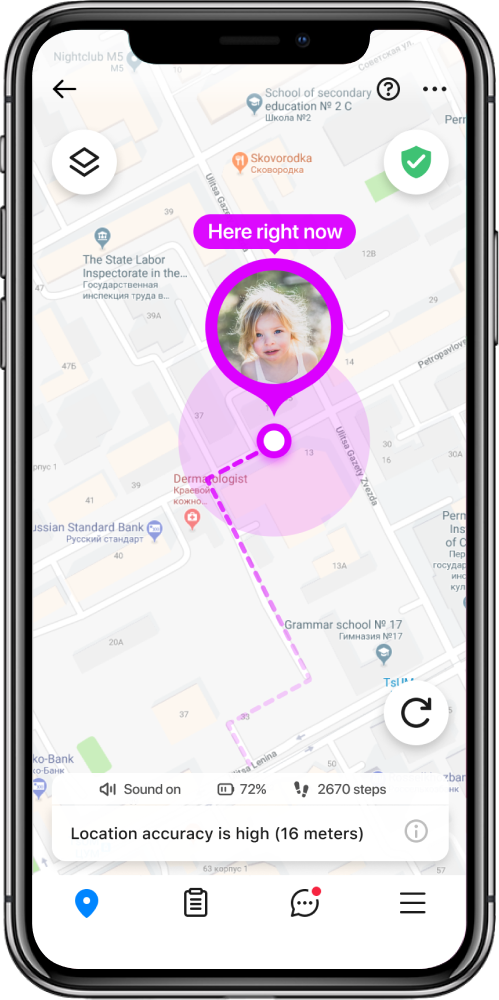
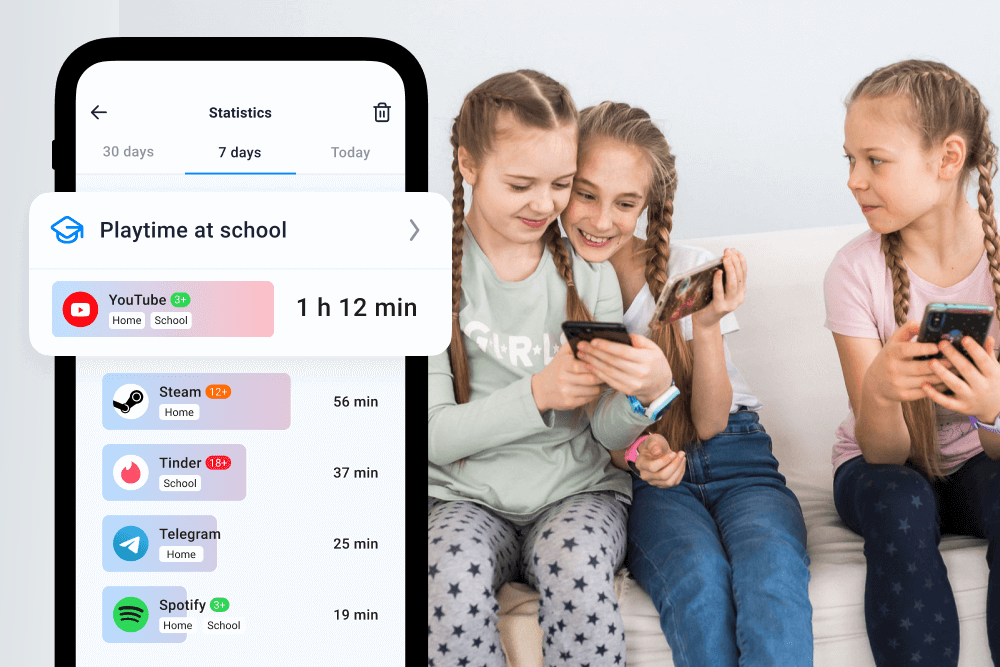
Findmykids isn’t just a GPS tracker—it also includes tools that help parents understand how kids use their devices.
With Findmykids, you can:
- See app-usage statistics
- Track screen time patterns
- Get alerts about risky or excessive use
- Set limits for specific apps or time periods
- Send a Loud Signal if your teen is ignoring calls (works even in silent mode)
This gives you a fuller picture of your teen’s digital habits while helping them build healthier screen routines.
Kids360: A Gentle, Kid-Friendly Digital Wellbeing App
The Kids360 app
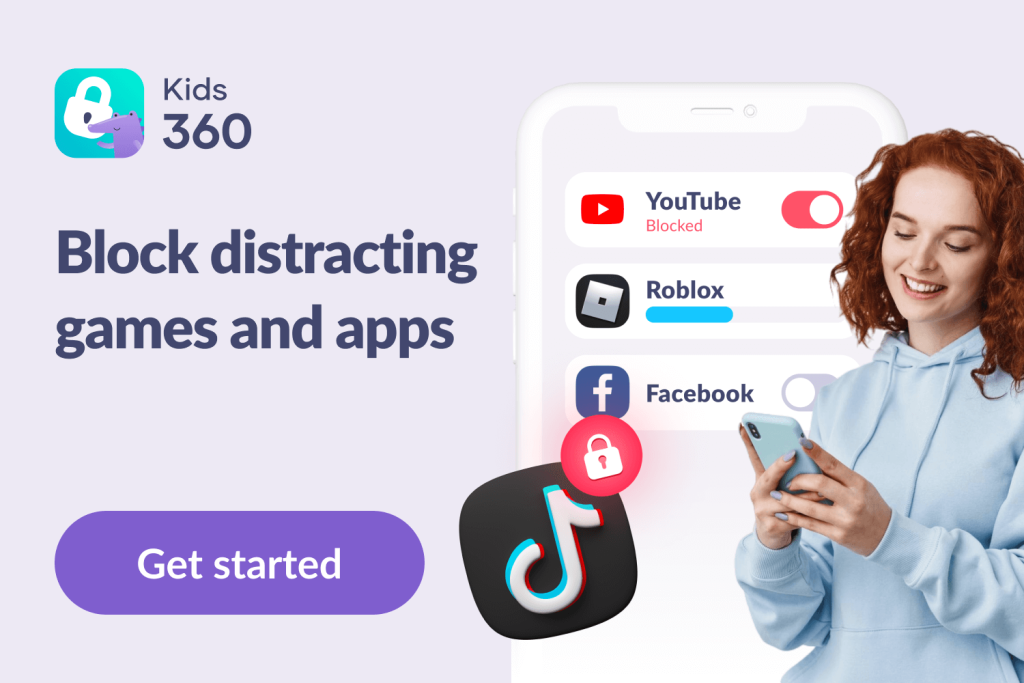
Kids360 helps young users develop healthier relationships with technology through:
- Smart screen-time schedules
- Automatic app pauses during bedtime, study time, or family time
- Friendly reminders and motivation for balanced use
- Built-in logic and focus-building tasks that help kids practice self-regulation
A simple, intuitive interface created specifically for children and preteens
Kids360 doesn’t just block apps—it helps kids understand why balance matters.
Both Findmykids and Kids360 make it easier to support your teen’s wellbeing, set healthy limits, and stay connected—without constant conflict. Try them today for free to get the tools you need for safer, healthier digital habits in your home!
Is Australia’s Social Media Ban a Good Thing for Young Australians?
It’s the million-dollar question: how effective will Australia’s social media ban be? While the prime minister and the rest of the government believe a social media ban for children will benefit young people, others are more skeptical. Some think it’s an overreach of the government, while others say it’s a violation of human rights.
Regardless of whether you live in Australia or in a country where social media bans are not implemented, understanding how to speak to your children about social media use is essential. Teaching them digital literacy, setting boundaries, and implementing screen time limits can help avoid addiction and protect their mental health.
If you found this article helpful or interesting, make sure to send it to another parent who has concerns over their child’s social media use.
FAQs
Is social media going to get banned?
No, social media is not being banned. However, Australia is implementing a harsher age restriction for certain types of social media apps. They are raising the minimum age from 13 to 16.
Why are states banning social media?
In reality, states are not banning social media. Instead, select states, such as Connecticut, Louisiana, Texas, Maryland, and Utah, have required parental consent for users under 16. In Utah, there is also a “social media curfew” from 10:30 pm to 6:30 am.
What is the Kids Off Social Media Act 2025?
The Kids Off Social Media Act 2025 was introduced to the U.S. Senate in January 2025. It proposes that children may not create social media accounts if they are under 13. It also prohibits social media companies from collecting personal data from users under the age of 17.
Which country is trying to ban social media?
Australia is trying to ban social media for children under the age of 16. European countries such as Denmark, France, and Spain are expected to follow their lead.
Resources
- Social media age restrictions, eSafety Commissioner, 2025
- Teens are spending nearly 5 hours daily on social media. Here are the mental health outcomes, American Psychological Association, 2024
- Australian teens trapped by social media apps as the ‘like’ button triggers mental health disorders, Australian Psychological Society, 2024
- Online Safety Amendment (Social Media Minimum Age) Act 2024, Australian Government, 2024
- Social media ban, UNICEF Australia
Cover image: Toey Andante/Shutterstock
Проверьте электронный ящик