

















Learn the essential techniques and strategies on how to block websites on a router, empowering you to control internet access and ensure a safer browsing experience for everyone connected to your network.
Do you want to avoid frequently visiting and being distracted by certain websites on your wireless network? Or perhaps you want to ensure your kids are safe online by blocking inappropriate content? Fear not; blocking them through your router is easier than you think. With so many settings available on most modern routers, you can easily restrict access to pesky or harmful sites using just your laptop, phone, or tablet.
Read on to find out all about how to block unwanted websites on a router.
Contents:
- Why Block Websites Through the Router?
- What You Need to Know to Block Websites on a Router?
- Step-by-Step Guide to Blocking Websites on Different Router Models
- Tips for Best Website Restrictions
- Use Findmykids to Block Apps and Protect Your Child
- FAQs
Why Block Websites Through the Router?
ronstik/Shutterstock.com
Have you ever wondered why some sites on your home network are restricted? It’s not just about controlling your kids’ screen time or stopping your roommates from hogging all the bandwidth. Knowing how to block content through your router can help protect your network from cyber threats by preventing access to malicious domains that could steal your personal information from your laptop or network.
Blocking websites is also a great way to manage screen time for kids and teens. Many routers allow you to block categories of websites, such as gambling, social media, or adult websites, which can help you stay focused while working or studying. Applying these rules at the router level helps you make sure the protections cover every device in your house, from smartphones and laptops to gaming consoles and smart TVs.
Of course, you could always ask yourself if you really need to check Instagram or TikTok for the 10th time today, but it’s nice to have the option, right?
What You Need to Know to Block Websites on a Router?
Teerasan Phutthigorn/Shutterstock.com
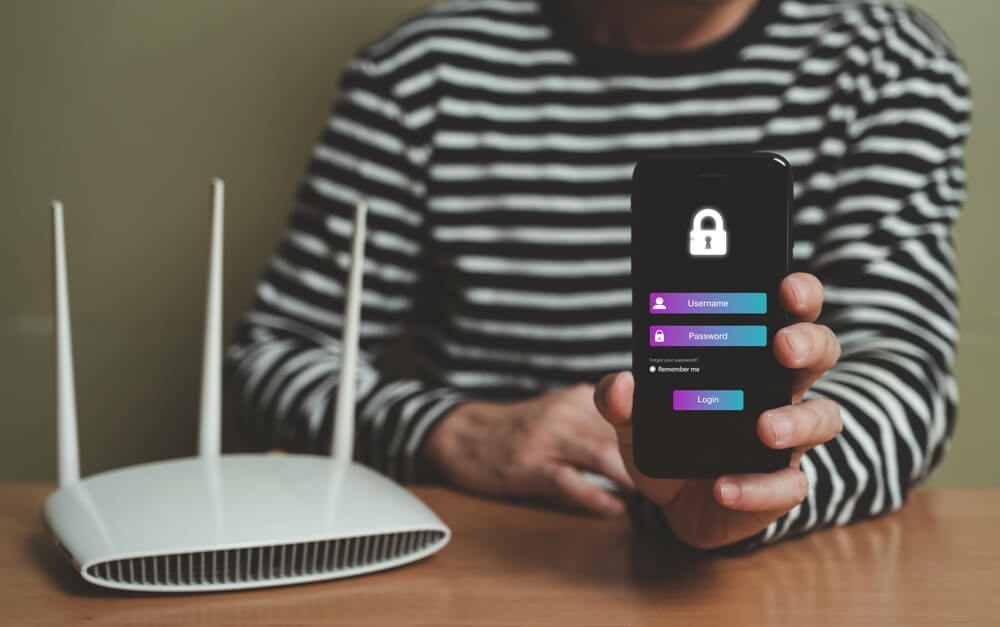
Blocking websites on a router is a valuable way to control access to certain content on your network. The basic configuration steps involve accessing your router’s web interface using your computer, laptop, phone, or tablet, creating a new rule or policy, and adding the URLs or keywords of the websites you want to block.
Keep a few things in mind when you’re establishing access restrictions on a router:
- It is essential to ensure that the router firmware is up to date to avoid any security flaws.
- Blocking websites by their IP addresses rather than domain names is recommended to prevent users from accessing them via proxy servers. Note that this method can be less effective for websites with dynamic IPs or those using CDNs (Content Delivery Networks). URL filtering is often more practical for most users.
- Remember that blocking websites on a router may not be foolproof. Users can bypass the restrictions of these blockers. It is always a good idea to combine this with other methods of content filtering and parental controls by installing additional apps on your devices.
- Consider using keyword blocking on your router for entire categories of websites, such as “gambling,” “adult content,” or “social media.”
Step-by-Step Guide to Blocking Websites on Different Router Models
Only_NewPhoto/Shutterstock.com
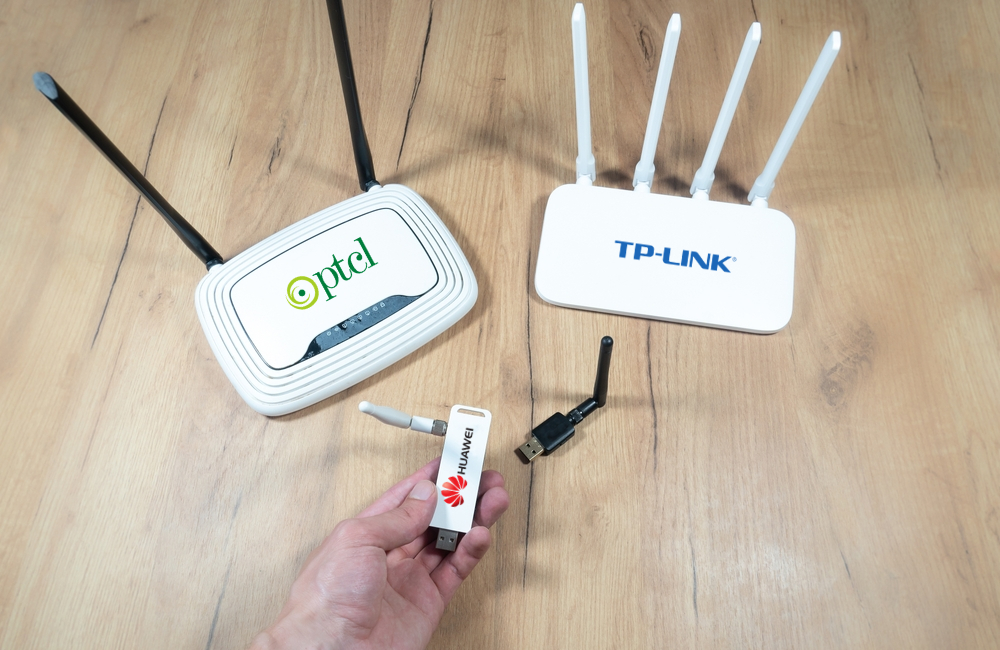
Wi-Fi routers are a dime a dozen these days, and it can be overwhelming trying to pick the right one for your needs. Each model boasts its own site blocker features to entice users, making the decision all the more difficult. But fear not. Blocking websites on your router is a simple task that applies across the board. However, some minor tweaks may be required, depending on the models.
Quick Guide: How to Block Websites on Your Router
Log in to your router’s web interface by entering your default gateway IP address (commonly 192.168.1.1, 192.168.0.1, or 10.0.0.1) in a browser like Google Chrome, then manually enter the IP address in the search bar and hit enter. Enter your admin credentials.
Then navigate to sections like “Parental Controls,” “Access Control,” “URL Filtering,” or “Security,” then “Block Sites.” Add the URLs or domains you want to block, choose “Always” or set a schedule, and save or apply the settings so the restrictions take effect.
Now that you know the general process, let’s look at how to do it step by step on some of the most common router models.
Netgear
If you have a Netgear router, the process is straightforward.
- Open Google Chrome or another browser and enter routerlogin.net or your default gateway IP.
- Log in with your admin credentials.
- Go to the “Security” tab and select “Block Sites.”
- Choose whether to block sites always or on a schedule.
- Enter the specific website URL or use keyword blocking to filter out broader terms.
- Click “Apply” to save your changes and secure your Netgear router.
Huawei
Here are the step-by-step instructions to block a website using a Huawei W-Fi router:
- Connect your computer, laptop, or smartphone to your Huawei Wi-Fi router network.
- Open a web browser and type your router’s IP address in the address bar. The default IP address for Huawei routers is 192.168.1.1. If this does not work, consult your router manual to find the correct IP address.
- Enter your username and password to access your router’s admin panel. The default username and password are usually “admin” for both fields. If you have changed them before and cannot remember them, consult your router manual for instructions on resetting them.
- Once you are logged in, under the “Parental Controls” or “Advanced” menu, look for an option called “URL Filtering” or “Website Filtering.” Click on it. This may vary depending on your router model, so consult your router manual if you need help finding it.
- In the “URL Filtering” or “Website Filtering” section, you should see an option to “Enable” the filter. Turn this on.
- Now, you can add the websites you want to block by clicking the “Add” or “Block Website” buttons—type in the website you want to block in the field provided. You can also block specific keywords or phrases by typing them in.
- Once you have added all the websites or keywords you want to block, click the “Save” button to save your changes.
TP-Link
Cristian Gutu/Shutterstock.com
Here are the step-by-step instructions to block a website using a TP-Link Wi-Fi router:
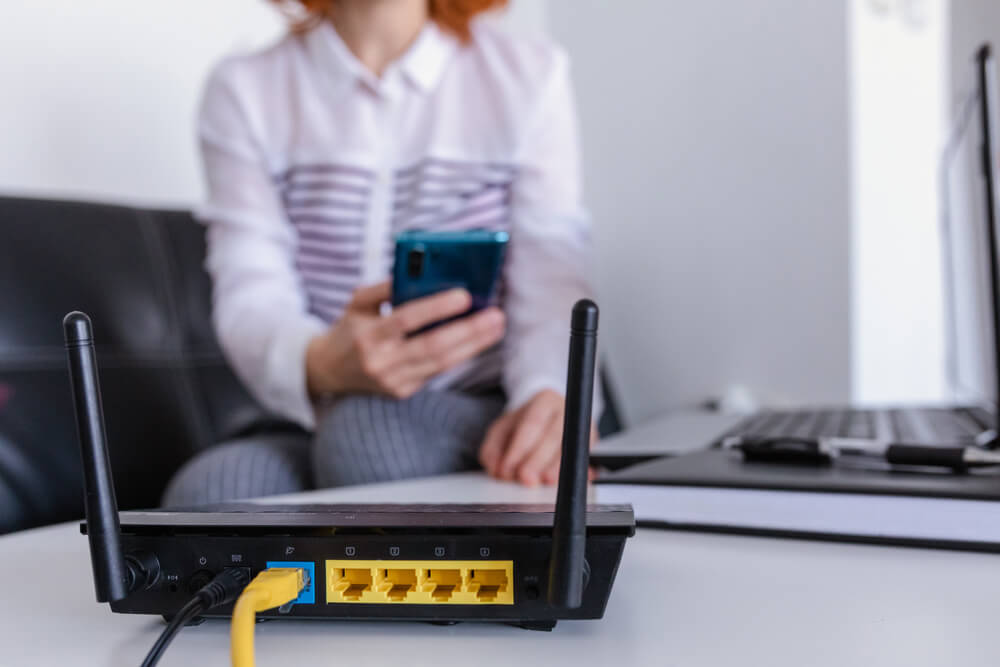
- Enter the web control page for your router using a laptop or smartphone. Open a web browser and hit enter http://tplinkwifi.net/ or the router’s IP address (the default IP address is 192.168.0.1 or 192.168.1.1) in the address bar.
- Navigate to the menu item, Access Control > Host, and select “Add New…”, choose “IP Address,” then in the “Host Description:” box, type a brief explanation of the host rule you want to set. On your network, type the range of IP addresses you want to ban access to. The new Host rule will now appear on the “Host Settings” page after you click “Save.”
- Choose “Add New” under Access Control -> Target. After selecting “Domain Name” in the “Mode:” box, provide a summary of the rule you set up. Enter the keywords you want the router to avoid using the “Domain Name:” box(es). The new Target rule will appear on the “Target Settings” page after you click “Save.”
- Go to Access Control -> Rule page, check the box next to “Enable Internet Access Control,” choose the option “Deny the packets specified by any enabled access control policy to pass through the Router,” and then click “Save.” If this option is set to “Allow,” all websites other than the ones you’ve set Host/Target rules for will be blocked.
- Click “Add New…” under “Access Control -> Rule,” then give a brief explanation of the rule in the “Rule Name:” box.
Make sure you’ve got your game plan set in the correct order. Firstly, head over to the “Host:” box and select the Host rule you expertly defined in Step 2. Once you’ve got that sorted, hop on to the “Target:” box and select the top-notch target rule you defined in Step 3. Now for the easy part— select “Anytime” in the “Schedule:” box —this one is a no-brainer! But here comes the important part—in the “Action:” box, select “Deny.” Lastly, select “Enabled” in the “Status:” box, and you’ll be ready.
PTCL Router
To block a website using a PTCL Wi-Fi router, follow these step-by-step instructions:
- Open a web browser on a laptop or smartphone connected to the PTCL Wi-Fi network and type “192.168.1.1” in the address bar. Press enter.
- Enter your username and password to log in to the router’s web interface. The default username and password are “admin.”
- Navigate to the “Security” tab in the router’s web interface.
- Click on “Access Control” from the left-hand side menu.
- Under the “Access Control” tab, click the “Add” button to create a new rule.
- Enter a name for the new rule in the “Rule Name” field.
- In the “Source IP Address” field, select “All.”
- In the “Destination IP Address” field, enter the IP address of the website you want to block. You can find the IP address of the website by doing a quick search on Google.
- Select “Deny” in the “Action” field.
- Click on “Save” to save the new rule.
- Restart the router to apply the changes.
- Once the router is restarted, your blocked website will be inaccessible from any device connected to the PTCL Wi-Fi network.
Asus
Credit: asus.com
If you have an Asus router, you have multiple options to limit access. The first one is to directly connect to the router’s settings. Here’s how to set up the URL filter and block inappropriate websites:
- Connect the device to the router via Wi-Fi or a wired connection.
- In your browser, enter your LaN IP. It’s usually http://192.168.50.1. If that doesn’t work, you can always visit router.asus.com and use the router’s credentials to access settings.
- Log in using your router’s admin credentials.
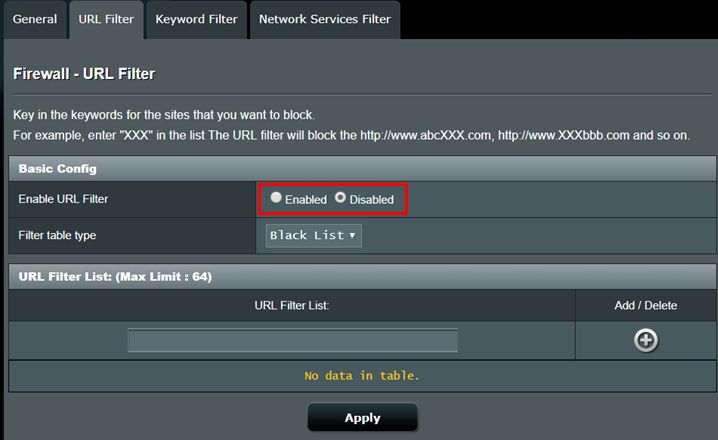
- Choose the “Firewall” option. Next, pick the “URL filter” tab and enable these settings.
- Set the desired black and white list options. Inappropriate websites should be blacklisted, allowing you to pick only specific sites that connected devices can visit.
- Once you finish, click on “Apply” to save everything. You can check if the list of unreachable websites works before you close the window.
Tip: After applying, test by visiting a blocked site to ensure the filtering works on every device.
An alternative way of blocking inappropriate websites on an Asus router is to use your phone and the dedicated Asus router app. This will require a Wi-Fi connection and the installation of the app. After you open the app, enter the “Family” section and select the user or device. Customize the “Web & App Filters” to block inappropriate content categories (e.g., adult content, gambling, etc.).
Note:
- Some older models may not have the URL filter in the same location or at all — in that case, “AiProtection” or “Parental Controls” tabs may be used.
- The mobile app gives category-level control, not specific URLs.
D-Link
Credit: grumpygeekwrites.wordpress.com
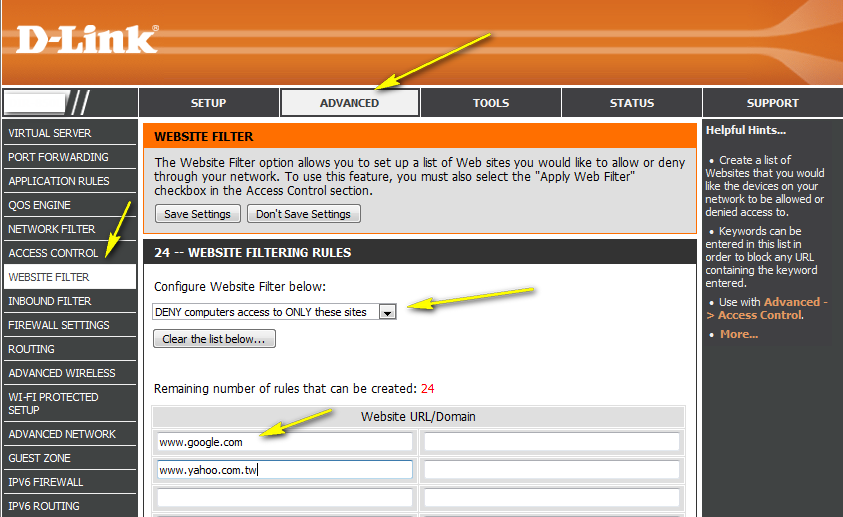
If you have a D-Link router, there are website filtering settings on a router level. Here’s how to access them to block internet sites:
- Use a device connected to the router to access its settings.
- Enter http://192.168.0.1 or http://dlinkrouter.local in your internet browser. Unless you changed the credentials, use the username Admin and leave the password blank.
- Find the “Website Filter” option. You will identify it in the “Advanced” tab. After you click it, the filtering submenu will appear on the left part of the screen. You can now set the desired block list for unreachable websites.
- Configure the desired filters. You can choose to deny the device’s access to the specified inappropriate websites. Just enter the domain addresses in the fields below.
- Move to the “Access Control” menu you will find on the left-hand part of the screen. After you enable it, click on the new policy.
- Set the policy details. The general rule is to select that the policy will always be active, although you can adjust it to your preferences. Finally, choose the devices and save the settings to complete the process.
Note: Access Control must be enabled for the website filter to take effect. Without this, your filter settings may not apply.
Tips for Best Website Restrictions
Vladimir Arndt/Shutterstock.com
Whether you’re trying to block adult content via a router, block TikTok via a router, or simply block websites on your PC, there are a few simple steps to follow to keep your family safe.
Use a strong password for the router
This prevents other people from changing your settings or turning off your restrictions.
Keep your blacklist up to date
New websites are being created every day—it’s important to be aware of changes in order to quickly ban unwanted or potentially dangerous content. Using a custom DNS service can automate much of this.
Use DNS for better filtering
Sometimes basic router features are not enough. This is where a dedicated DNS service comes in handy. By changing your DNS settings, you can route your internet traffic through a service that automatically filters out malicious or inappropriate domains.
Many families rely on a custom DNS service to enforce strict content filtering across their entire home network. When you adjust your router’s DNS settings, you apply these rules to every device connected to the Wi-Fi. You simply log into your router interface, locate the internet setup page, and replace the default ISP addresses with the DNS server addresses provided by your chosen service.
Using a reliable DNS service provides advanced filtering capabilities that standard routers lack. If your children connect to a different network, however, these router-level DNS settings will no longer protect them, which is why device-level apps remain crucial.
Monitor and adjust
Implementing website restrictions is not a one-time event. Regularly monitor and adjust your advanced filtering rules as necessary. Conduct periodic reviews of website usage to see if you need to adjust your content filtering.
Check the limits before you deploy them to your users
Are the settings working correctly? Are the sites that you want to be available accessible? Are all potentially dangerous sites blocked?
Control network traffic
See which sites are visited most often on your home network to decide whether to block them or not.
Use a firewall to protect your network from malicious websites
This will help prevent unauthorized users from accessing your network and will also help keep your data safe.
Use a router with parental controls
If you want to make website restrictions even more effective, you can use a router with built-in parental controls. Read reviews and check product availability and new router releases on top tech sites to learn more about the routers that offer these features.
Use a parental control app
Consider using a router with built-in parental controls or a parental control app for added protection. This gives you advanced filtering features that standard routers lack.
If the router does not have such functionality, you can download the parental control app to additional devices. This will double the protection against dangerous content for children—not only will sites be banned, but also applications that are not suitable for their age or contain inappropriate content, especially when kids connect to a different network.
Use Findmykids to Block Apps and Protect Your Child
Findmykids app
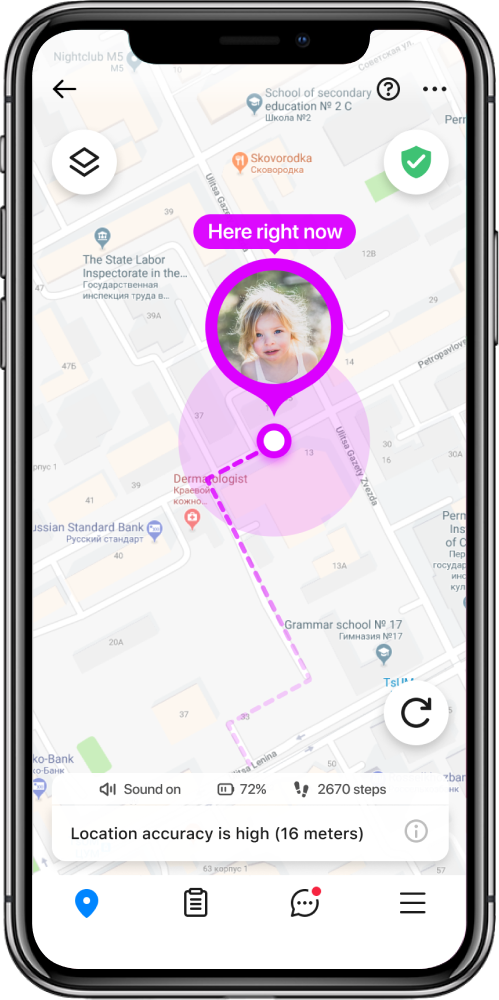
Have you ever found your child glued to an inappropriate app installed on their tablet or phone? The Findmykids app goes beyond basic router settings to give you complete peace of mind. While routers manage your home Wi-Fi network, Findmykids protects your child wherever they go.
Depending on the device and your subscription, you can:
- Track their real-time location, view detailed routes on a map, and receive movement notifications.
- Block unwanted apps entirely or set a specific timer for app usage to support homework and bedtime routines (Android only; iOS supports blocking all apps at once, but no individual timers).
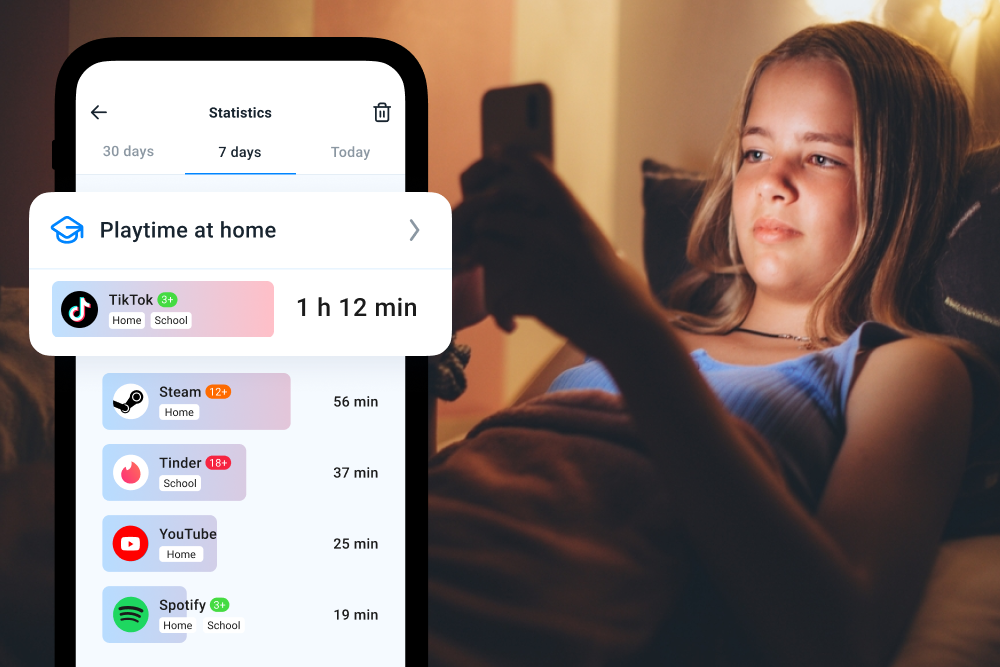
- Monitor exactly how much time they spend in specific apps, complete with category and age ratings.
- Use the Loud Signal (Bypass silent mode) feature to send a loud alert to your child’s phone even if it is on silent or Do Not Disturb mode.
- Block 18+ websites or other unwanted websites and restrict in-app purchases directly on the device.
- Filter out calls from unknown numbers to protect them from strangers, complete with a visible call log.
- Listen to their surroundings with the Sound Around feature to ensure they are safe (Android only. Note: Your child receives a notification when this is active to ensure transparency).
- Protect the app from being deleted by the child with removal protection.
Download the Findmykids app for free right now to keep your child safe online! Available on iOS and Android platforms.
Block access to websites through a router and/or install parental control apps on a child’s devices—this combined approach will double the degree of protection for a child from dangerous content or content that is inappropriate for their age. Say goodbye to worrying about unsafe content and hello to peace of mind!
FAQs
Can I block certain websites on my router?
Yes, it is possible to block certain sites, like explicit websites or those with harmful content, at the router level. A lot of modern routers support this feature, with built-in router controls that let you set a list of websites you don’t want anyone (like your children) to be able to access. You can also change your router’s DNS settings to point to a filtering service. Follow the simple steps outlined in the guide above to block sites.
How do I permanently block a website?
There are several methods you can use to block content, like gambling sites or social media websites, permanently on your home network or specific devices. However, the method for doing this will vary depending on what hardware you have. It’s different on a TP-Link router compared to other brands of wireless routers, for instance. It is often much easier to use a parental control app like Findmykids to block inappropriate content directly on the device, rather than adjusting complex browser settings or configuring DNS server settings.
How do I block the Internet on my router?
It depends on the router, but you can usually access your router settings through a web browser. From there, look for the Parental Control options or Access Control settings. You can then configure the relevant settings to block access to any site or online community you choose. Once you’ve done that, users will no longer be able to access those sites on your home Wi-Fi connection.
How to hide websites visited from a router?
The only effective way to hide sites that you’ve visited at a router level, so even your internet provider can’t see them, is to use a VPN. This will encrypt your connection and hide your IP address and online activities, so nobody can see any address range of the sites you’ve visited, what files are in your download center, or what you’ve typed into the search bar.
How do I block YouTube or TikTok on my router?
To block apps like YouTube or TikTok, you can use your router’s URL filtering or your router’s parental control settings. Alternatively, you can easily block these apps using a comprehensive parental control app like Findmykids.
How do I block adult content on my router?
Most routers allow you to block adult content by enabling parental controls. You can also list out certain keywords to block on the router, like “adult,” “porn,” or “explicit,” in the URL filtering settings. For mobile devices, an app like Findmykids can also block 18+ websites on iOS devices.
How to block websites on a tablet?
You can block websites on a tablet just like you would block websites on a phone or other device. The easiest way is to use your router or a parental control app like Findmykids. In addition to keeping your family safe, this can also help you reduce their screen time.
The picture on the front page: Maryia_K/Shutterstock.com
Проверьте электронный ящик