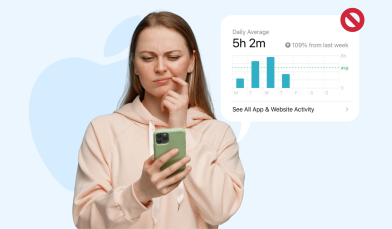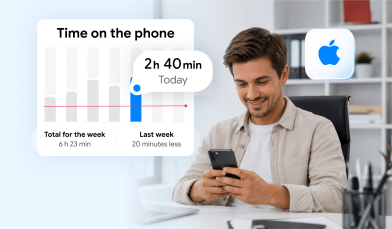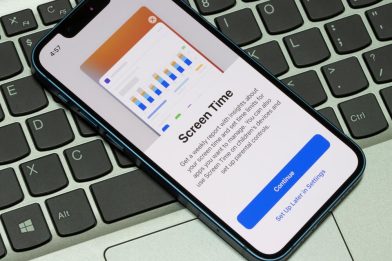















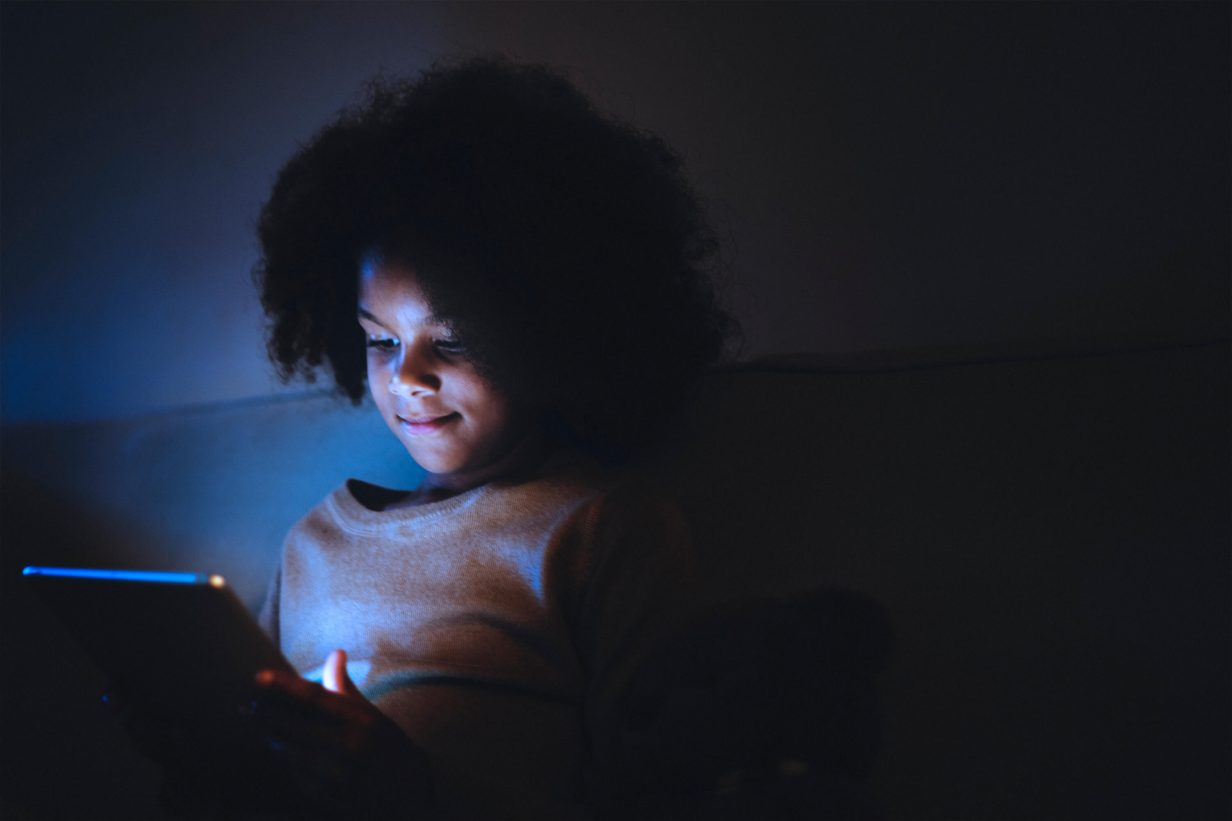
In this digital age, you’ve probably heard the advice of turning off all screens at least an hour before bed because they emit blue light. This concern with blue light and how it affects our health, especially our eyes, quickly turns into concern about children who spend hours in front of screens.
With 86% of children using their smartphones at night, parents can’t help but wonder, “Is blue light bad for kids’ eyes?”
Contents:
What Is Blue Light and Where Does It Come From?
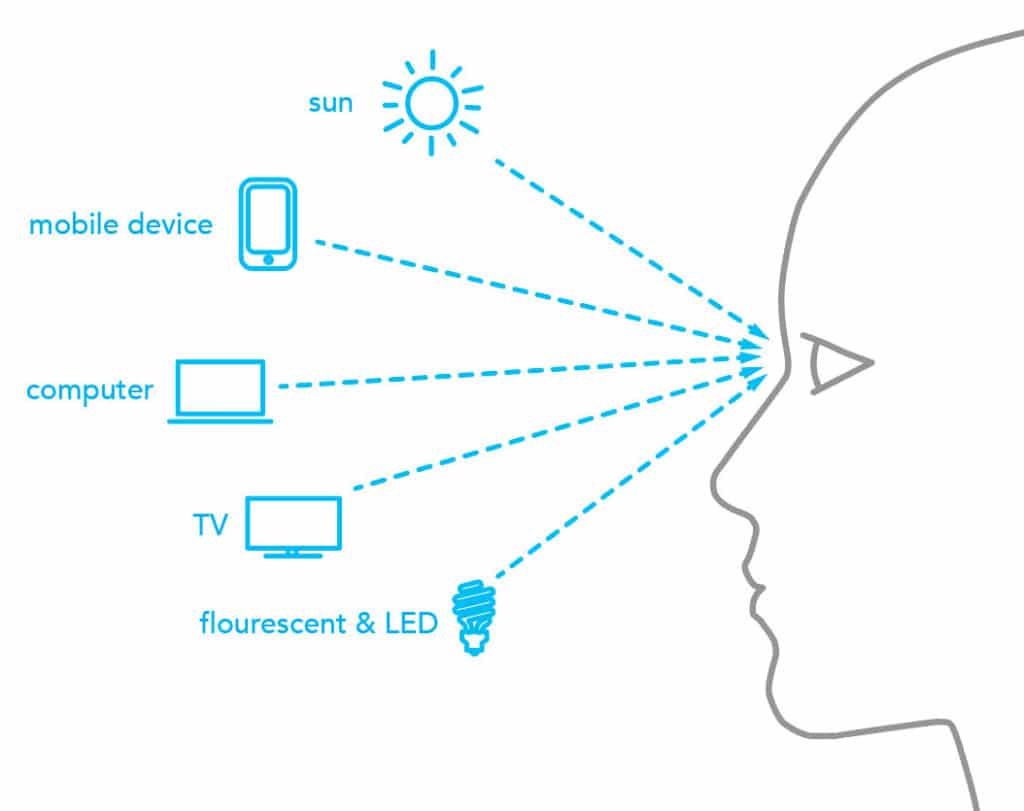
Credit: eyesafe.com
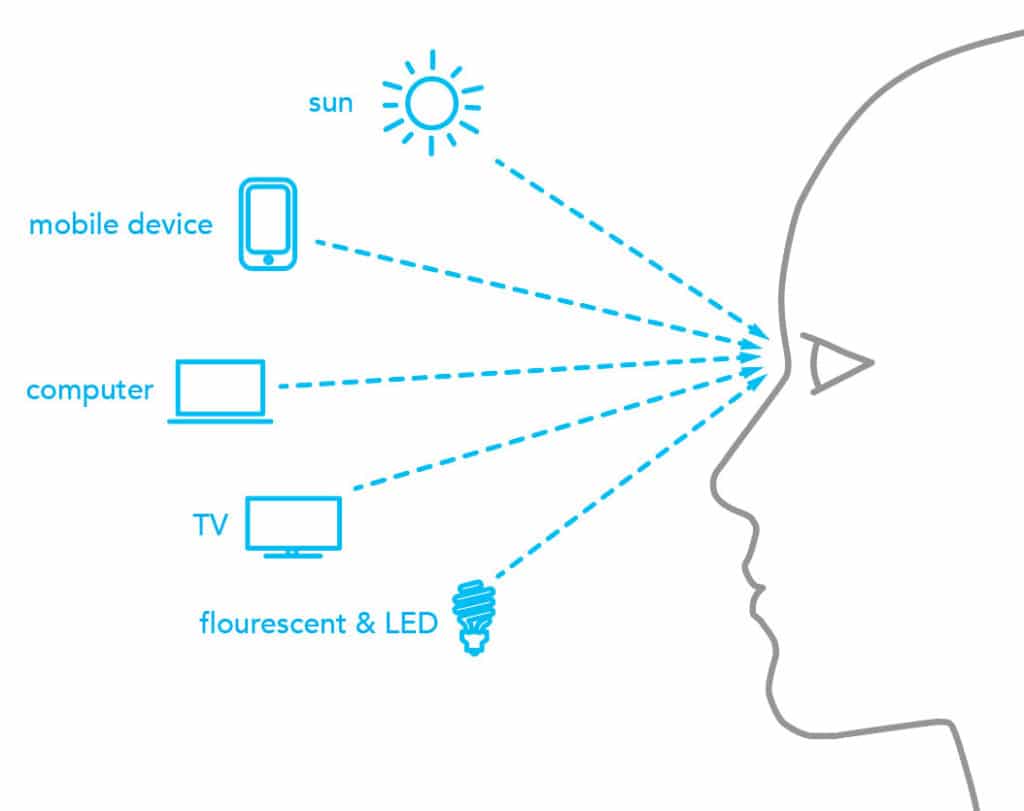
Blue light is a form of electromagnetic radiation and is a blue-spectrum light on the visible light spectrum. It’s a high-energy, short-wavelength light that’s part of the rainbow of colors. In fact, the biggest source of blue light is the sun! It’s the reason our sky looks blue during the day (more precisely, shorter blue wavelengths scatter more in the atmosphere than longer wavelengths—a phenomenon known as Rayleigh scattering; for a detailed explanation, see NASA Space Place).
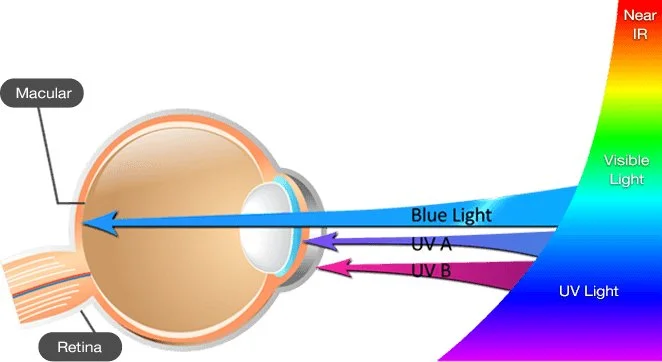
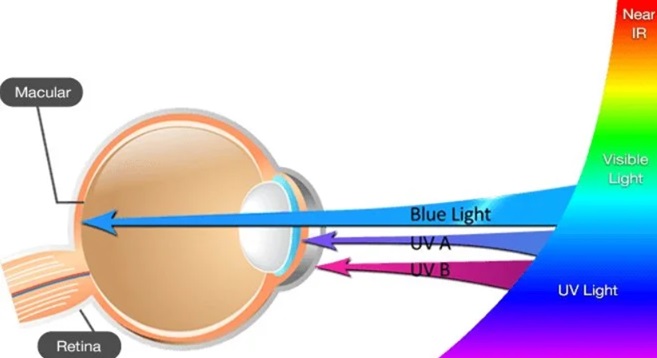
Because of the shorter wavelength’s high energy, it shatters, making the visible blue light pass deeply into the human eye, reaching the retina in the back.
Credit: images.squarespace-cdn.com
This blue light is responsible for regulating the human circadian rhythm, which is our internal clock to control our body’s natural wake and sleep cycles. Natural blue light can also help us boost alertness, mood, and better sleep. In fact, adding more blue light can be used to treat seasonal affective disorder, making up for not getting enough exposure in the winter months.
How Blue Light from Screens Differs from Natural Sunlight
But the blue light from digital devices—phones, tablets, computers, and TVs—differs from natural sunlight. Here’s a comparison to show the main differences:
| Factor | Sunlight | Screens (LED, OLED) |
| Intensity | Very high, natural | Low (equivalent to just a few dozen lux) |
| Spectrum | Full, broad spectrum (includes red, green, and blue) | Narrower, with a peak in the short-wavelength blue range (~450–470 nm) |
| Timing of Exposure | Daytime, natural periods | Often in the evening or at night, frequently prolonged |
| Physiological Effect | Supports circadian rhythm and melatonin production | Evening exposure can suppress melatonin and shift the sleep cycle |
| Potential Harm | Does not cause eye damage at normal exposure | Does not damage the retina, but may disrupt sleep and contribute to eye strain during prolonged use |
⠀
As you can see, blue light from screens is not inherently harmful, but its timing and prolonged close-up exposure can affect circadian rhythm and contribute to digital eye strain, especially in children who spend many hours in front of devices.
Effects of Blue Light on Children
There is a growing concern about how excessive blue light exposure from spending too much time in front of a screen can impact a child’s health and development.
In this section, we’ll look at how screen use—particularly exposure to high-energy blue light from devices—may influence children’s eyes, sleep, and overall well-being.
Does Blue Light Damage Eyes?
Here’s the thing: most research around whether blue light damages your eyes is ambiguous. The short answer is that exposure to natural and artificial blue light every day is not linked to eye damage.
Now, while excessive blue light may not cause retinal cell damage, there are some effects of using screens that you should consider: eye strain and sleep quality.
Blue Light and Digital Eye Strain
Digital screens play a major role in eye strain, especially when kids have constant exposure to screens for more than 7 hours a day. However, blue light is not linked to this eye strain. It just so happens to be what your screens emit, so it gets a bad reputation.
So, to be clear, blue light does not cause eye strain or vision problems, but how we use the screens on our digital devices does.
When a child is focused on a tablet, phone, or computer screen:
- They blink less often (sometimes 50% less than normal)
- Their eye muscles stay “locked in” at one distance
- They are exposed to the right light up close for long periods
This combination can lead to digital eye strain (also known as computer vision syndrome). But what does eye strain look like in children? You might notice your child:
- Rubbing their eyes more often
- Complaining of headaches
- Saying their eyes feel “tired”
- Blurry vision after screen exposure
- Trouble focusing after using a digital device
- Sensitivity to light
- Dry eyes
While eye strain doesn’t cause long-term or permanent damage to the eyes, it can be uncomfortable and affect a child’s development. In some cases of digital eye strain, children may experience frequent headaches, lower sleep quality, and difficulty reading or learning.
Blue Light and Sleep
GOLFX/Shutterstock.com
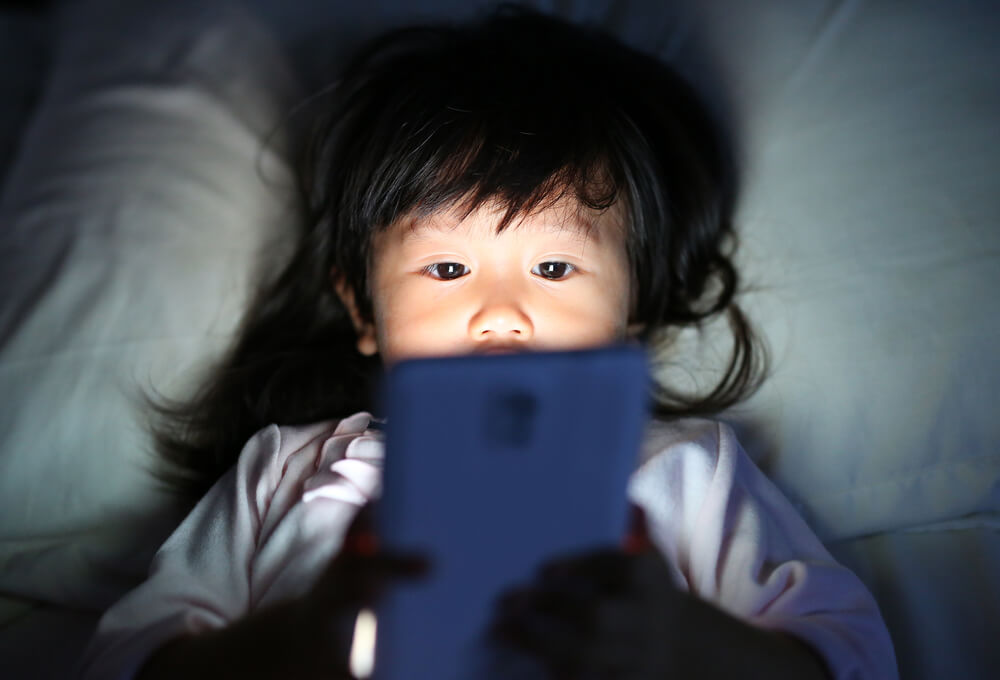
The main effect of blue light is lowered sleep quality.
Remember, blue light is emitted from the sun, which tells our bodies it’s time to be awake. However, when using screens that emit blue light late at night, it tricks your body into staying awake and suppresses natural melatonin production.
Studies show that too much exposure to blue light can suppress melatonin production by twice as much when compared to exposure to other light waves. This can potentially shift the circadian rhythm, delaying the sleep cycle and preventing restful sleep.
When it comes to children’s sleep patterns, it’s especially important to pay attention. Good quality sleep in children is essential for their growth, immune system, and cognitive development. Poor sleep can have lasting impacts on their development and physical growth.
Long-Term Effects of Blue Light
While there are no known long-term effects from artificial sources of blue light specifically, there are long-term effects of too much screen time use in children.
When children spend too much time in front of screens, long-term effects include:
- Vision changes, such as myopia and nearsightedness
- Development of age-related macular degeneration (AMD)
- Sleep disorders
- Shorter attention spans
- Difficulty with emotional regulation
- Reduced physical activity
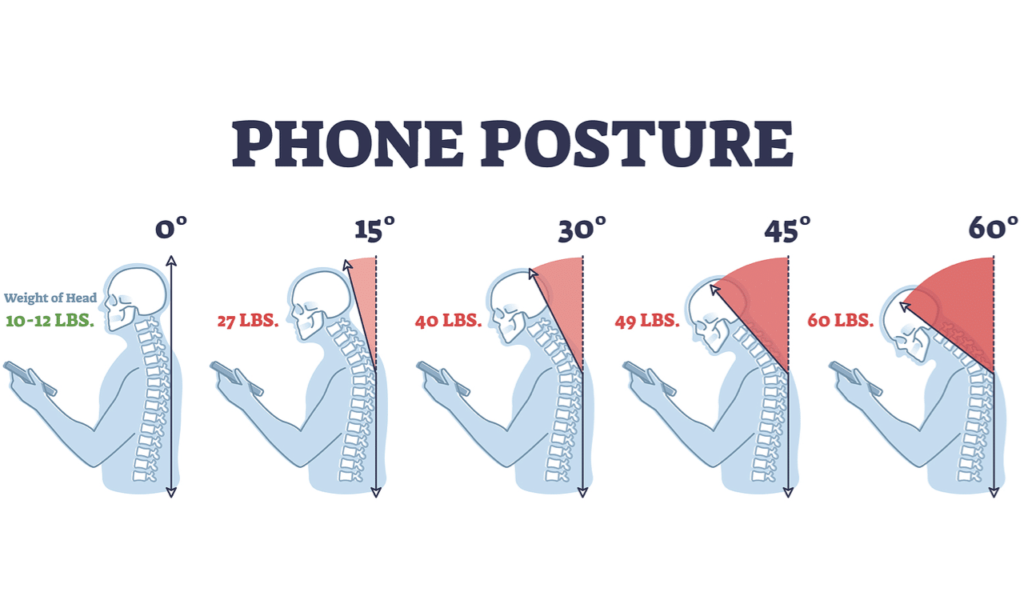
- Poor posture and neck strain
- Underdeveloped social and emotional skills
- Reduced memory and cognitive function
The main concern here isn’t how often your child is exposed to blue light. Instead, it is how much time they are spending in front of screens rather than in the real world.
Read also: Recommended Screen Time for Kids: How Much Is Healthy by Age.
Do Blue Light Glasses and Screen Filters Work?
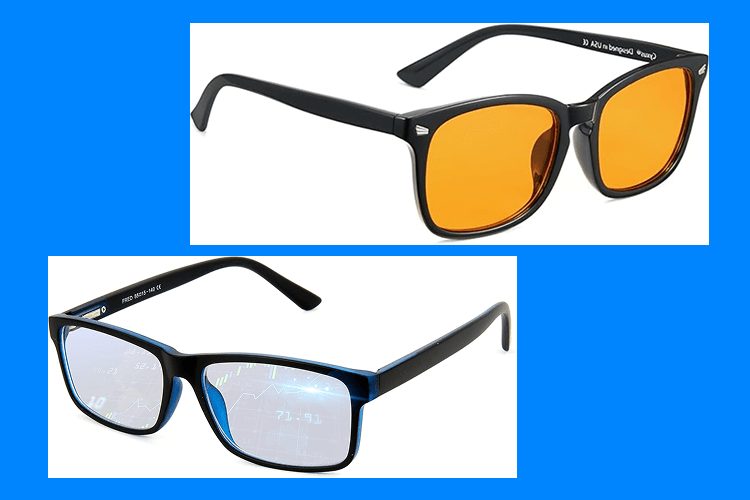
Credit: amazon.com
There is mixed scientific evidence about whether wearing blue light glasses and screen filters effectively reduces blue light exposure in a way that improves eye comfort. While these products can reduce the amount of blue light reaching the eyes, studies show that blue light-blocking glasses do not significantly improve digital eye strain symptoms.
While there is no substantial evidence of the effectiveness of blue light glasses and screen filters in reducing eye strain, some people do find relief when they use them. This may be due to reduced glare, improved contrast, or individual sensitivity. So, it seems to be up to the individual whether they find them helpful.
If you wear computer glasses, opt for anti-reflective lenses, as this can reduce eye strain by minimizing reflections.
Yellow-Tinted Lenses vs. Clear Filters
When blue light glasses first came out, they were orange or yellow-tinted. However, you can now find blue light protection with clear lenses and even have them fit with your eye glass prescription if you wear glasses daily.
Studies do show that the orange-tinted glasses are more effective at blocking blue light than clear filters. However, it’s important to remember that blue light truly only affects your sleep. It’s the screen use that affects your vision.
What About Screen Filters and Night Mode?
Screen filters—whether built into devices (such as Night Mode or Night Shift) or added as physical screen protectors—reduce the amount of blue light by shifting the display toward warmer tones.
These features may help reduce the impact of blue light on sleep when used in the evening. However, current research does not show strong evidence that they significantly reduce digital eye strain.
To help reduce screen-related discomfort, experts often recommend practical habits such as taking regular breaks, adjusting screen brightness to match room lighting, and blinking more frequently to prevent dry eyes.
How Parents Can Reduce Blue Light Exposure
When prioritizing your child’s development, many parents may focus on reducing blue light exposure to ensure good quality sleep. Below are some effective ways to limit blue light.
Night Mode and Blue Light Filters on Device
Turning on a blue light filtering mode like Night Mode on digital devices turns those bright blue tones into warmer, yellow/orange tones to reduce the amount of blue wavelengths.
This can help prevent disruption of the circadian rhythm and support your body’s natural wind-down process at night. However, relying solely on Night Mode is not enough.
While Night Mode can limit blue light from electronic devices like computer screens, it does not block it entirely. It also does not affect the content shown on the screen, the brightness level, or how long your child spends using their device screen.
Limit Screen Time

Findmykids app
The main issue to consider when limiting blue light exposure is excessive screen time. Yes, blue light can affect the human wake cycle, but it’s the too much screen time that is truly affecting your child’s health.
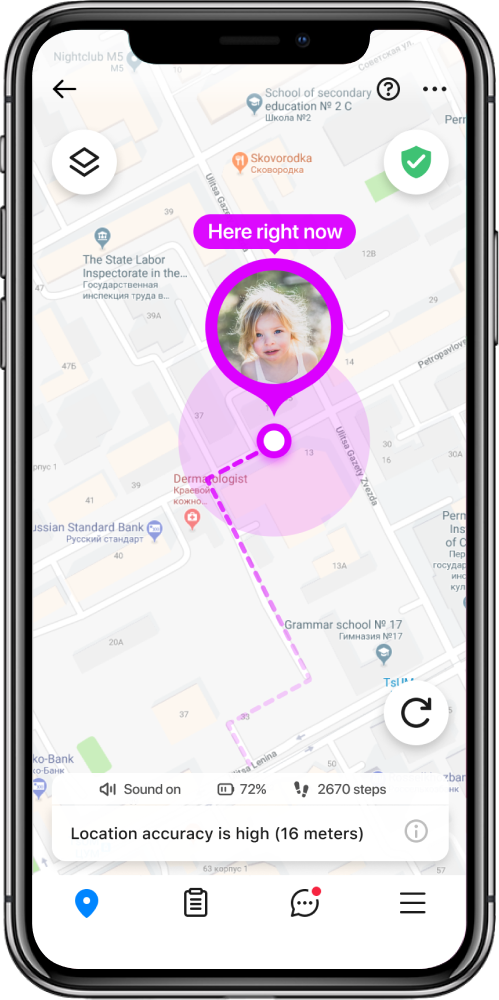
The best way to limit screen exposure is with the Findmykids app. It supports healthy device use while giving you peace of mind—not as a punishment, but as guidance for better habits and eye health.
With Findmykids, you can:
- Monitor Screen Time — see how long your child spends on phones, tablets, or individual apps.
- App Usage Insights — identify which apps contribute most to screen exposure and potential blue light (social media, games, streaming).
- Set Time Limits — block specific apps or the entire device for a set duration, helping children take necessary breaks from screens.
- Ensure Offline Safety — manage device use while knowing your child is in safe locations through features like:
- Real-Time Location Tracking — see exactly where your child is at any time.
- Geofence Alerts — get notifications when your child enters or leaves designated safe zones like home, school, or a friend’s house.
- SOS Button — your child can quickly alert you in case of an emergency.
- Loud Signal / Super Signal — override silent mode to reach your child if needed.
Try Findmykids today to manage your child’s screen time, keep them safe, and support healthy sleep habits—download the app for free and get started in just a few taps!
Experts recommend that children between the ages of 2 and 5 have less than an hour of screen time per day. From ages 5 to 17, they recommend 2 hours per day, focusing on high-quality education content.
Related: How to Reduce Screen Time for Kids Without Drama.
Follow the 20-20-20 Rule
To help reduce digital eye strain in your children, practice the 20-20-20 rule. It works like this: Every 20 minutes, look at something 20 feet away for at least 20 seconds.
This can help relax the eye’s focusing muscles, encouraging blinking, and allowing the eyes to rest for a bit. It’s a helpful habit to help your children learn and implement so that they can use it throughout their lives. Because let’s be honest, screens aren’t going anywhere.
Adjust Home Lighting
Did you know that your LED (light-emitting diode) lighting emits blue light? While the goal isn’t to remove blue light completely (we need it during the day), you can take steps to reduce it when you turn lights on at night.
Switch out bright, cool-toned fluorescent lights with warm white or soft white lightbulbs. They have less blue light and are perfect in bedrooms, playrooms, and living spaces in the evening.
As the sun goes down, you can also consider turning on lamps instead of overhead lights, dimming lights, or creating a soft light setting. Not only does this reduce blue light exposure at night, but it also creates a cozy atmosphere where your child can wind down.
Teach Healthy Device Habits
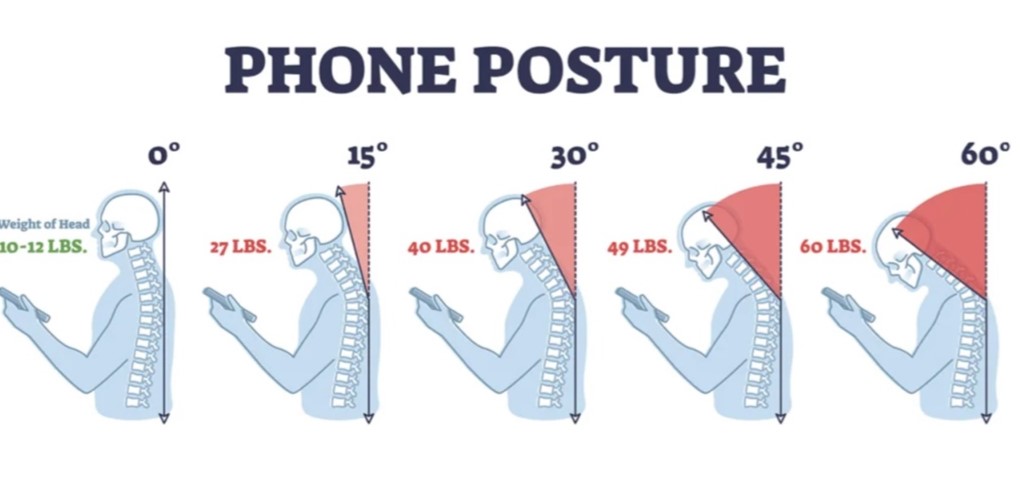
Credit: ergoglobal.com
Along with limiting screen time and adjusting lighting, it’s important to teach children how to use devices properly. Simple habits can reduce eye strain and make screen time safer:
- Maintain a proper distance — keep the device about 16–18 inches (40–45 cm) from the eyes.
- Hold screens slightly below eye level — looking down slightly is easier on the eyes and neck.
- Encourage frequent blinking — remind children to blink often to keep eyes moist.
- Take regular breaks — besides the 20-20-20 rule, encourage standing up or stretching every 30–40 minutes.
- Avoid screens in the dark — make sure the room is softly lit to prevent extra strain on the eyes.
- Use larger fonts when possible — smaller text forces the eyes to work harder.
- Limit multitasking on devices — switching between screens or apps quickly can tire the eyes faster.
These habits, combined with screen time management tools like Findmykids, can help children develop a balanced and safe approach to digital devices, protecting their eyes while supporting healthy routines.
When to See a Doctor About Blue Light Exposure
User16264697 / Freepik.com
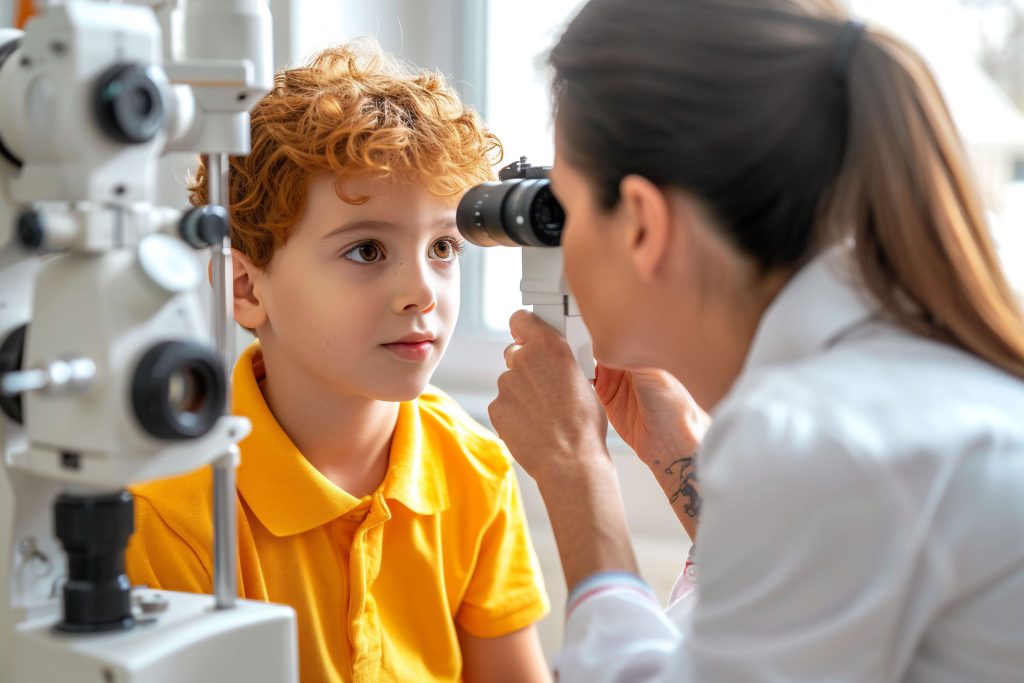
Blue light exposure itself is not considered a medical emergency, and there aren’t any symptoms related to it. However, there are some signs that something else is going on and your child should see an eye doctor or their pediatrician.
You should consider an eye exam if your child has:
- Frequent headaches
- Ongoing eye pain
- Persistent blurry or double vision
- Squinting often
- Sitting very close to screens or books
- Complaints of not seeing clearly
- Excessive light sensitivity
- Red, watery, or dry eyes
Blue light is not likely to harm your child’s eyes. Instead, these symptoms could be related to another eye condition that requires treatment.
Read more: Effective Ways to Break Free from Phone Addiction.
Reduce Screen Time Use and Improve Your Child’s Eye Health and Sleep Quality
Blue light gets a bad reputation. So many people think that exposure to blue light is bad, but it’s actually too much screen time that is the issue, especially in children.
The best way to support your child’s development and health is to limit daily screen use. This, in turn, will also reduce blue light exposure, helping your child sleep better at night.
If you found this article helpful or informative, make sure to share it with a friend who is also concerned about their child’s development and blue light effects from screen use.
FAQs on Blue Light Exposure to Kids
freepik / Freepik.com
Is blue light from phones actually damaging my eyes?
No, the blue light from your phone is not damaging your eyes. However, looking at screens for too long can cause eye strain and myopia due to brightness, proximity, and reduced blinking.
Is digital eye strain the same thing as blue light damage?
Here’s the good news: blue light damage does not exist. However, digital eye strain does exist and becomes present when using screens too often and watching them too close.
Do blue light blocking glasses really work?
While there is ongoing debate about whether blue light-blocking glasses work, most studies lean towards no. If you do want a pair of blue light glasses, opt for orange-tinted lenses as they have been proven to be the most effective compared to clear lenses.
Does blue light affect sleep with Night Shift?
Yes, blue light can lower your sleep quality. While Night Shift can reduce blue light exposure, it is best to turn all screens off at least an hour before bedtime to maximize sleep quality.
What’s the best way to protect kids’ eyes from screens?
Practicing the 20-20-20 rule is the best way to protect your kids’ eyes from screens. After 20 minutes of screen use, have your child look at something 20 feet away for 20 seconds.
Using a tool like Findmykids can help by monitoring screen time and reminding children to take breaks, making it easier to follow eye-care habits consistently.
Resources
- How Much Time Do Children Spend on Gadgets at Night? Findmykids Reveals the Reality, Findmykids’ research, 2025
- Why Is the Sky Blue?, NASA Space Place
- The inner clock—Blue light sets the human rhythm, National Library of Medicine, 2019
- Narrow-band blue-light treatment of seasonal affective disorder in adults and the influence of additional nonseasonal symptoms, National Library of Medicine, 2009
- Blue Light Exposure: Ocular Hazards and Prevention—A Narrative Review, National Library of Medicine, 2023
- Screen Time and Children, The American Academy of Child and Adolescent Psychiatry (AACAP), 2025
- Digital Eye Strain, Blue Light, and Tips on How to Relieve Your Eyes, Brown University Health, 2022
- Computer vision syndrome, The American Osteopathic Association (AOA)
- The influence of blue light on sleep, performance and wellbeing in young adults: A systematic review, National Library of Medicine, 2022
- Blue light has a dark side, Harvard Health Publishing, 2024
- Sleep: An essential element of success for children, Mayo Clinic Health System, 2023
- Digital Screen Time and Myopia: A Systematic Review and Dose-Response Meta-Analysis, National Library of Medicine, 2025
- Why staring at screens is making your eyeballs elongate – and how to stop it, The Guardian, 2022
- New Research Links Blue Light to Macular Degeneration Risk, Antioxidants May Offer Hope, Macular Degeneration Research, 2024
- Are Blue Light-Blocking Glasses Worth It?, The American Academy of Ophthalmology, 2021
- Blue‐light filtering spectacle lenses for visual performance, sleep, and macular health in adults, The Cochrane Library, 2023
Cover image: rawpixel.com / Freepik.com
Проверьте электронный ящик