
















Koala parenting is a parenting style that focuses on empathy and emotional connection, and it’s one that many parents are turning to. With an emphasis on developing secure attachment, koala parenting promotes the idea of creating a safe environment and providing gentle guidance to support both child and maternal mental health.
If the koala parenting style appeals to you, keep reading for more information on what it is, its benefits, and how to incorporate it into your everyday parenting.
Contents:
- What is Koala Parenting?
- Koala Parenting vs Other Styles
- Characteristics of a Koala Parent
- Benefits for Children
- Downsides of Koala Parenting
- Practical Tips for Implementing Koala Parenting
- FAQs
What is Koala Parenting?

Bossa Art / Shutterstock.com
This parenting philosophy, which has its roots in traditional attachment parenting styles, is inspired by how mother koalas care for their young and is all about supporting healthy emotional development and building a strong emotional bond. As a mother koala holds her baby joey, the method involves plenty of holding and cuddling, keeping the baby in close physical proximity throughout the day, responding to the baby’s cry, and being constantly emotionally available.
Those who embrace koala parenting pay close attention to their child’s emotional signals, with a view to developing emotional security and healthier relationships. For some, this may seem an emotionally demanding approach, but there are many benefits of koala parenting (such as the ability to emotionally regulate), which we’ll explore in more detail below.
Koala parenting is different from attachment and gentle parenting styles, although all emphasize secure attachment and emotional responsiveness. It’s called koala parenting as it’s based on how, in the wild, mama koalas keep their young physically close from birth and focus on principles including birth bonding, breastfeeding, babywearing, bedding in the same room, and believing in the baby’s cry. Koala parents prioritize closeness, and the philosophy supports healthy emotional development, frequent physical affection, and emotional warmth.
Koala Parenting vs Other Styles
The core focus of the koala parenting philosophy is building a strong emotional connection so that the child feels supported and secure. It’s about developing security, empathy, and trust, and providing gentle guidance and redirection as necessary. Different parenting methods, such as gentle parenting, have empathy and a respectful, balanced connection and discipline as their core focus.
Whereas koala parents tend to encourage gradual, supported independence, the helicopter parenting style is typically characterized by parents exerting excessive control over their child’s decisions. Meanwhile, free-range parents lean into giving even younger children plenty of opportunity to practice independent decision-making with minimal intervention, unless risks are present.
| Parenting Style | Core Focus / Philosophy | Approach to Independence | Key Characteristics |
| Koala Parenting | Emotional connection, security, empathy, trust | Gradual, supported independence | Gentle guidance, redirection, strong parent-child bond |
| Gentle Parenting | Empathy, respect, balanced connection and discipline | Encourages independence with support | Respectful communication, positive reinforcement |
| Helicopter Parenting | Control over the child’s decisions | Low – parents intervene heavily | Excessive oversight, protective, directive |
| Free-Range Parenting | Risk-aware freedom, self-reliance | High – children practice independent decisions | Minimal intervention, allows mistakes for learning |
| Authoritative | High expectations with warmth and responsiveness | Moderate – guided independence | Clear rules, supportive, encourages problem-solving |
| Authoritarian | High control, low warmth | Low – strict obedience expected | Rules, discipline, obedience-focused |
| Permissive | High warmth, low structure | High – child chooses often | Few rules, indulgent, supportive but less guidance |
| Neglectful / Uninvolved | Low warmth, low control | High – child left to self-manage | Minimal involvement, inconsistent support, distant |
Characteristics of a Koala Parent
Koala parents are highly attuned and responsive to their child’s emotions from a very early age. This parenting approach promotes responsiveness, closeness, and both physical and emotional presence. Experts in koala parenting agree that this parenting style can be tailored to personal family dynamics, rather than being a principle that’s set in stone.
Typical characteristics of koala parenting include:
- A priority on skin-to-skin contact. This could include a detailed birth plan incorporating skin-to-skin contact and breastfeeding as soon after birth as possible.
- Responding quickly to the baby’s cries.
- Learning the baby’s communication style and being highly responsive to this.
- Plenty of hugs and cuddles, and wearing the baby in a sling or carrier while going about daily activities.
- Sleeping in the same room as the baby.
- Offering gentle guidance as the child gets older—this is in contrast to more authoritarian forms of child rearing.
Benefits for Children

Martin Novak / Shutterstock.com
There are many benefits of koala parenting, both for the child and the mother. This approach supports secure attachment, emotional regulation, and a child’s emotional development, which can make for better long-term mental health.
Securely attached kids are often more resilient as adults and find it easier to develop healthy relationships. The emotional closeness that comes with koala parenting can even lead to kids that are more confident in later life—a secure child is often better able to cope with life’s natural ups and downs.
Parenting experts weigh in on this, with those who endorse this approach suggesting koala kids develop more advanced language skills and experience less stress as adults. The powerful emotional connection these children enjoy with their parents is incredibly nurturing and can be extremely beneficial to a child’s development, with the positives lasting well into the future.
Downsides of Koala Parenting
While this parenting method helps build emotional connection, trust, and empathy, there are some potential downsides to consider. It can be physically and emotionally demanding, and some experts have witnessed parents burning out in their attempts to be constantly attentive and highly attuned to their child’s needs. Working parents, or those in very busy households, may find it particularly challenging to follow the tenets of koala parenting to the letter and experience guilt as a result as they attempt to be the “perfect” parent.
Added to this, some people equate koala parenting with styles that don’t put adequate emphasis on encouraging independence as children grow. It’s difficult to balance closeness and independence, and this is something to take into account if you’d like to start koala parenting. Ultimately, the method needs to work for you and your personal family circumstances.
Practical Tips for Implementing Koala Parenting
Want to get started with koala parenting? Try out these tips:
- Prioritize physical and emotional presence and responsive care. This could be carrying your baby in a sling as you go about your daily tasks, giving lots of cuddles, or having regular conversations with your child that focus on building a strong emotional bond.
- Respond to your child’s needs with warmth and empathy—acknowledge their cries or distress and react to these. Pay close attention to the unique ways your child communicates.
- Validate your child’s emotions without judgment. You don’t need to agree with them, but understanding that they have been “heard” is powerful.
- Set gentle boundaries as your child grows and learns, with a focus on guidance and direction.
- As your child grows, adapt the parenting approach to continue providing emotional closeness and warmth. This could be through, for example, making regular time to chat about your child’s school day, or enjoying movie evenings together as a family.
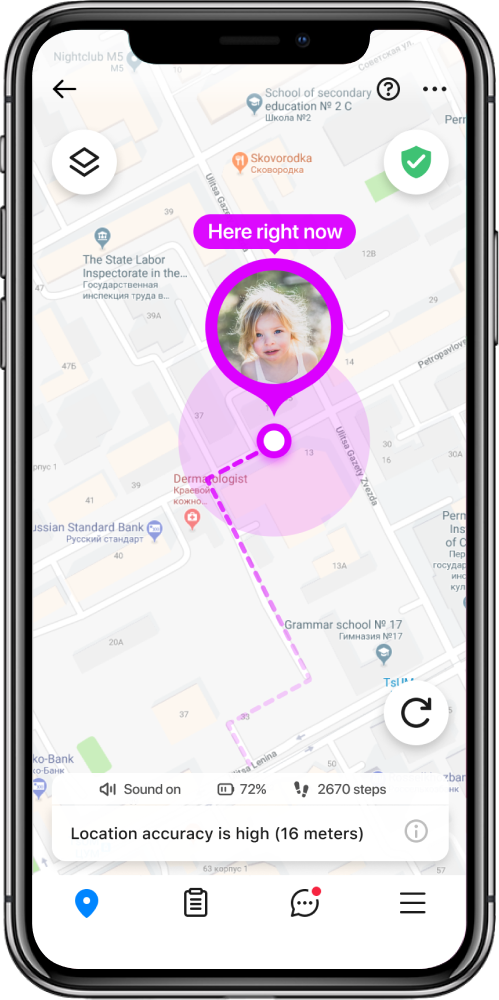
Tech solutions can help you get the balance right between independence and closeness as your child gets older.
Using an app such as Findmykids means—when the time is right—you can let your child leave the house on their own (maybe to meet friends, or walk to school) without sacrificing peace of mind. This app allows you to set geofences, such as their school site, so you’ll get a notification when they arrive or leave these areas, “listen in” to what’s going on around them, and keep an eye on their location history.

Findmykids app
To Koala Parent or Not — the Choice is Yours!
So, is koala parenting just the latest trendy parenting style, or is it one you should consider deploying? While koala parenting may offer many benefits—such as building better emotional regulation skills and fostering good parenting skills—it may not be right for everyone.
You may wish to incorporate some of its tenets into your daily parenting style, or combine the method with another style, to suit your unique family. Use the guide above to help decide whether koala parenting is right for you, and how to introduce its key principles into your daily life.
FAQs
What is a koala parenting style?
The koala parenting style is one that highly responsive caregivers often use. Koala parents tend to prioritize emotional and physical closeness, responding to a child’s needs, and building a close emotional bond. The name koala parenting comes from how mother koalas care for their babies in the wild.
What are the 7 signs you are a koala parent?
The key signs that you’re a koala parent are prioritizing physical presence, focusing on emotional bonding, breastfeeding and babywearing, creating an emotionally supportive environment, practicing gentle discipline, seeking community support, and emphasizing natural development.
What are the 4 parenting styles?
The four key parenting styles are authoritative, authoritarian, permissive, and neglectful.
Read more: What Are the 4 Types of Parenting Styles and Which One is Right for You?
What is panda parenting?
Panda parenting emphasizes emotional connection, trust, and independence, with a focus on allowing kids to learn from their experiences. Elephant parenting, on the other hand, prioritizes the happiness and emotional security of children and is characterized by gentle discipline and supportive problem-solving.
Cover image: freepik / Freepik.com
Проверьте электронный ящик