


















Viewed for far too long as simply a buzzword in educational circles, Montessori parenting is actually a revolutionary approach that can bring peace and purpose into your family’s life.
When you shift your perspective, you create a home where your children feel capable, respected, and eager to engage with the world around them.
But what is Montessori parenting, and is it right for you? Let’s explore.
Contents:
- What Is Montessori Parenting?
- How Montessori Parenting Looks in Daily Life
- Benefits of Montessori Parenting
- Challenges & Common Misconceptions
- Montessori Parenting vs Other Parenting Styles
- Practical Tips for Parents Starting Montessori at Home
- Supporting Safe Independence with Technology
- FAQs
What Is Montessori Parenting?
You might think of miniature furniture or wooden toys when you hear the name, but Montessori parenting goes far deeper than aesthetic choices.
At its heart, this philosophy is about extending the respect and trust found in a Montessori classroom into your living room, serving as a way of raising children that views them as capable individuals who are eager to learn and contribute to their family.
Dr. Maria Montessori developed her method over a century ago, yet her insights into child development remain revolutionary today.
Instead of acting as the boss who directs every move, a Montessori parent acts as a guide. You observe your child’s interests and provide the right environment for them to flourish. It isn’t about letting kids run wild. Rather, the goal here is to give children freedom within consistent boundaries so they can develop self-discipline and internal motivation.
Core Principles of Montessori Parenting
To really get this right, you need to understand the core pillars that hold up the Montessori parenting approach.
Respect for the Child
This is the big one: we often interrupt children or talk over them without realizing it. To foster respect, you need to treat your child with the same courtesy you would offer a guest. You value their concentration and don’t interrupt them when they are deeply engaged in work or play.
The Absorbent Mind
Maria Montessori observed that young children, especially from birth to age six, soak up information effortlessly from their surroundings. They’re constantly learning from the home environment, your behavior, and their experiences. Modeling the behaviors you want to see, then, becomes incredibly important.
The Prepared Environment
You can encourage independence by setting up your home to be accessible for little hands. A prepared environment means organizing spaces so your kids can succeed without your constant help, often involving low shelves, accessible tools, and order. When everything has a place, children learn to restore order themselves without waiting for it to be done for them.
Hands-on Learning
Children learn by doing, so Montessori parenting prioritizes real-world activities over passive entertainment. Whether it’s washing dishes or counting apples, concrete experiences build the foundation for abstract thinking later.
Auto-Education (Self-Directed Learning)
You trust that your child has an innate drive to learn, so your job is to connect them with the right educational materials or practical life activities, then step back. This creates intrinsic motivation because they are doing it for themselves, not for a gold star or your applause.
Montessori Parenting vs Montessori Schooling
A Montessori school or Montessori academy is a formal setting with trained teachers and specialized Montessori materials designed for specific developmental milestones.
You don’t need to turn your living room into a classroom or buy expensive equipment to apply Montessori principles. The “curriculum” at home is everyday life. While schools focus on academic and social progression in a group, the Montessori home focuses on being a functional member of the family unit.
In a Montessori program at school, the teacher presents formal lessons. At home, you are teaching children how to dress, how to treat the dog gently, and how to help with dinner. You are supporting the whole child in a more organic, fluid way.
How Montessori Parenting Looks in Daily Life

Iryna Inshyna / Shutterstock.com
Integrating the Montessori method into your daily routine doesn’t require a total overhaul, but it does require intention. Here are some examples.
Morning & Bedtime Routines
Mornings set the tone, so instead of dragging a sleepy child through the motions, you can build a routine that allows them to take charge.
- Visual Charts: Create a chart with pictures showing steps like “brush teeth,” “get dressed,” “eat breakfast,” and “put on shoes.”
- Limited Choices: Lay out two outfits the night before so your toddler can choose without getting overwhelmed.
- Accessible Items: Keep toothbrushes, hairbrushes, and socks at their level so they don’t have to ask for help.
- Consistent Sequence: Keep the order of events the same to build security and predictability.
Household Responsibilities
Children want to feel useful. When you involve them in household responsibilities, you’re validating their place in the family.
- Child-Sized Tools: Provide a small broom, a mini dustpan, or a cut-down sponge so their hands can actually manage the task.
- Real Work: Let them chop vegetables with a safe knife or fold washcloths. Avoid “pretend” cleaning; give them the real deal.
- Process Over Perfection: Accept that the floor might not be perfectly swept. The goal is the effort and the habit, not the pristine result.
- Team Effort: Frame cleaning as something “we do to take care of our home” rather than something “you have to do.”
Related: Child-Friendly Chores and Responsibilities That Teach Lifelong Skills.
Self-Care Skills (Dressing, Hygiene, Snack Prep)
When a child can care for their own needs, their confidence skyrockets.
- Dressing Stations: Use low drawers or baskets. Show them how to put on a coat using the “flip trick” on the floor.
- Hygiene setup: A sturdy stool at the sink and a mirror at their eye level encourages face washing and tooth brushing.
- Self-Serve Snacks: Dedicate a low drawer in the fridge and a low cupboard for healthy, approved snacks. They can serve themselves when hungry.
- Water Station: Keep a small pitcher and glass on a low table so they can get a drink without begging you for one.
Communication & Respectful Language
Effective communication in a Montessori family is about listening as much as speaking.
- Get Down Low: Physically lower yourself to their eye level when speaking. It reduces intimidation and improves connection.
- Use Positive Phrasing: Instead of “Don’t run,” try “Please walk.” Tell them what to do, not just what not to do.
- Validate Feelings: Acknowledge their emotions (“I see you are frustrated the tower fell”) before rushing to fix it.
- No Baby Talk: Use real words and rich vocabulary. Children are capable of understanding complex language if you use it in context.
Collaborative Problem-Solving
Conflict is an opportunity for social learning, so you move away from being the referee and become a mediator.
- Identify the Problem: “I see two kids who want the same truck.”
- Brainstorm Solutions: Ask them, “How can we solve this?” You might be surprised by their creativity.
- Respect the Solution: If they agree to take turns or trade, support that decision.
- Peace Table: Designate a small area where siblings can go to talk out their disagreements calmly.
Independence in Public Spaces
Leaving the house adds variables, but the principles remain.
- Preparation: Explain where you are going and what will happen before you leave the house.
- Involvement: Let them carry their own small backpack with a water bottle and a toy.
- Tasks: In the grocery store, give them a job like “find the red apples” or “hold the bread so it doesn’t get squished.”
- Freedom of Movement: Whenever safe, allow them to walk freely rather than being strapped in a stroller, even if it takes longer.
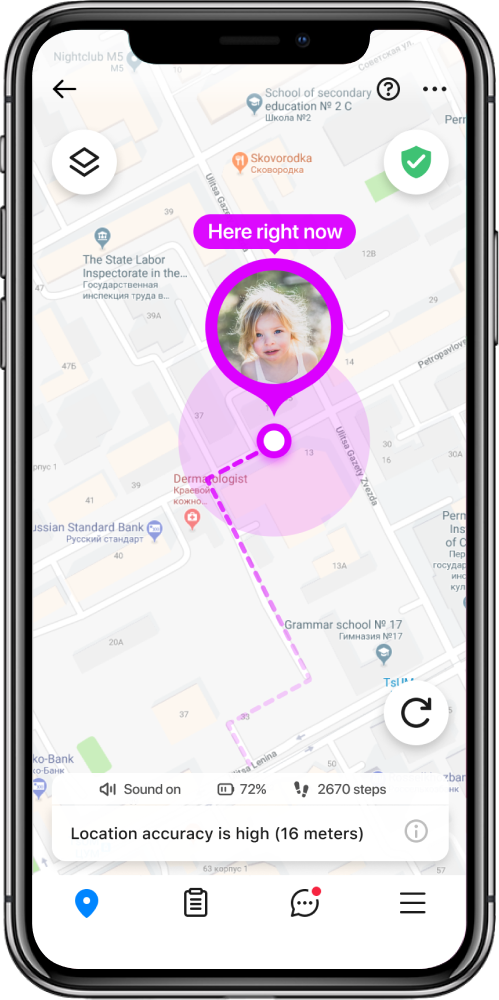
Give your child the freedom to explore nearby streets or a playground—Findmykids lets you track their location and step in only when needed.
Benefits of Montessori Parenting
Why put in all this effort? Simply put, the payoff is substantial for both you and your children.
Confidence and Capability
When you focus on fostering independence, children learn that they are capable agents of change. They trust their own abilities to solve problems and care for themselves.
Internal Motivation
Because you avoid excessive rewards and punishments, Montessori kids develop a strong sense of internal motivation. They do things because they feel good doing them or because it’s the right thing to do, not to get a candy bar.
Better Concentration
By protecting their focus and providing an inspiring environment, you help children develop deep concentration skills, something that serves them well in academics and in life.
Emotional Intelligence
The focus on respect and communication fosters high emotional growth, with children learning to name their feelings and empathize with others.
Peaceful Home Environment
While no home is perfect, a Montessori home often has less yelling and fewer power struggles because expectations are clear and children feel heard.
Challenges & Common Misconceptions
It isn’t all sunshine and orderly shelves. Adopting a Montessori parenting style comes with hurdles.
The “Strict” vs “Permissive” Confusion
Some people think Montessori means kids do whatever they want. Others think it’s too rigid. In reality, it’s a balance. You set boundaries (safety, respect for others), and within those boundaries, there is freedom.
The Mess Factor
Allowing children to do things themselves often means more spills and mess initially. It takes patience to watch a toddler pour milk, knowing half of it might end up on the table.
Time Consumption
It is always faster to tie your child’s shoes than to wait for them to do it, but the Montessori way requires you to slow down and value the learning process over efficiency.
Cost Misconceptions
You might see expensive wooden toys online and think you can’t afford this lifestyle. But true Montessori parenting focuses on attitude and practical life skills, which are free. You can use real kitchen tools you already own.
Montessori Parenting vs Other Parenting Styles
Skyline Graphics / Shutterstock.com
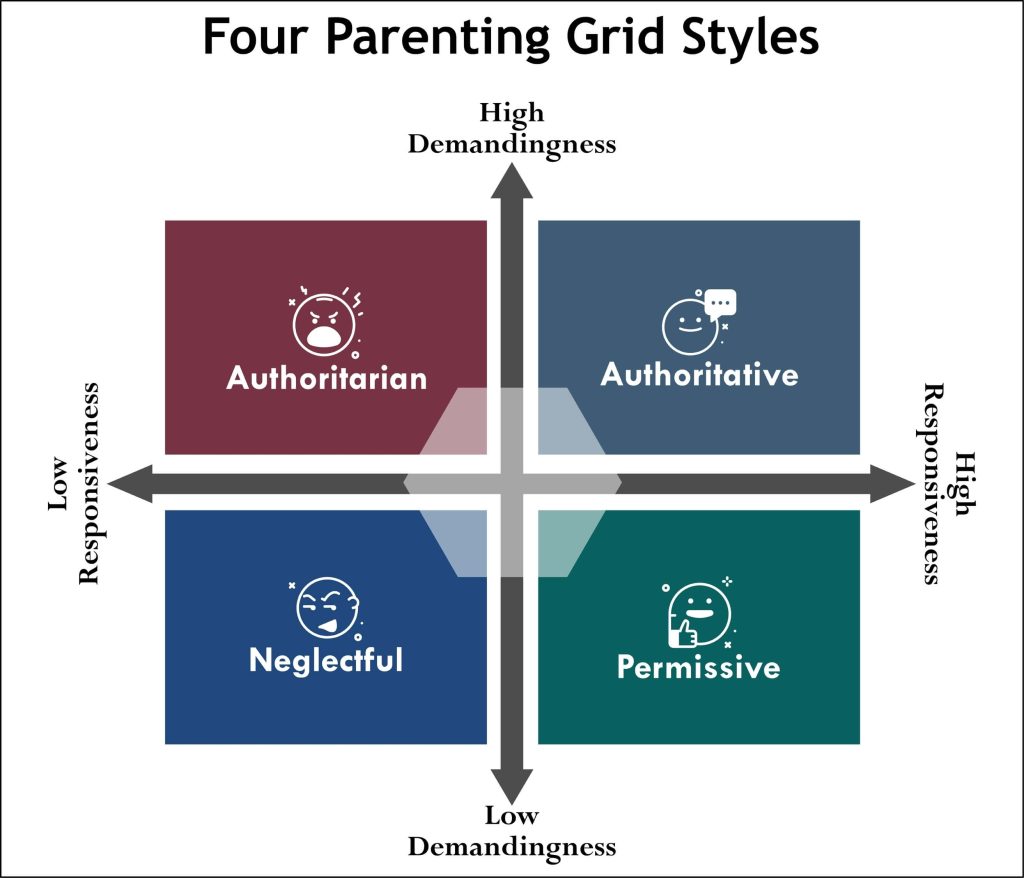
How does this stack up against other popular parenting styles?
Helicopter Parenting
Helicopter parents hover and direct every move to prevent failure. A Montessori parent steps back, allowing safe failure so the child can learn resilience.
Authoritarian Parenting
This style relies on “because I said so.” Montessori relies on respect and explanation. You want the child to understand the why behind the rule.
Permissive Parenting
Permissive parents might struggle to set boundaries. Montessori parents are firm about boundaries regarding safety and respect, providing a secure structure.
Attachment Parenting
There’s actually a lot of overlap here, especially with younger kids. Both value connection and responsiveness. Montessori just adds a heavier emphasis on physical independence earlier on.
Practical Tips for Parents Starting Montessori at Home
Start here:
- Declutter First: You can’t have a prepared environment with clutter everywhere. Rotate toys so only a few are out at a time.
- Observe Your Child: Spend a few days just watching. What are they interested in? Where do they struggle? Follow the child’s interests.
- Start with Practical Life: Invite them to cook, clean, and garden with you. These practical life activities are the easiest entry point.
- Read the Experts: Authors like Simone Davies (The Montessori Toddler) and Paula Polk Lillard provide incredible, accessible guides.
- Be Patient with Yourself: You are unlearning decades of conditioning. You will slip up and default to bossiness. That’s okay. Apologize and try again.
Montessori Parenting Across Ages
Here’s a glimpse at what Montessori parenting looks like across the ages:
Infants
Focus on freedom of movement. Skip the restrictive swings and jumpers. Use a floor bed or a movement mat. Provide simple sensory toys they can grasp.
The Montessori Toddler
This is the golden age for practical life skills, since they want to do everything you do. Provide child-sized furniture and tools. Focus on toileting, dressing, and food prep.
Preschoolers (3–6)
Your children are ready for more complex tasks and longer periods of concentration. Introduce more educational materials related to reading, numbers, or geography if they show interest.
Elementary Age
The focus now shifts to social independence and intellectual exploration. Kids want to know “why” and “how.” Support big projects and group activities. Encourage them to plan their own outings or manage a small allowance.
Teenagers
Montessori for teens is about economic independence and real-world contribution. Encourage them to get a job, volunteer, or manage a household budget, but respect their need for privacy and peer connection while maintaining a supportive environment.
Supporting Safe Independence with Technology

Findmykids app
As children grow, their range of independence expands from the living room to the neighborhood. In Maria Montessori’s time, communities were tighter, and kids roamed freely. Today, we have to balance that need for independent exploration with modern safety concerns.
This is where technology can be a quiet ally, rather than a distraction. Findmykids is a tool that aligns beautifully with the Montessori philosophy of granting freedom within boundaries. It allows you to give your older child the autonomy to walk to school or play at the park independently.
You get the peace of mind of knowing their location, which allows you to step back and let them navigate the world on their own terms.
With Findmykids, you can set up real-time location tracking, geofencing, and safety alerts—empowering your child while keeping them safe. Download the Findmykids app for free today and experience stress-free supervision!
Your Montessori Journey Begins Today
The Montessori parenting approach is a journey, not a destination. You don’t need to be perfect. Your home doesn’t need to look like a catalogue. Instead, you just need to nurture a relationship that’s built on trust and respect.
Start making the small changes. Lower a hook. Buy a smaller pitcher. Pause before you interrupt. You’ll be giving your child the greatest gift of all: the belief that they are a capable, valuable person.
It’s a long game, but watching your child bloom into their own person is worth every spilled cup of milk along the way.
FAQs
Do I need to buy expensive Montessori materials?
No. While specific materials are used in Montessori schools, the home environment should focus on real-life tools. A small broom, a measuring cup, or a hairbrush are perfect educational materials for the home.
Can I do Montessori part-time?
Absolutely. Montessori is a lifestyle and a mindset. Even if your child attends a traditional school, you can apply Montessori principles at home by fostering independence and respect during evenings and weekends.
How do I handle discipline in a Montessori home?
Montessori discipline focuses on teaching, not punishing. We use natural consequences (if you throw the food, you must be done eating) and collaborative problem-solving rather than time-outs or shaming.
Is Montessori suitable for children with special needs?
Yes. The Montessori method is highly adaptable because it follows the child’s individual pace and interests. It was originally developed by Maria Montessori, working with children who had developmental delays.
What if my child isn’t interested in the activities I set up?
That’s fine! It means you need to observe more. Follow the child’s interests. If they ignore the puzzle but love the water, let them wash dishes or play in the sink.
What is the Montessori method of parenting?
Montessori parenting is a child-led approach based on Dr. Maria Montessori’s philosophy, emphasizing independence, respect, and hands-on learning. Parents act as gentle guides, creating a prepared home environment with accessible tools and materials that allow children to explore, make choices, and develop life skills at their own pace. Instead of constant correction, adults observe and support the child’s natural curiosity, fostering confidence and self-discipline through freedom within clear limits.
What is the biggest criticism of Montessori?
The most common criticism of the Montessori method is its perceived lack of structure and limited group interaction, which some say may hinder children’s ability to adapt to traditional school settings and develop teamwork skills. Critics also point to inconsistent implementation—due to the lack of trademark protection—and high tuition costs, which make access unequal. Others argue the balance between freedom and structure can be confusing, with some environments feeling too rigid or too unstructured depending on how the method is applied.
What is a Montessori parent?
A Montessori parent supports a child’s independence, curiosity, and self-discipline by creating a calm, structured environment where the child can explore and make choices. Instead of directing every action, they act as guides—offering tools, respectful communication, and real-life tasks to help the child grow with confidence. The approach emphasizes freedom within limits, natural consequences, and mutual respect, avoiding both permissiveness and over-control.
How is Montessori parenting different from traditional parenting?
Montessori-style parenting emphasizes a child-led approach—focusing on independence, hands-on learning, and respectful guidance—while traditional methods often rely on obedience, top-down control, and behavior management through praise or punishment. Rather than directing every action, Montessori parents prepare environments that promote choice, self-discipline, and real-world problem-solving, fostering deeper engagement and intrinsic motivation.
Cover image: LightField Studios / Shutterstock.com
Проверьте электронный ящик