














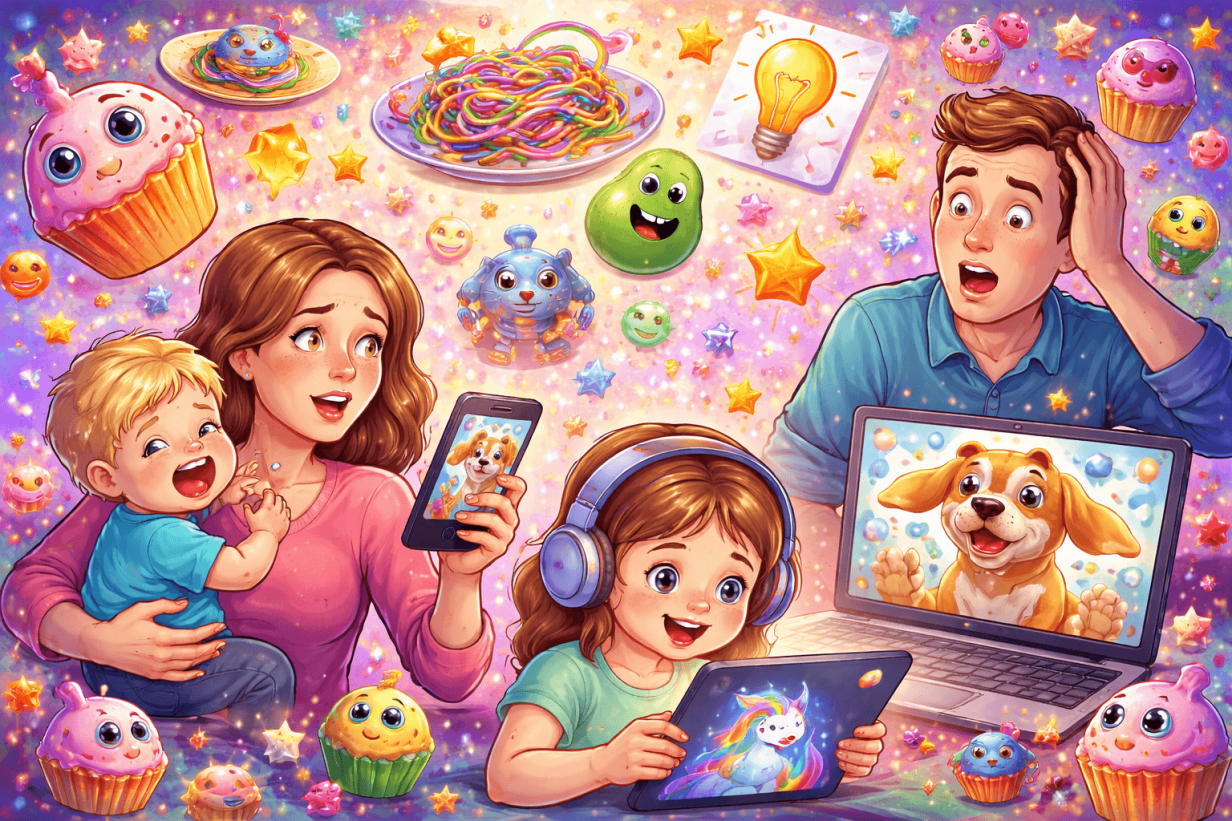
You might be scrolling through your social media feeds and suddenly realize half the posts look slightly weird, plastic, or entirely fake. If you’re wondering what AI slop is, that’s just what it is: the massive flood of low-quality, AI-generated content designed purely to grab attention and make money without offering any real value to the person watching or reading it.
Contents:
What “AI Slop” Means
The word “slop” paints a pretty clear picture: think of a cafeteria worker scooping unrecognizable mush onto a tray. AI slop is the digital equivalent of that mush. It’s poor quality, mass-produced internet filler dreamed up by artificial intelligence.
AI Slop vs. AI-Generated Content
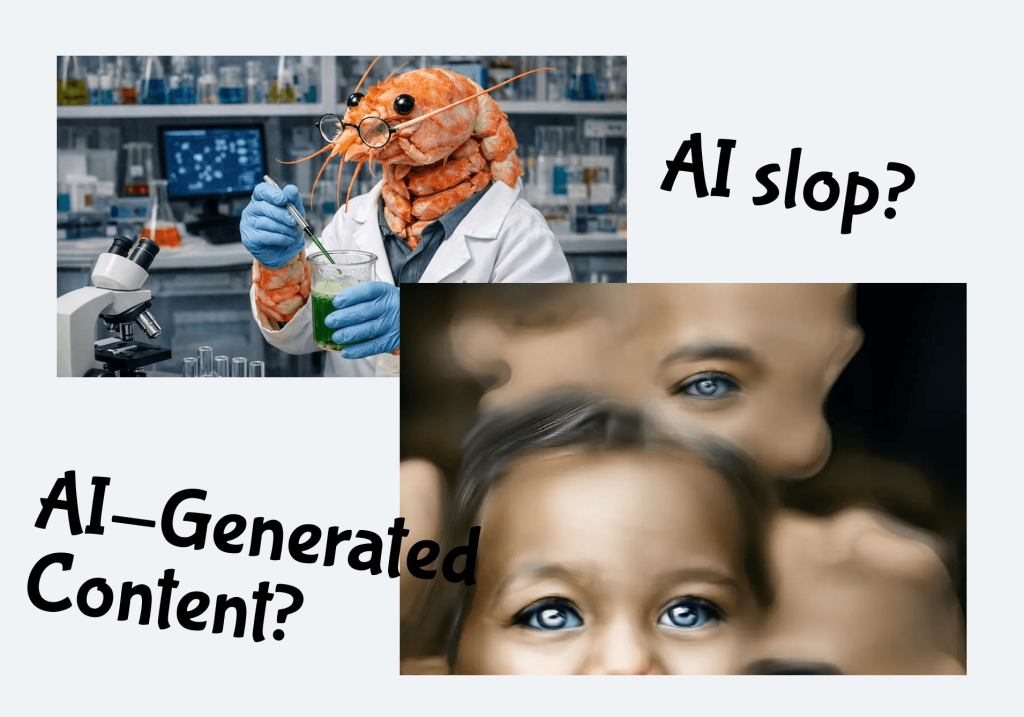
Credit: realkm.com and penji.co
First, it’s important to know that AI slop and AI-generated content are two different things. Generative AI tools can create incredible art, help write complex code, and assist creators in producing interesting, high-quality material. When a person uses an AI model to genuinely improve a project, that’s just AI-generated content.
AI slop, however, happens when users strip away all human creativity and let AI tools generate thousands of low-quality articles, AI-generated video clips, and AI image posts just to game the system. What makes it “slop” is the lack of care, the cookie-cutter approach, and the intent to spam online content platforms for a quick buck, often at the expense of real users looking for real information.
Consider two paintings: one crafted by a digital artist using AI for sketching, the other “spat out” by a bot in twenty seconds, with repeated weird-looking hands and text that looks like ancient runes. If you’ve seen the second, then congrats: you’ve seen AI slop.
Where AI Slop Shows Up Online
Low-quality content is everywhere. You’ll find AI slop polluting almost every major social media platform and corner of the internet right alongside genuine content. And it’s hard to identify, even for the most gifted associate professor!
Social Media Feeds
@a.i.slop1♬ original sound – AISlop
Open Instagram or TikTok. Scroll for thirty seconds. You’ll encounter AI-generated videos of presidents playing Minecraft or AI-generated image galleries of oddly dressed “celebrities.”
Some viral slop videos stitch together countless AI-generated clips, hoping for one to hit the engagement jackpot. The comments are often nonsense or spammy, generated by bots rather than real people.
Twitter and Facebook are full of AI slop threads filled with fake “historical photos” and stories that never happened, which is a quick way for creators to gain followers, even if it creates confusion for users.
Recently, a viral AI-generated image of “Pope Francis in a puffer jacket” made major news because so many people were convinced it was real. The social media feeds rewarded the post with millions of likes before anyone realized something was off.
Search Results and Low-Value Websites
Google “how to fix a leaky pipe” or “homework help math” and look at the results. Mixed among the quality how-to guides are articles that seem endless, repetitive, and written in a strange tone.
AI slop fills websites built only to serve ads or collect affiliate commissions. Sometimes, these sites use AI generators to spin out hundreds of new articles a day. The top result often isn’t the best, it just got there fastest.
In 2024, The Verge reported that entire “content farms” use new tools of AI to mass-produce material, flooding search engines and drowning out helpful guides. If your child tries to research for a school project, they might have to sift through piles of AI slop before finding true, accurate information, and that’s a huge problem.
Ads and Monetization Ecosystems
Plenty of bots and “fake-news” sites use AI slop to flood platforms with junk articles, clickbait videos, or dodgy ads. These exist mainly to earn money from unsuspecting visitors, often targeting kids and teens to “earn money fast” or click through to another ad. And it works, because volume is all that matters in this world.
YouTube, in particular, has seen an explosion of AI-generated video content, blending clumsily edited audio narrations with poor-quality AI imagery. Short, poorly rendered clips about popular games like Fortnite or Minecraft, made in batches by generative AI, grab the feeds and rack up millions of views.
Game Assets and Creator Tools
The trend doesn’t stop with news and memes. AI slop has found its way into game assets and tools for game creators. Studios trying to cut corners pump out “filler” graphics or music using AI and stuff it into games. The result is bland, uninteresting assets and environments that lack any sense of personality.
If your child plays Roblox or similar platforms, you might find AI-generated assets that look like generic mash-ups of classic Mario, Minecraft blocks, or superhero logos. Private servers, where kids expect creativity, turn into grey-washed AI-generated levels with no spark.
Take the viral project Velvet Sundown as another example. What appeared to be a real indie band turned out to be an AI-generated creation—from the music to the visuals and backstory. Listeners interacted with content that felt authentic at first, but was ultimately synthetic and often repetitive, highlighting how AI can fill space with convincing but low-value output.
Why AI Slop Is Spreading So Fast
AI slop is a virus that spreads because it’s shockingly easy to create. In the past, if you wanted to make a viral video or build a big website, you needed actual skills, talent, or money. Now, just grab an AI tool, feed it a few prompts, and you’re in business. It costs almost nothing to flood a social media platform or search result page now.
Social media companies benefit directly. More posts mean more content for the algorithm to recommend. It doesn’t matter if the content is meaningful or not. If it keeps people watching, commenting, or sharing, the platform and its creators make more money.
Read also: A Parent’s Guide to Protecting Your Child from Social Media Scams.
As more people and companies chase easy money, the slop only ramps up. Even well-known publishers occasionally slip, using AI to pump out quick stories or automate video descriptions. It’s getting harder for everyday users (and kids) to separate good from garbage.
Some of the most common incentives driving AI slop include:
- Easy revenue: Each click or view earns tiny amounts of money, so the more slop, the more money.
- Speed: AI generators can produce content 24/7 with no breaks, turning effort and art into a numbers game.
- Volume over quality: It’s no longer about who writes the best post, but who can flood the zone the fastest.
- Engagement farming: Fake drama, wild AI images, and spammy posts are built to provoke comments and shares.
The Real-Life Risks of AI Slop for Kids

Sylvie Bouchard/Shuttertock
Most people care more about protecting their children than worrying about a random fake image. But for kids, an internet full of AI slop is more than annoying, since it shapes how they learn, feel, and interact with others and the world.
The Impact on Education: Can Kids Trust What They See?
Kids don’t have the life experience or critical thinking skills to always spot AI-generated slop in their daily browsing. If a child googles “how to do fractions,” and lands on a site packed with AI-generated gibberish, they’ll probably get confused…or worse, learn the wrong thing.
a 2025 report found that 35% of teens have been deceived by fake news or low-quality content, much of it AI-generated, on social platforms. Flooding the web with misinformation and inaccurate educational material makes homework and research a minefield.
Worse still, some slop websites slip in subtle advertisements or biased statements in homework help articles, influencing kids’ opinions without them even realizing it. It’s low-key digital manipulation, but scaled larger than ever before.
The Effect on Mental Health: Information Overload and Trust Issues
Scrolling through nonstop AI slop can leave kids overwhelmed, even anxious. They’re exposed to a constant stream of weird images, fake celebrities, distorted news, and comments that make little sense. It’s noise, noise, noise, all day long.
When everything on the internet feels fake or unreliable, kids may start doubting their ability to tell good from bad or real from false. Over time, this trust collapse can lead to digital fatigue, lower self-esteem, and even anxiety or mild fear about participating online. Kids want to understand the world, but end up drowning in a flood of AI slop.
Not only that, but exposure to harmful content and fake AI videos can lead to mild crude humor becoming normalized, an increase in cyberbullying, and unhealthy comparison behaviors, all thanks to low-quality online content that spreads faster and wider due to AI tools.
The Hidden Dangers: Scams, Manipulation, and Unsafe Content
The outright dangerous side of AI slop lies in the hidden scams, harmful content, and deepfakes that can easily trick kids.
- Fake giveaways or “earn money fast” schemes: AI-generated video content or posts with hundreds of AI-generated comments trick kids into sharing passwords, spending money, or sharing friends’ personal info.
- Deepfake voices: Cyber criminals use AI voice models to clone a teacher or celebrity’s voice, coaxing kids into clicking dangerous links or sharing sensitive information.
- Mature or Not Content: Even seemingly innocent slop videos can secretly slip mature audio, fake body images, or unplayable gambling content into social media feeds, exposing younger children to things they’re not ready for.
Kids also encounter unintentionally harmful content, like AI-generated images depicting moderate violence, heavy, unrealistic blood, or disturbing romantic themes, all of which have cropped up in social feeds when a filter fails.
Practical Ways Parents Can Protect Children from AI Slop
You can’t clean up the internet. But what you can do is make your child’s online life safer and smarter. Here’s how to help limit their AI slop exposure and keep their digital diet healthy.
1. Start With Open, Nonjudgmental Conversations
You don’t need to be a technology wizard to spot slop. Ask your kids about what they see and how they feel about different things online. Make it normal to ask, “Do you think this is real?” or “Does this video seem off to you?” Build their instincts so they’re always assessing the online content that pops up in their feeds.
2. Teach Critical Thinking Skills (With Examples)
Use real-life AI slop from social media platforms as teaching material. Pull up viral posts and challenge your child to spot the AI-generated image among user-shared art. Discuss how AI-generated videos sometimes get faces, hands, or even the audio all wrong.
Show them actual news articles calling out fake videos or images, like the infamous fake Martin Luther King Jr. speech or other deepfake scandals. Help them compare sources and learn that the first answer isn’t always correct, or even created by a human.
3. Use App Monitoring and Parental Controls

Findmykids app
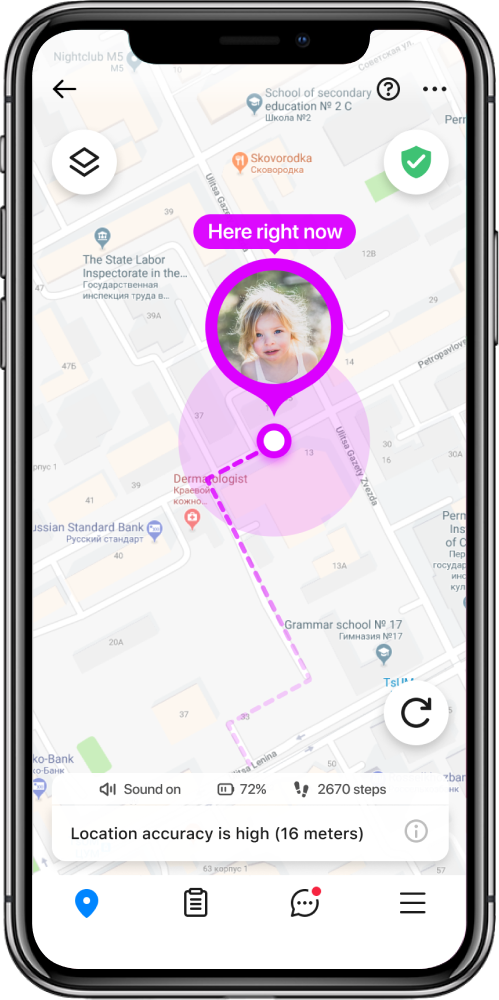
You don’t need to hover or spy to help your child develop healthy digital habits. Tools like Findmykids give you a clear, respectful view into what’s really happening on their device, so you can guide (not snoop or control) their experience. Consider it supportive supervision: you’re helping your child learn digital awareness, not tracking their every move.
Findmykids offers app usage statistics, showing which apps your child uses most, whether that’s games, chat services, or video platforms where AI slop tends to appear. This lets you notice patterns, like if they’re suddenly spending way more time on a new video app that’s full of low-quality, repetitive content.
With the screen time control feature, you can gently limit exposure to those platforms that tend to flood feeds with low-quality, AI-generated videos or images. This isn’t about blocking everything or upsetting the trust built with your child; it’s about setting smart boundaries together and forming good habits.
Supportive digital supervision also means keeping conversations going, asking your child about the content they see, encouraging them to share what’s interesting or weird, and keeping an open door if something online feels off or upsetting. Paired with your involvement, a tool like Findmykids acts as your digital dashboard, helping your family stay balanced and aware without turning everyday internet use into a surveillance exercise.
- Track which apps your child spends the most time on (especially social media feeds and video apps).
- Spot sudden surges in time on low-quality content apps or suspicious platforms.
- Set app usage limits or time restrictions on specific apps.
- Get daily or weekly reports to help guide family conversations about their online activity.
You don’t need to block every app. Just knowing how, when, and where your child spends their time (and what platforms are slop-heavy) lets you set healthy boundaries, without hovering.
Download Findmykids and start building safer digital habits together—one small step at a time.
4. Set Parental Controls for Scroll and Content Maturity Settings
Use the settings in your child’s device to limit app downloads, restrict access to certain apps, and set age-based content filters.
On Android or iPhone, scroll to parental controls and block apps known for viral slop, weird “group party” videos, or unfiltered content. Adjust maturity settings in popular apps so that even if your child stumbles into something new, it’s less likely to be mature or explicit AI-generated slop.
On social media platforms, go to the user’s profile or settings app, and tweak privacy settings. Limit who can comment, connect, or send messages, so your child’s connection list includes only real-life friends, not bots, scammers, or fake profiles.
Related: Social Media Privacy Settings: What to Change First — and Why It Matters.
5. Stay Informed About AI Trends
New AI tools and trends pop up every month. Read up on generative AI news or follow reputable digital safety blogs. If a new viral “trend” starts to show up, ask your child about it. Staying involved keeps you ahead of the curve and ready to spot the next big wave of AI slop before it becomes a problem.
6. Encourage Creative, High-Quality Alternatives
Not all AI content is slop. Encourage your kids to follow genuine creators who put in real effort, creativity, and personality. Support channels and platforms that value human input and originality over churned-out internet filler. Maybe inspire them to create their own digital art or video, so they learn the difference between meaningful projects and slop.
Taking Charge of Your Child’s Digital Diet
The digital world’s not going backward. AI is only going to play a bigger part in how content gets created and consumed. As a parent, your influence, conversations, and choices matter. You can shield your child from the worst excesses of AI slop, help them identify what’s worth their time, and empower them to be savvy, smart digital citizens.
Talk about the difference between genuine art and generated images. Scroll social media together. Show them why a slop video might be viral but isn’t valuable. The more examples you work through, the safer and more resilient your child becomes.
By pairing conversation, critical thinking, and tools like Findmykids, you don’t just help your child survive the tidal wave of AI slop. You help them thrive in a world where new technology doesn’t have to mean an endless feed of junk.
FAQs

freepik / Freepik.com
What is AI slop?
AI slop refers to low-quality, mass-produced content generated by artificial intelligence. It includes fake images, poorly written articles, and bizarre videos created simply to farm views and earn money on a social media platform.
Why is it called “slop”?
The term compares this cheap, thoughtless digital media to the unappetizing, mass-produced food served in cafeterias or fed to farm animals. It highlights the lack of care, effort, and human creativity involved in making it.
Is AI slop the same as AI-generated content?
No. AI-generated content can be high-quality and useful when a person uses AI tools to assist their work. AI slop specifically refers to the low-quality, low-effort spam that pollutes the internet.
Where do people see AI slop most often?
You’ll see it most frequently in social media feeds on Facebook, TikTok, and YouTube, as well as in the search results of low-quality websites trying to rank for popular keywords. Kids also encounter it in game assets, group party videos, and even chat threads filled with auto-generated comments.
Cover image: image generated by ChatGPT / OpenAI
Проверьте электронный ящик