

















Sexting on Snapchat can feel like a covert and confusing part of youth digital life—especially when young people are exploring relationships and intimacy online. For parents, understanding what sexting really means, the risks involved, and how to respond calmly and constructively is critical to keeping children safe online.
Contents:
What Is Sexting on Snapchat?

What sexting might look like. Amphiggins / Wikipedia.org
Sexting is sending or receiving sexually explicit text messages, nude pictures, or sexual videos via digital platforms. While sexting can occur through text messaging, WhatsApp, and many other social apps, Snapchat’s mix of features makes it seem like a safe option.
a large meta-analysis of 39 studies involving more than 110,000 adolescents found that sexting behaviours are widespread among young people between the ages of 12–17, with:
- 15% reporting having sent sexts
- More 27% reporting having received them.
- 12% admitting forwarding a sext without consent.
- 8.4% having had their own images shared by someone else.
Read more: What is Sexting and Is It Common Among Teens?
Why People Use Snapchat for Sexting
Snapchat has a unique set of features that contribute to its appeal. When the app was first introduced to the market, one of its core unique identifiers was its disappearing messages.
Pictures or videos sent on Viber or WhatsApp automatically sync to your camera roll, while Facebook saves conversations with the option to save any pictures or videos. In Snapchat, your photos are apparently lost forever after a set time you can determine (from 1–10 seconds). Even though it’s now possible to screenshot content, this reputation sustains.
Milne et al. found that for many teens, Snapchat is only about fun, connection, and friendships. Young people often share snaps about everyday interests—school life, hobbies, music they’re listening to, or videos they’ve seen on YouTube. But many of them also use it to indulge in casual flirting or informal digital dating with their peers. Such interactions can naturally escalate to sharing explicit content.
Key Dangers of Sexting on Snapchat

App Store
Research confirms adolescent sexting is closely linked to impulsivity and sensation-seeking. The pace at which images and messages can be exchanged encourages escalating behaviours, where children may be easily seduced into sharing content quickly and emotionally before fully considering the consequences.
Mori et al. found that adolescents who engage in sexting are also more likely to report sexual risk-taking behaviours, inconsistent contraceptive use, delinquent behaviour, anxiety and depression, and substance misuse.
In addition, studies show minors who engage in sexting have significantly higher chances of becoming victims of image abuse—where their photos are shared, used for blackmail, or coerced for more content. There are also risks of bullying, exploitation, and legal consequences for sharing sexually explicit content, even among minors
a recent news report highlighted growing concerns from law enforcement and child protection organisations about sextortion and grooming online, particularly on platforms like Snapchat. According to the report, Snapchat reported around 20,000 instances of concerning material—including sextortion and child sexual abuse images in the first half of 2024 alone.
Snapchat is the most frequently cited app in child sexual abuse image crime reports across the UK. A Sky News article highlights a case in which a 14-year-old girl was tricked by an adult posing as a 15-year-old boy into sending nude images. The man blackmailed her into stripping live on camera with threats of posting the photos online if she refused.
UK police recorded 7,062 offences of “sexual communication with a child” in 2023–24 — an 89% increase since 2017–18. In cases where a platform was identified, Snapchat was involved in 48%.
a 2024 report by the Internet Watch Foundation found that while young women are most at risk, there is a significant rise in exploitation involving children under 10. In 2023, the IWF identified 107,615 webpages containing self-generated sexual imagery involving children under 10, a 66% increase from 2022. Experts warn that more and more primary-school-aged children are being coerced or groomed online to create sexual content.
The same features that make social platforms appealing to young people—fast messaging, disappearing snaps, and private conversations—also create opportunities for exploitation. For parents and caregivers, understanding how these dynamics work is an important step toward helping children navigate online relationships safely, recognize pressure or manipulation early, and feel confident asking for help when something doesn’t feel right.
Red Flags
Most young people will not openly talk about sexting or uncomfortable online experiences. Research shows that many children who encounter upsetting situations online do not tell adults, often choosing instead to confide in friends or handle the situation alone. Some may even prefer to keep online conversations private because they worry about losing access to their phone or social media accounts if parents intervene.
Instead, parents may notice subtle changes in behaviour or technology habits. Watch for patterns such as:
- Sudden secrecy around their phone or computer, such as quickly closing apps, tilting the screen away, or taking devices into private spaces like the bathroom or bedroom.
- Being unusually anxious or upset after receiving notifications, especially if they immediately delete messages or seem distressed after checking Snapchat.
- Spending much more time online late at night, particularly when they appear to be waiting for a message or snap from someone.
- New online contacts they can’t clearly explain, such as mentioning people they’ve never met offline, strangers, or unknown usernames.
- Strong emotional reactions to online conversations, including sudden mood swings, nervousness, or appearing pressured to respond quickly.
- Reluctance to let anyone else use or look at their phone, including changing passwords frequently or becoming defensive about privacy.
- Unusual concern about their appearance, such as repeatedly taking selfies, editing photos, or asking questions about how they look in pictures.
- Receiving gifts, money, or online credits from someone they met online, which can sometimes be part of grooming or coercion.
- Withdrawal from normal activities or friendships, particularly if they seem preoccupied with online interactions.
- Talking about someone online who seems much older or overly attentive, even if they describe the relationship as harmless.
None of these behaviours automatically means a child is involved in sexting or unsafe conversations online. However, noticing patterns or sudden changes can be a helpful starting point for calm, supportive conversations about their digital experience.
How Parents Can Protect Their Child on Snapchat
Sexting chat is more common on mobile devices than on computers, so the proper restrictions and safety features must be utilised to keep your child as protected as possible.
| Action | Result |
| Set Up Device Safety Together | Discuss and agree on Snapchat settings that prioritise safety—including privacy settings, friend lists (no strangers), blocking unknown users, and turning off features like Snap Map. Make it a team project rather than a surveillance tactic. |
| Understand How the Platform Works | Learn how Snapchat’s features function—including disappearing messages, Snap Map, and reporting tools—so you can explain to your child how the service works and what safety settings should be enabled. |
| Model Open Communication | Let your child know they can tell you anything without fear of consequences. Research consistently shows that supportive parent‑child communication reduces risky behaviours and improves decision‑making. |
| Teach Digital Citizenship and Consent | Talk about consent both offline and online. Explain that sending and receiving explicit content should always be consensual—and that consent can be withdrawn at any time. Research shows that gaps in sex education often leave young people uncertain about healthy digital interactions. |
| Encourage Critical Thinking About Screenshots and Sharing | Emphasise that even if a snap seems temporary, others can save, screenshot, or reuse it. Encourage your child to pause before sending anything they wouldn’t want made public. |
| Respect and Set Boundaries | Agree on reasonable screen time and communication habits, and implement a monitoring app, such as Findmykids, to ensure your child balances online activity with offline interactions. Create family tech rules that prioritise time together away from screens. |
| Know the Reporting Tools | Familiarise yourself with Snapchat’s safety tools—including report, block, and restricted mode. |
⠀
Related: How to Use Snapchat Parental Controls to Keep Your Kids Safe Online.
How to Talk to Your Child About Sexting

Media_Photos/Shutterstock.com
Conversations about sexual topics can be awkward—but they don’t have to be stressful.
Start with Curiosity, Not Judgement
Ask open‑ended questions like: “Have you seen people share snaps like that?” or “What do you think makes someone comfortable sharing something private?”
Use Shared Media Moments
If you see a story in the news about sexting risks or online safety, use it as a conversation starter.
Teach Respect and Consent
Make it clear that consent applies online too, and that a person’s comfort and safety—including their reputation—matters.
Emphasise Real Consequences
Talk about emotional well-being, long‑term impact, and how images can be misused. Reiterate that control ends once something is sent.
Reassure Them You’re on Their Side
Let your child know that they won’t be punished for honest questions or mistakes—and that talking to you first always beats finding out too late.
Teach How to Spot a Suspicious Snapchat Account
A recent user-experience survey found that one in five (20%) Snapchat users had come across at least one fake or spam account. Teaching digital citizenship and identifying warning signs will help your child navigate Snapchat more safely.
- Profile Information. Real Snapchat accounts tend to have a real profile picture, a realistic username, a small bio, and a custom Bitmoji or Snapcode. Blank profiles or boring details are suspicious.
- Profile Picture. Bot profiles often use stock photos or images stolen from other websites. Reverse image search to verify it.
- Snap Score. A low Snap Score could signify it’s a brand-new or defunct fake account that hasn’t had much real-life interaction.
- Account Activity. Fake accounts either have no stories or feature AI-generated, inconsistent stories.
- Verification Questions. Impersonators tend to be quite hesitant when you ask for specifics about how they know you. Vague responses can help you identify an impostor.
- Mutual Friends. If you don’t share mutual friends, the account may belong to a stranger or someone you don’t know in real life, which is a red flag.
- Attitude. Scammers rush the conversation, use excessive compliments, and exploit impulsivity and sensation-seeking. Some scammers also try to convince children to upload personal photos or send private snaps as part of grooming or sextortion schemes.
- Behavioural Clues. They will most likely decline your real-time or video chat calls. Bots and impostors generally shy away from spontaneous exchange.
Remind your child that sharing sexually explicit content can have serious legal consequences, even if the person seems friendly or trustworthy.
Read also: 15 Warning Signs That Help to Identify a Child Predator.
Other Sexting Apps Parents Should Know About
Snapchat often gets the most attention in conversations about teen sexting, but it’s far from the only platform where explicit images or private messages may be exchanged. Many apps that help people connect and communicate quickly can also be used for sexting—especially when they offer strong privacy features or anonymous interactions.
Understanding where these conversations can move next helps parents recognise risks earlier and talk to children about online security and digital boundaries.
Telegram
App Store
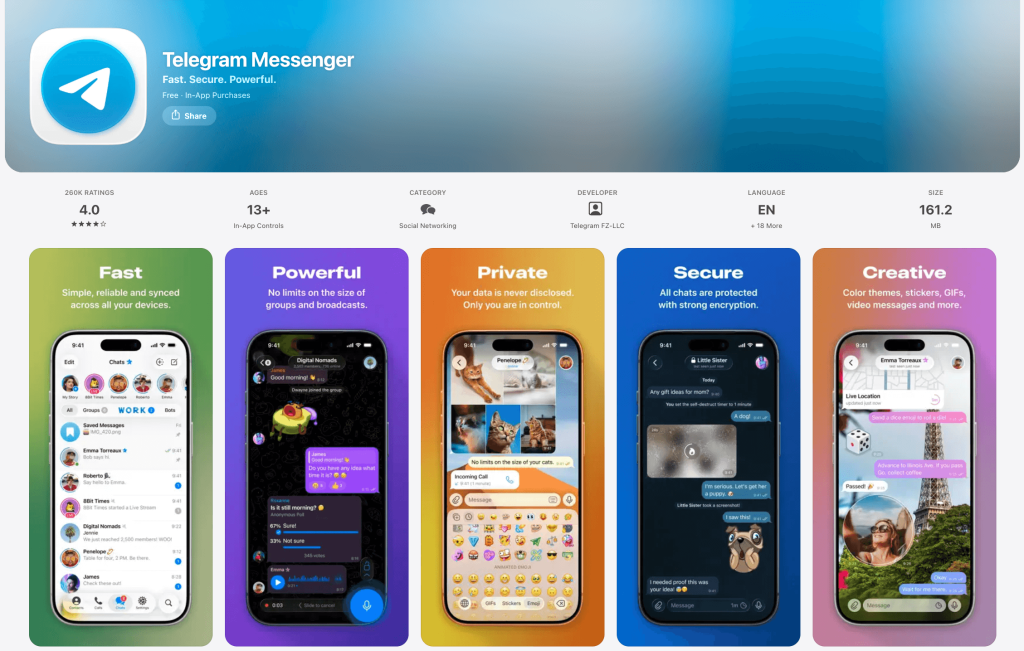
One platform parents increasingly hear about in discussions of sexting apps is Telegram. The messaging app has around 1 billion users worldwide, making it one of the largest communication platforms after WhatsApp.
Telegram offers several privacy features that can make it appealing for private conversations, including secret chats, disappearing messages, and the ability to hide phone numbers. These tools can create the impression that messages or images are completely private.
Because of this, some teens encounter communities where “telegram nudes” or other explicit content are exchanged in private groups or channels. A simple search within the app can reveal hundreds of public or semi-private channels dedicated to sexting or adult content.
Kik Messenger

App Store
Another app that has repeatedly raised concerns among law enforcement agencies is Kik. The messaging platform allows users to communicate using only a username, meaning real people can interact without sharing a phone number or verified identity.
This level of anonymity can make it harder to verify who someone actually is. Authorities have previously warned that the platform has been linked to cases involving minors exchanging explicit photos with strangers or being approached by predators online.
Yubo

App Store
Apps designed to help teens meet new people can also introduce risks. One example is Yubo, a social platform with more than 85 million users that focuses on livestreaming and meeting new friends online.
The app includes swipe features similar to dating apps, allowing users to discover and start conversations with strangers based on age or location. This makes it easy for young people to connect with people they have never met offline, which can sometimes lead to sexualised conversations or requests for explicit images.
Anonymous Messaging Apps

App Store
Anonymous messaging platforms can also create environments where sexting or harassment occurs more easily. For example, the app NGL (“Not Gonna Lie”) allows users to receive anonymous questions and messages through a shared link.
Concerns about cyberbullying and manipulation were serious enough that in 2024, the U.S. Federal Trade Commission banned NGL from offering its service to users under 18 following allegations that it encouraged harmful interactions among younger users.
Because users don’t always know who is sending messages, children may mistakenly believe they are interacting with friends when the messages could actually come from strangers.
Navigating Sexting on Snapchat Safely
Sexting on Snapchat is a complex part of modern adolescent life. While disappearing messages, private chats, and the fast pace of exchanges may seem harmless, they can create opportunities for impulsive sharing, exposure to coercion, or exploitation by other users.
Once intimate photographs or nudes are sent online, it can be impossible to completely forget or erase them from the internet, even if the original snap disappears.
For caregivers, awareness and proactive guidance are key. Observing subtle behavioural changes, setting clear boundaries around device use, and using tools like Findmykids to monitor apps and screen time can help protect children while fostering trust. Encourage open conversations, emphasise consent, and teach your child how to recognise suspicious interactions or block users who make them uncomfortable.
Ultimately, your goal is not to police every message but to equip your child with the knowledge and confidence to navigate digital spaces safely, understand real-world consequences, and make thoughtful choices online.
FAQs
What is Snapchat sexting, and why is it risky?
Snapchat sexting refers to sharing sexually explicit messages, pictures, or videos on Snapchat. It’s risky because snaps can be saved without consent, shared by others, and may expose minors to sextortion or exploitation.
Do Snapchat messages really disappear forever?
No. While Snapchat messages are designed to disappear after viewing, recipients can take screenshots or record the screen without notifying the sender.
Can someone save Snaps with a screenshot or screen recording?
Yes—screenshots and screen recordings can capture content before it disappears. The sender receives a notification when a chat is screen-grabbed; there is nothing they can do to prevent it once the snap is sent. The recipient can also choose to capture the image on a different device, meaning the sender won’t know it’s been retained.
Is Snapchat free to use for kids?
Yes, Snapchat is generally free to download and use. However, some features, subscriptions, or promotions within the app may involve optional purchases.
References
- Association of Sexting With Sexual Behaviors and Mental Health Among Adolescents: A Systematic Review and Meta‑analysis, Camille Mori, Jeff R. Temple, Dillon Browne, Sheri Madigan. JAMA Pediatrics, 2019
- Impulsivity and Sexting, Habit Otanga. The Psychology and Neuroscience of Impulsivity, 2024
- How Risky is Online Sexting by Minors? David Finkelhor, Samantha Sutton, Heather Turner, Deirdre Colburn. Journal of Child Sexual Abuse, 2024
- Snapchat flagged in nearly half of child abuse imagery crimes in past year, Arthi Nachiappan. Sky News, 2024
- Online grooming crimes against children increase by 89% in six years. NSPCC, 2024
- Under 10s groomed online ‘like never before’ as hotline discovers record amount of child sexual abuse, Internet Watch Foundation, 2024
- Risks and safety on the internet: the perspective of European children: full findings and policy implications from the EU Kids Online survey of 9-16 year olds and their parents in 25 countries, Livingstone, Haddon, Görzig, A. & Ólafsson, K. The London School of Economics and Political Science, 2011
- Children and Adolescents and Digital Media, Yolanda (Linda) Reid Chassiakos, Jenny Radesky, Dimitri Christakis, Megan A. Moreno, Corinn Cross, David Hill, Nusheen Ameenuddin, Jeffrey Hutchinson, Alanna Levine, Rhea Boyd, Robert Mendelson, Wendy Sue Swanson. Pediatrics, 2016
- Large Language Models in an App: Conducting a Qualitative Synthetic Data Analysis of How Snapchat’s “My AI” Responds to Questions About Sexual Consent, Sexual Refusals, Sexual Assault, and Sexting, Tiffany L. Marcantonio, Gracie Avery, Anna Thrash & Ruschelle M. Leone. The Journal of Sex Research, 2025
Cover image: ayhanturandesign / Freepik.com
Проверьте электронный ящик