

















Tiger parenting is a parenting approach that prioritizes academic and intellectual achievement above other childhood and adolescent developmental outcomes. It is often practised by Asian American parents and immigrant families, who typically have high expectations of their children.
Although some tiger parents can be warm and nurturing, tiger parenting involves pressuring children to succeed while withholding praise and affection. It is generally considered a strict, authoritarian parenting style that damages a child’s self-worth and impedes healthy development.
In this article, we’ll examine the tiger parenting style, acknowledging the good intentions behind the approach, while also exploring its emotional impact on young people.
Contents:
- What Is Tiger Parenting?
- Tiger Parenting vs Other Parenting Styles
- Effects of Tiger Parenting on Children
- 5 Signs You Might Be a Tiger Parent
- How to Be a High-Expectation Parent Without Putting Pressure on Your Child
- Using Technology to Support Healthy Independence
- FAQs
What Is Tiger Parenting?
The term tiger parenting was coined by American author and Yale University law professor Amy Chua in her book Battle Hymn of the Tiger Mother, which explores her approach to raising her two daughters. The book is largely aimed at Asian parents and promotes a strict parenting style that emphasizes discipline and high achievement over Western ideals of individuality and emotional well-being.
Tiger parenting draws on Confucian ideology, which stresses that children should respect and obey their parents while striving for self-improvement from a young age.
Spotlighted in popular publications like The Wall Street Journal and South China Morning Post, tiger parenting blends Confucius philosophy with traditional Chinese culture and an authoritarian parenting style. It is popular among immigrant parents, particularly mothers of Chinese or other ethnic origin who believe in a highly controlling parenting approach.
Core Characteristics of Tiger Parenting
Key elements of the “Tiger Mother” approach include strict discipline and an unwavering focus on academic excellence. According to Chua, the typical tiger mom believes:
- Schoolwork always comes first
- An A- is a bad grade
- Successful children must be two years ahead of their classmates in maths
- You must never compliment your children in public
- If your child ever disagrees with a teacher or a coach, you must always take the side of the teacher or the coach
- The only activities your children should be permitted to do are those in which they can eventually win a medal
Unsurprisingly, Amy Chua’s book, as well as the tiger parenting approach in general, is highly controversial. While many Chinese parents claim it builds self-control, resilience and success, critics argue that children raised by tiger parents often have poor social skills, low self-esteem, and mental health problems.
Tiger parents generally advocate tough love and a prioritization of excellence over a child’s emotional and mental health. Many children raised by tiger parents grow up feeling like they are constantly pushed to achieve, yet never feel good enough in their parents’ eyes.
Tiger Parenting vs Other Parenting Styles
Tiger parenting is generally considered strict and punitive, with little regard for a child’s voice or personal goals. But how does it compare to other parenting practices?
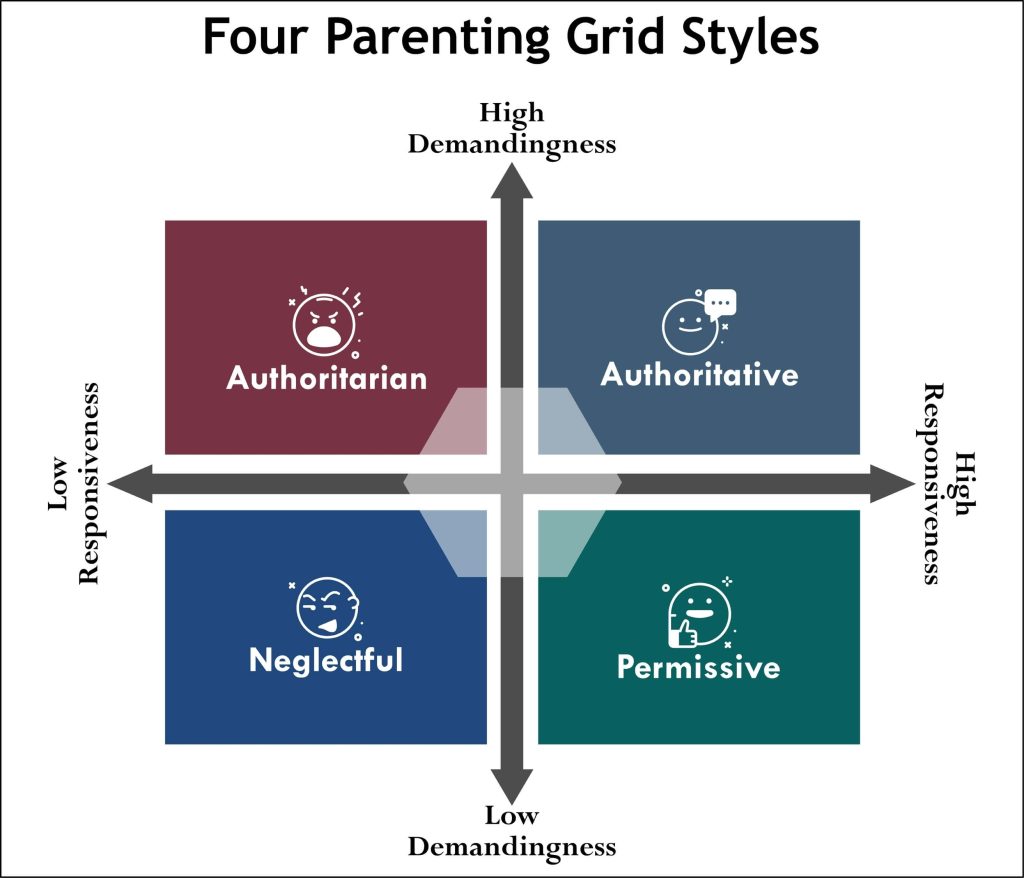
To understand the differences, psychologists often look at the Eight Parenting Dimensions, which evaluate parenting across areas like warmth, discipline, autonomy support, monitoring, communication, consistency, use of physical punishment, and emotional modeling. This framework helps explain why tiger parenting can drive high achievement but often scores low on warmth and autonomy support, while authoritative or free-range parents balance control with emotional support and independence.
Authoritative Parenting
While both authoritative and tiger parents have high expectations for achievement, authoritative parents balance this with emotional support, encouraging independence without expecting their children to obey their every demand.
Authoritative parenting emphasises the need for rules and boundaries, while also providing warmth, emotional support, and autonomy. Unlike with tiger parents, children are encouraged to voice their opinions and make decisions about their lives.
according to research conducted by the National Library of Medicine in 2022, authoritative parenting is consistently linked to the most positive outcomes for child development. This approach fosters independence and good academic performance, while also meeting a child’s emotional and social needs.
Authoritarian Parenting
Authoritarian parents are similar to tiger parents. They are highly demanding, enforcing strict rules and expecting obedience without discussion. Typically, this approach limits flexibility, affection, and reasoning, while focusing on compliance and obedience in all areas.
The main difference is that authoritarian parenting is not focused on personal excellence or academic success, but rather total control over the child’s life.
Free-range Parenting
Contrasted with authoritarian or tiger parenting, free-range parenting practices independence and self-reliance, allowing children to explore freely, take risks, and learn from their own experiences.
This approach encourages personal autonomy and exploration, with minimal intervention or supervision. Free-range parents trust their child to make decisions and don’t enforce inflexible rules or oversight.
Attachment Parenting
Attachment parenting is about creating a strong parent-child relationship. This is achieved through close physical contact, nurturing, and responsiveness.
The goal of attachment parenting is not about success or achievement, but to foster secure bonds and promote emotional and social child development.
Helicopter Parenting
Helicopter parents closely monitor and often intervene in their child’s life, aiming to prevent failure or difficulty. Unlike tiger parents, whose focus is on discipline and high achievement, helicopter parents prioritize oversight and protection, often regardless of performance. While their intentions are protective, this style can reduce a child’s independence and problem-solving skills and may increase stress or anxiety.
Snowplow Parenting
Snowplow parents actively remove obstacles from their child’s path to ensure success. Like tiger parents, they are highly achievement-focused, but unlike tiger parents, who push for excellence through structured guidance, snowplow parents eliminate challenges entirely. This can prevent children from developing resilience, persistence, and autonomy, even while temporarily boosting performance.
Summary Table
Skyline Graphics / Shutterstock.com
→→→
| Parenting Style | Core Focus | Approach to Independence | Pros | Cons |
| Tiger | High achievement, discipline | Low | Academic success, self-discipline | Stressful, low emotional support |
| Authoritative | Rules + warmth, independence | High | Balanced, positive outcomes for the child | Requires consistent effort from parents |
| Authoritarian | Obedience, control | Low | Compliance, clear expectations | Limits autonomy, low warmth |
| Free-Range | Autonomy, exploration | Very high | Resilience, problem-solving | Risk of accidents or misjudgment |
| Attachment | Emotional security, bonding | Moderate | Emotional regulation, strong parent-child bond | May be permissive if boundaries are loose |
| Helicopter | Close oversight, preventing failure | Low | Short-term safety, support | Reduced independence, anxiety |
| Snowplow | Clearing obstacles, ensuring success | Low | Achievement-focused | Hinders resilience, coping skills |
Effects of Tiger Parenting on Children
Like all parenting styles, there are both positive and negative effects of tiger parenting on children.
According to proponents of the tiger parenting approach, positive outcomes for children include:
- High academic performance, resulting in the child’s ability to perform well in tests and get good grades
- Strong sense of discipline and work ethic, shaped by clear parents’ expectations
- Goal orientation and sense of purpose, supporting the child’s future
- Effective time management
- A belief that success comes from effort and hard work, rather than innate talent or socioeconomic status
- Development of a sense of family obligation, instilling responsibility and commitment to the household or family goals
However, studies also show that tiger parenting can lead to:
- Аn increased risk of anxiety and depression, affecting the child’s emotional intelligence and well-being
- Poor developmental outcomes, such as difficulty forming close relationships with peers
- Higher levels of academic pressure, with lower grades overall
- Increased risk of self-harm and suicidal behavior
- Struggles with independence and self-discipline, as well as potential negative impacts on children’s self-esteem
5 Signs You Might Be a Tiger Parent

BearFotos/Shutterstock.com
Although tiger parenting is an intentional parenting approach, many parents enforce elements of this parenting style without realizing it, or because that’s the way they were raised.
You may be thinking you’re doing the best for your child by being a tiger parent, without realizing the negative impact it could be having.
Here are five signs you could be a tiger parent:
1. You have impossibly high expectations
Tiger parents often believe that hard work is the path to safety. If you feel anxious when your child is not at the top of their class or excelling in their music practice, you are probably setting impossible standards for your child to meet, which will lead to stress and poor self-esteem in the long run.
2. Goals are set by you alone
All parents expect their children to meet academic goals to the best of their ability. However, tiger parents often control their child rather than working with them to set goals and monitor outcomes.
Tiger parents typically expect goals to be reached at all costs, even if they come at the expense of positive parenting dimensions, such as emotional well-being and social relationships.
3. You value academic achievement over everything else
If you value grades and school performance over emotional and social well-being, you may be a tiger parent. Academic achievement is important, but most parents agree that this shouldn’t come at the expense of their child’s mental health or ability to make friends.
4. You use guilt or shame to punish your child
Tiger parenting argues that using guilt and shame to punish a child teaches them to be disciplined and high-achieving. However, studies show that shaming your child can actually lead to maladaptive responses such as anger, defensiveness, withdrawal, and blaming others.
5. You limit praise and affection
Tiger parents often withhold praise and affection from their children, either because they believe this is the right approach to help them learn resilience or simply because it was how they were raised by their own traditional Chinese parents.
While experts warn against excessive praise (this can lead to pressure, perfectionism, and dependence on external validation), there is a common consensus that appropriate praise and affection are crucial to a child’s resilience, motivation and emotional development. Many tiger parents recognize this need for balance and take a more moderate approach.
How to Be a High-Expectation Parent Without Putting Pressure on Your Child
With all parenting styles, there is a balance to be found. Many parents blend approaches or adapt existing parenting styles to fit the needs of their individual child.
Studies on tiger parenting consistently find it to be harmful for child development, putting young people at a higher risk of stress, anxiety, and depression without necessarily improving their grades or academic performance.
It’s important to balance the positive elements of tiger parenting, such as a strong work ethic and an intrinsic sense of responsibility, with the affection and emotional support they need to thrive. This is why many caregivers turn to authoritative parenting.
Authoritative parenting still emphasizes boundaries and high expectations but offers a more collaborative relationship, alongside compassion, encouragement, and emotional support.
Sensitive or emotionally-driven children may benefit from a more gentle parenting approach. Gentle parenting is an evidence-based approach founded by Sarah Ockwell-Smith. It is a softer style of parenting that focuses on empathy, respect, and mutual understanding.
Gentle parenting is not the same as permissive parenting, which is very lenient with rules and boundaries, often allowing children to make the rules and do as they like. Gentle parents encourage exploration and independence but also set clear rules and expectations.
Using Technology to Support Healthy Independence
Findmykids app
Most psychologists agree on the importance of fostering independence in children and teens. Encouraging your child to be independent will help build their confidence, resilience, and self-esteem, preparing them for adulthood.
For younger children, this might involve assigning appropriate chores and tasks, such as encouraging them to pick their clothing or supporting healthy risk-taking and letting them make mistakes.
Older children and teenagers will benefit from more autonomy and independence, such as going out with friends or walking home from school alone. It can be scary when older children suddenly crave independence, but this is a healthy part of their human development that should be navigated with mutual trust and respect.
That said, you’ll still want to maintain boundaries and ensure they’re safe. You might agree that they can go to the park with their friends as long as they keep their phone on and are back for dinner, for example. Older children may be allowed more freedom, but still have a curfew and rules about where they can go and with whom.
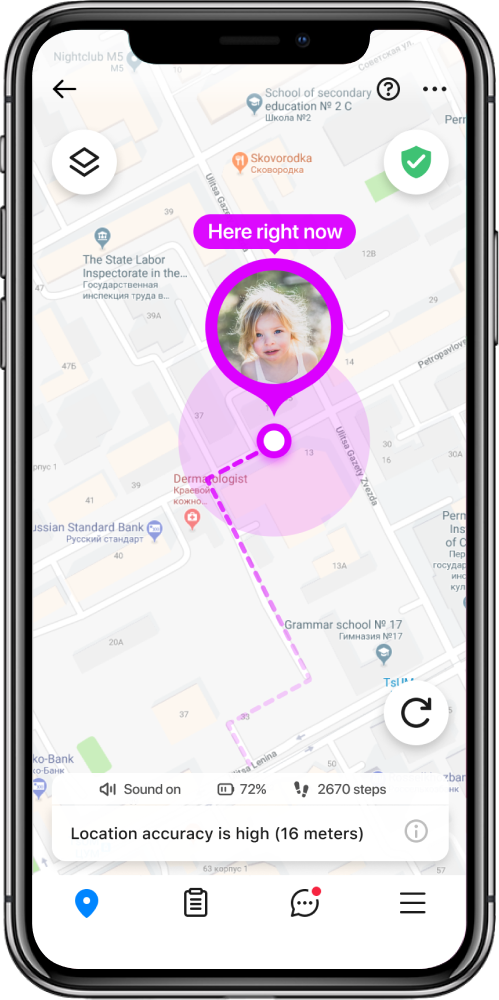
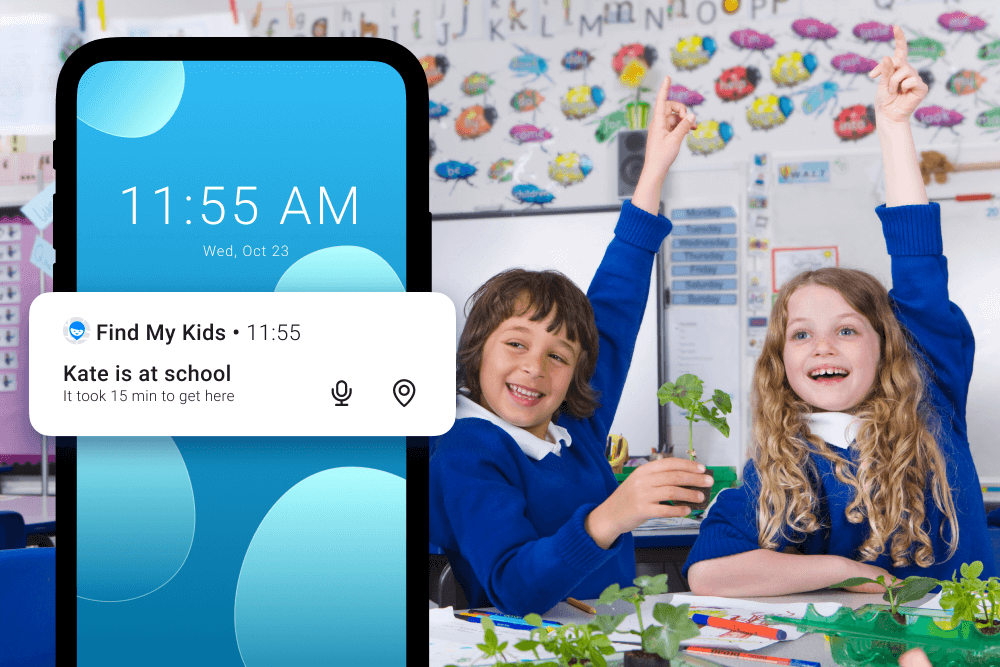
One way to allow teenagers this independence while still ensuring their safety is to download the Findmykids app. With Findmykids, you can monitor your child’s real-time location, get updates about places they visit, and even listen to what is happening around your child, to make sure they’re safe if they don’t answer calls.
Using the app, children can also send SOS signals to parents if they need help, while blocking unwanted calls. Parents can also monitor screen time and set limits and parental controls through the app, allowing freedom while making sure they have a safe online experience.
Try Findmykids today to support your child’s independence while keeping their safety a top priority!
Encouraging Success without Exerting Control: Finding the Balance
Whichever style of parenting you most align with, supporting your child’s development and helping them grow into a healthy, happy young person is all about balance.
Raising children is hard, and all parents make mistakes. Understanding the potential impact of tiger parenting isn’t about guilting or shaming parents who have used these techniques in the past, especially Chinese American families, for whom tiger parenting is part of the culture.
However, it’s important to be aware of the impact of extreme parenting of any kind, whether that’s overbearing, controlling, or permissive. Raising successful children is not just about academic excellence or achievement, but also the child’s ability to share their feelings, make friends, and engage in hobbies.
With the right amount of affection, praise, encouragement, and discipline, children can grow up to be emotionally healthy and successful adults, respected for their individual strengths and qualities.
FAQs
What is a tiger parenting style?
Tiger parenting is an authoritarian approach characterized by strict discipline, high academic expectations, and limited tolerance for failure. Parents using this style often enforce rigid rules, emphasize hard work and mastery (especially in academics or music), and discourage leisure activities like TV or sleepovers. Rooted in Confucian values and commonly associated with some East Asian families, tiger parenting aims to secure future success through intense parental control—though it may raise concerns about emotional well-being.
What is tiger vs elephant parenting?
Tiger parenting emphasizes discipline, high achievement, and rigorous expectations, using strict rules and negative reinforcement to push children toward success. In contrast, elephant parenting prioritizes emotional well-being, offering warmth, empathy, and a secure environment that encourages self-esteem and exploration. While tiger parents aim to prepare children for competitive realities, elephant parents focus on building confidence through support. Many families today blend both styles to balance ambition with emotional resilience.
What are the 4 types of parenting styles?
The four core parenting styles are Authoritative, Authoritarian, Permissive, and Uninvolved. These are defined by two key traits: demandingness (rules, expectations) and responsiveness (emotional warmth, support). Authoritative parents balance high expectations with warmth, fostering independence and strong outcomes. Authoritarian parents enforce strict rules with little emotional support. Permissive parents offer warmth but lack structure. Uninvolved parents provide minimal guidance or emotional connection, often to the child’s detriment.
What is the difference between a tiger mom and a helicopter mom?
Tiger moms are known for enforcing strict discipline and pushing children toward high achievement, especially in academics and extracurricular activities. Their focus is on performance, mastery, and future children’s success, often through tough love and high expectations. In contrast, helicopter moms are highly involved in their child’s life to prevent failure or discomfort. Their parenting is rooted in protection and control, frequently intervening to manage outcomes rather than letting children learn independently.
Cover image: pikisuperstar / Freepik.com
Проверьте электронный ящик